

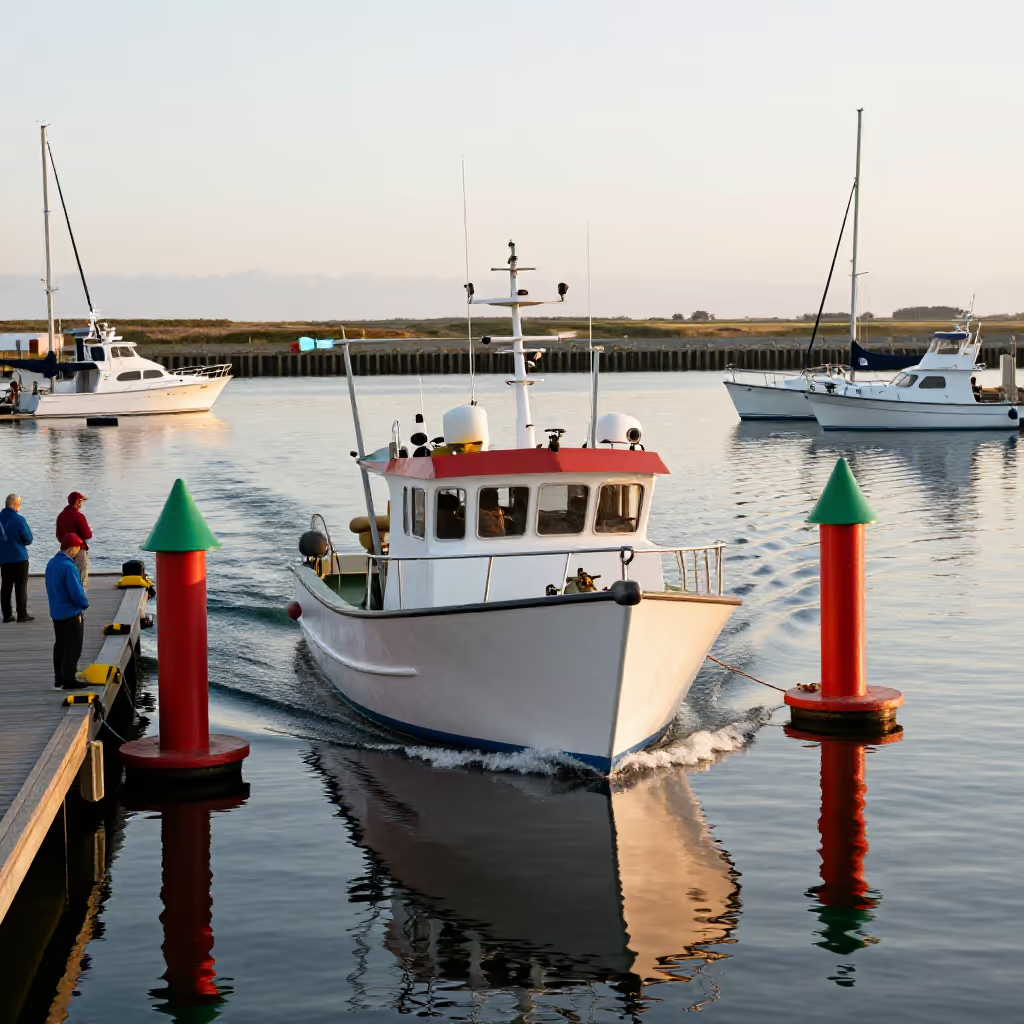
einlaufen
to enter
Refers to ships or boats entering a harbor or bay.
EXAMPLE
Das große Kreuzfahrtschiff wird morgen früh in den Hafen einlaufen.
The large cruise ship will enter the harbor early tomorrow morning.
to enter / arrive / shrink
Loading your saved state.
to enter
Refers to ships or boats entering a harbor or bay.
Das große Kreuzfahrtschiff wird morgen früh in den Hafen einlaufen.
The large cruise ship will enter the harbor early tomorrow morning.
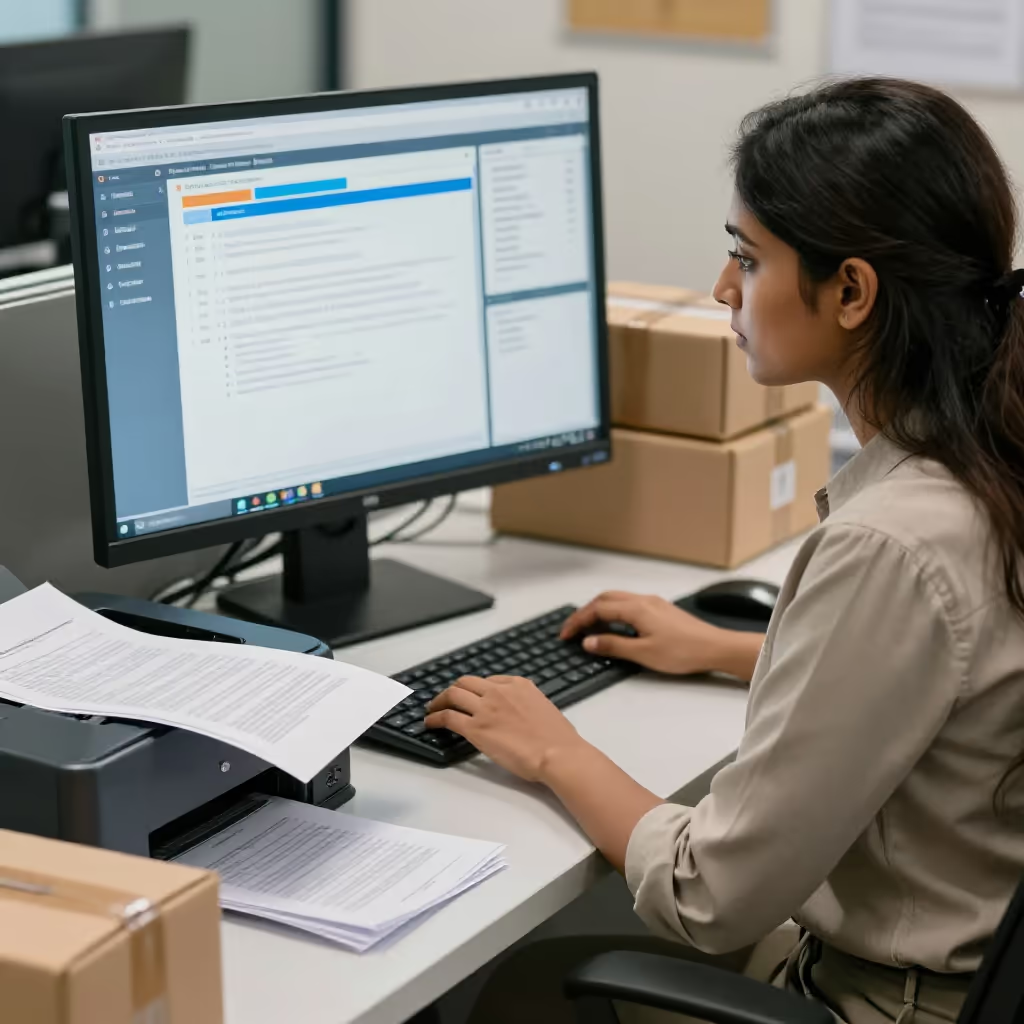
to arrive
Describes the arrival or receipt of news, reports, orders, or payments.
Die ersten Spenden für das Projekt sind bereits eingelaufen.
The first donations for the project have already arrived.
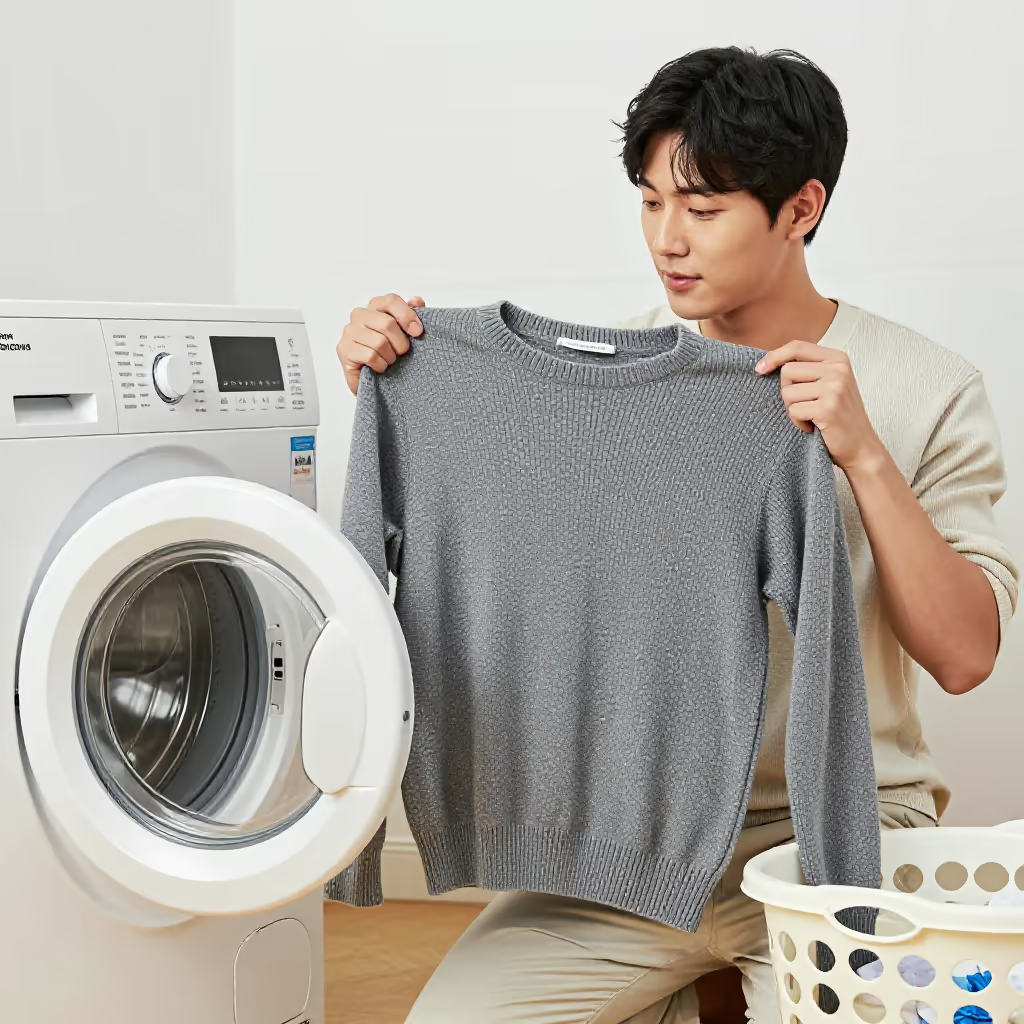
to shrink
Describes textiles, especially clothing, shrinking because they were washed at too high a temperature.
Der neue Wollpullover ist mir beim Waschen leider eingelaufen.
Unfortunately, my new wool sweater shrank in the wash.
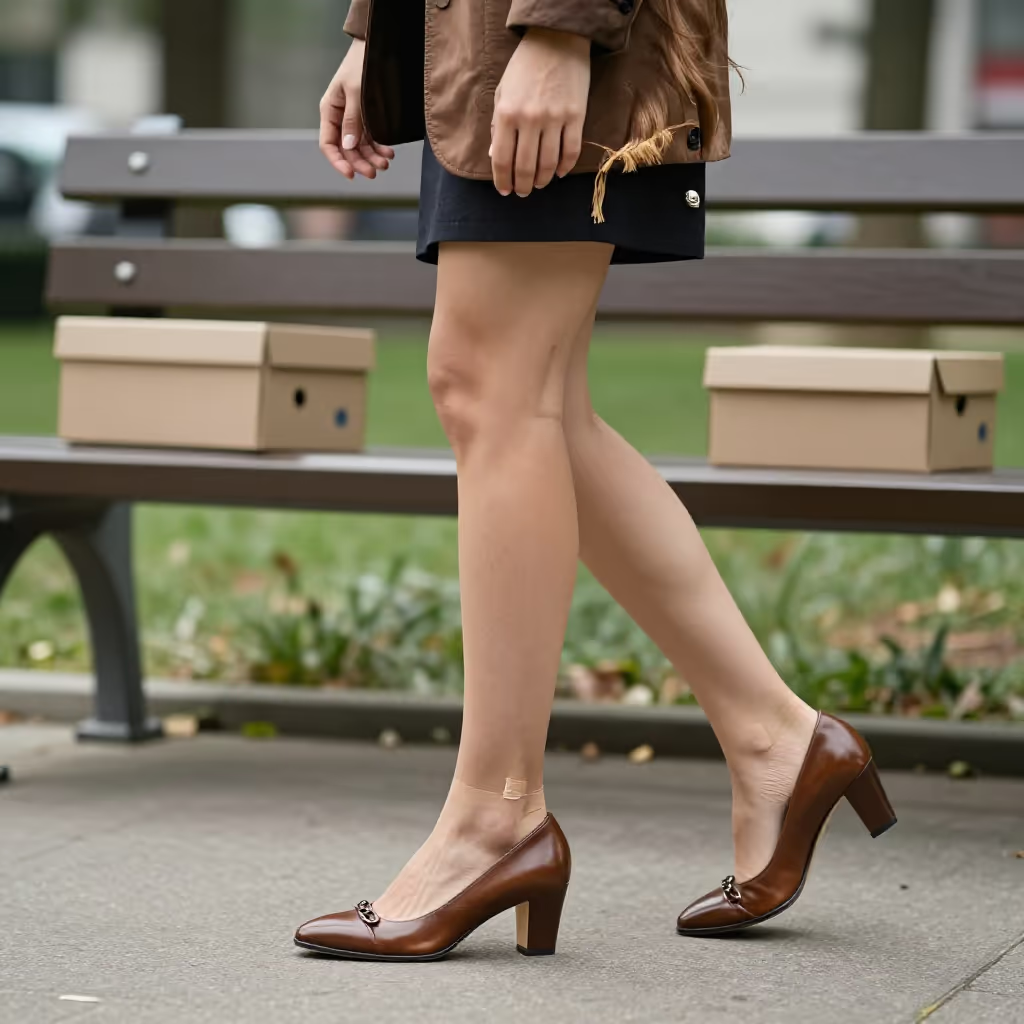
to break in shoes
To wear new shoes long enough until they become softer and have adapted to the foot, so that they are comfortable.
Vor der großen Wanderung muss ich meine neuen Stiefel erst noch einlaufen.
Before the big hike, I still have to break in my new boots.
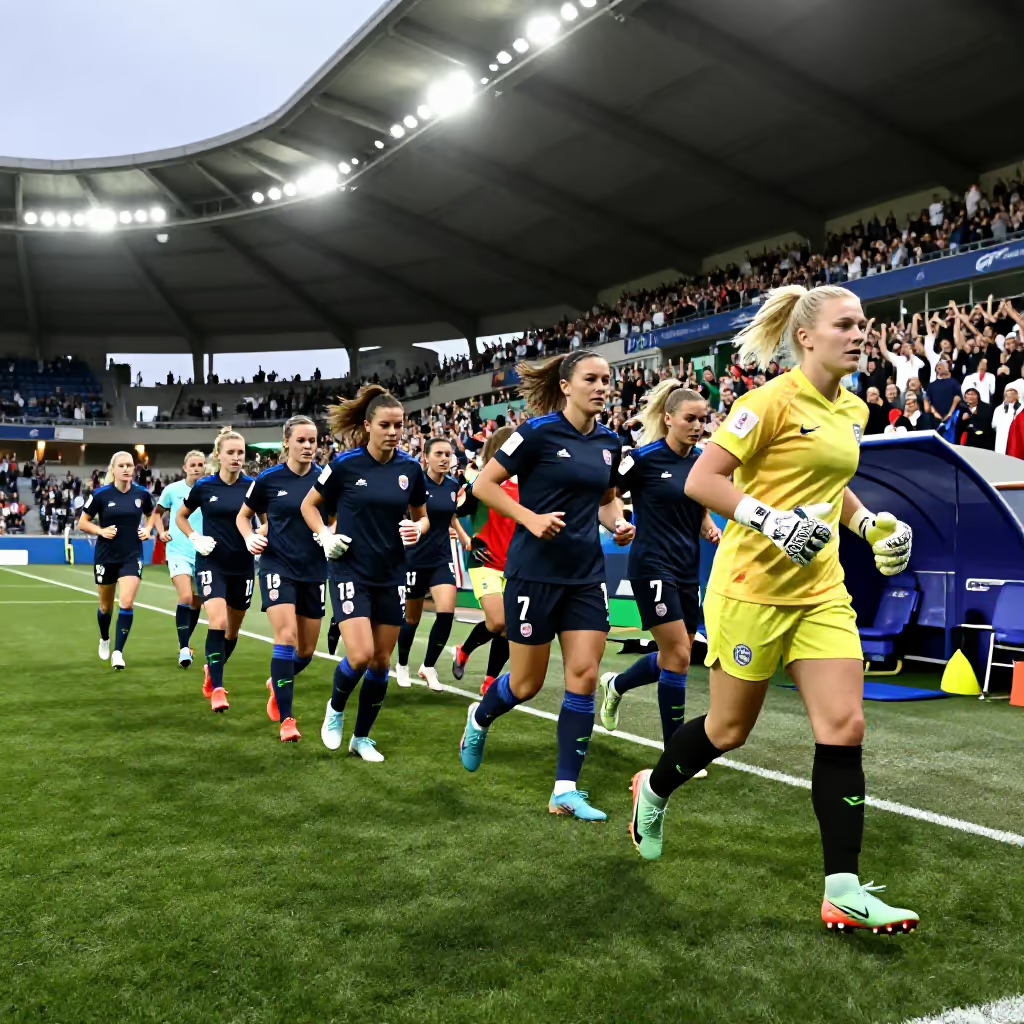
to enter
In sports, the act of athletes or teams entering the playing field or stadium, usually at the beginning of a competition.
Die Spieler liefen unter dem Jubel der Fans ins Stadion ein.
The players entered the stadium to the cheers of the fans.
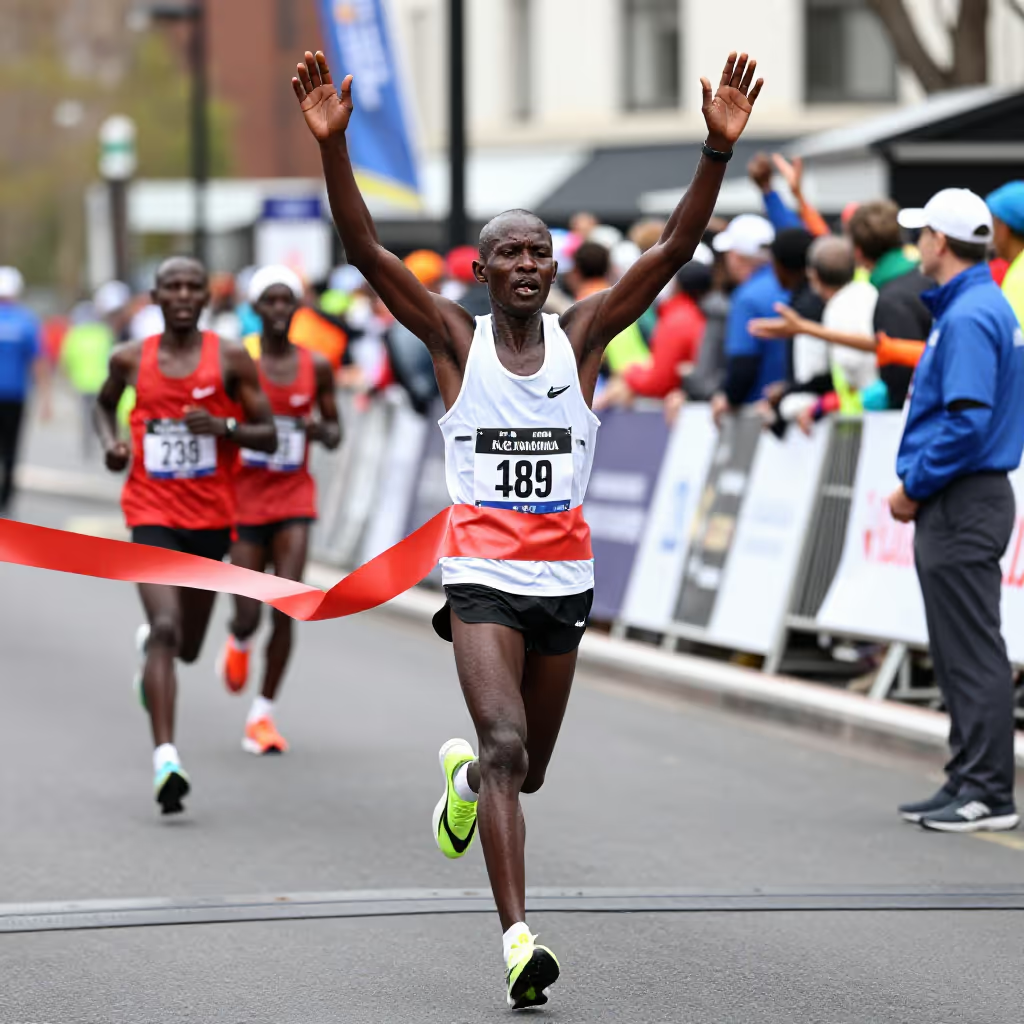
to finish
In a race, to cross the finish line; to reach the finish.
Der Marathonläufer ist nach nur drei Stunden ins Ziel eingelaufen.
The marathon runner finished after only three hours.
'Einlaufen' (to enter / arrive / shrink) is a separable verb. The prefix 'ein-' comes at the end in a main clause. In subordinate clauses and in the infinitive with 'zu', the verb stays together.
Die Flotte läuft in den sicheren Hafen ein.
The fleet enters the safe harbor.
Since 'einlaufen' (to enter / arrive / shrink) describes movement or a change of state in all of its meanings, the perfect tense is always formed with the auxiliary verb 'sein' (to be).
Die E-Mail mit der Bestätigung ist soeben eingelaufen.
The email with the confirmation has just arrived.
The prefix 'ein-' often suggests movement 'hinein' (into/inward). This applies literally to ships (into the harbor), athletes (into the stadium), and runners (into the finish), but also figuratively to clothing that gets smaller (shrinks inward).
Die Mannschaft ist pünktlich zum Anpfiff eingelaufen.
The team entered right on time for kickoff.
When the subject of the sentence is something abstract, 'einlaufen' usually means 'ankommen' (to arrive) or 'eingehen' (to come in / be received). Typical subjects are messages, orders, payments, applications, or complaints.
Bis zum Fristende sind über hundert Bewerbungen eingelaufen.
By the deadline, more than one hundred applications had arrived.
When clothing shrinks, the person this happens to can be in the dative. This is a very typical construction in German.
Die neue Jeans ist mir leider beim ersten Waschen eingelaufen.
Unfortunately, the new jeans shrank on me the first time I washed them.
In the meaning 'to make shoes more comfortable', 'einlaufen' is used as a transitive verb with an accusative object. The fixed expression is '(die) Schuhe einlaufen' (to break in shoes).
Ich trage die neuen Schuhe zu Hause, um sie für die Party einzulaufen.
I wear the new shoes at home to break them in for the party.
to reach
In a race, erreichen and einlaufen can both express successfully arriving at the finish. Erreichen describes this arrival neutrally; einlaufen is associated with sports and is typically used in the fixed expression ins Ziel einlaufen.

Die Läuferin läuft nach drei Stunden ins Ziel ein.
The runner crosses the finish line after three hours.
Die Läuferin erreicht nach drei Stunden das Ziel.
The runner reaches the finish after three hours.