

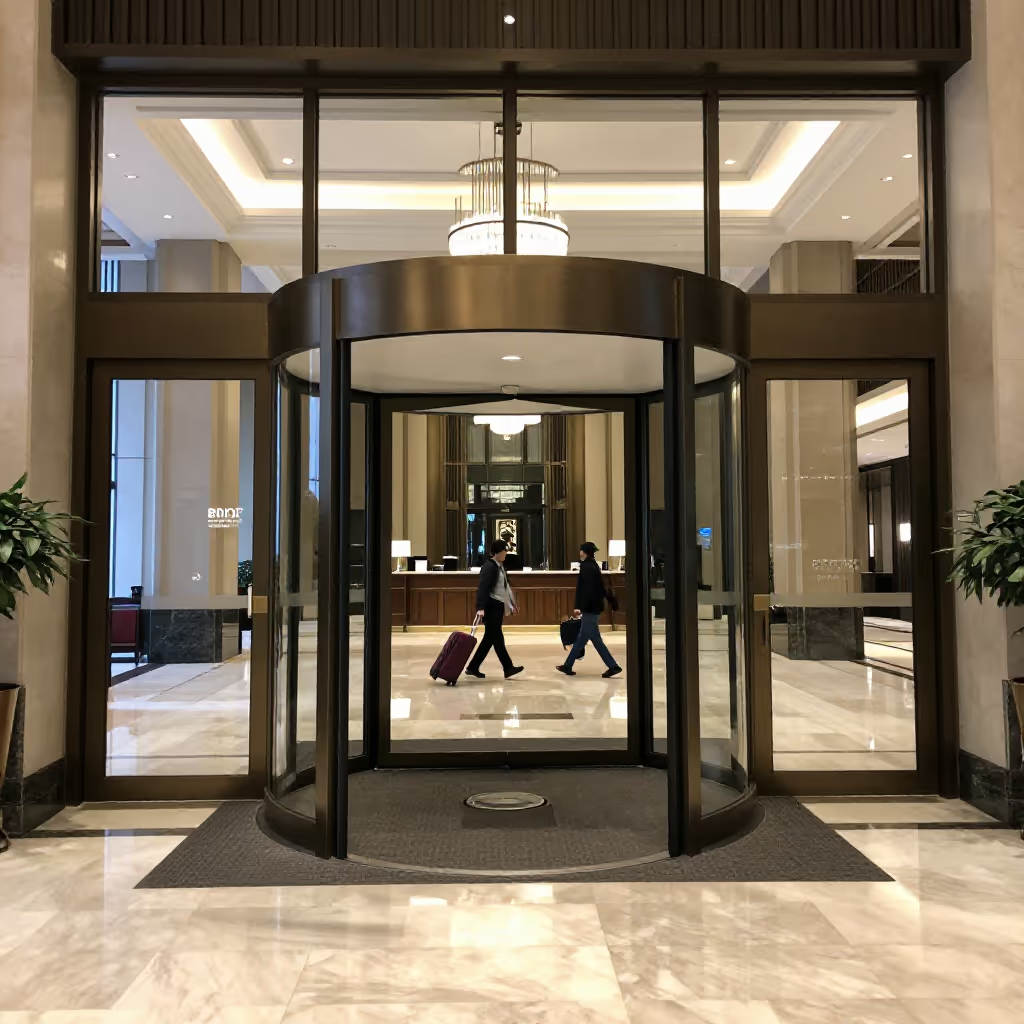
A large room or hall located directly behind the main entrance of a building, especially in public buildings such as hotels, theaters, or train stations.
example
Wir treffen uns um 18 Uhr in der Eingangshalle des Kinos.
We'll meet at 6 p.m. in the entrance hall of the cinema.
Usage tips
Word composition
This word is made up of 'Eingang' (entrance) and 'Halle' (hall), connected by an 's'. So it literally describes the hall located at the entrance of a building.
EXAMPLE
Die große Eingangshalle des Museums war sehr beeindruckend.
The large entrance hall of the museum was very impressive.
Correct preposition
To express movement, you use the accusative: 'in die Eingangshalle gehen' (to go into the entrance hall). To describe a location, you use the dative: 'in der Eingangshalle warten' (to wait in the entrance hall).
EXAMPLE
Bitte kommen Sie direkt in die Eingangshalle.
Please come directly into the entrance hall.
Typical places
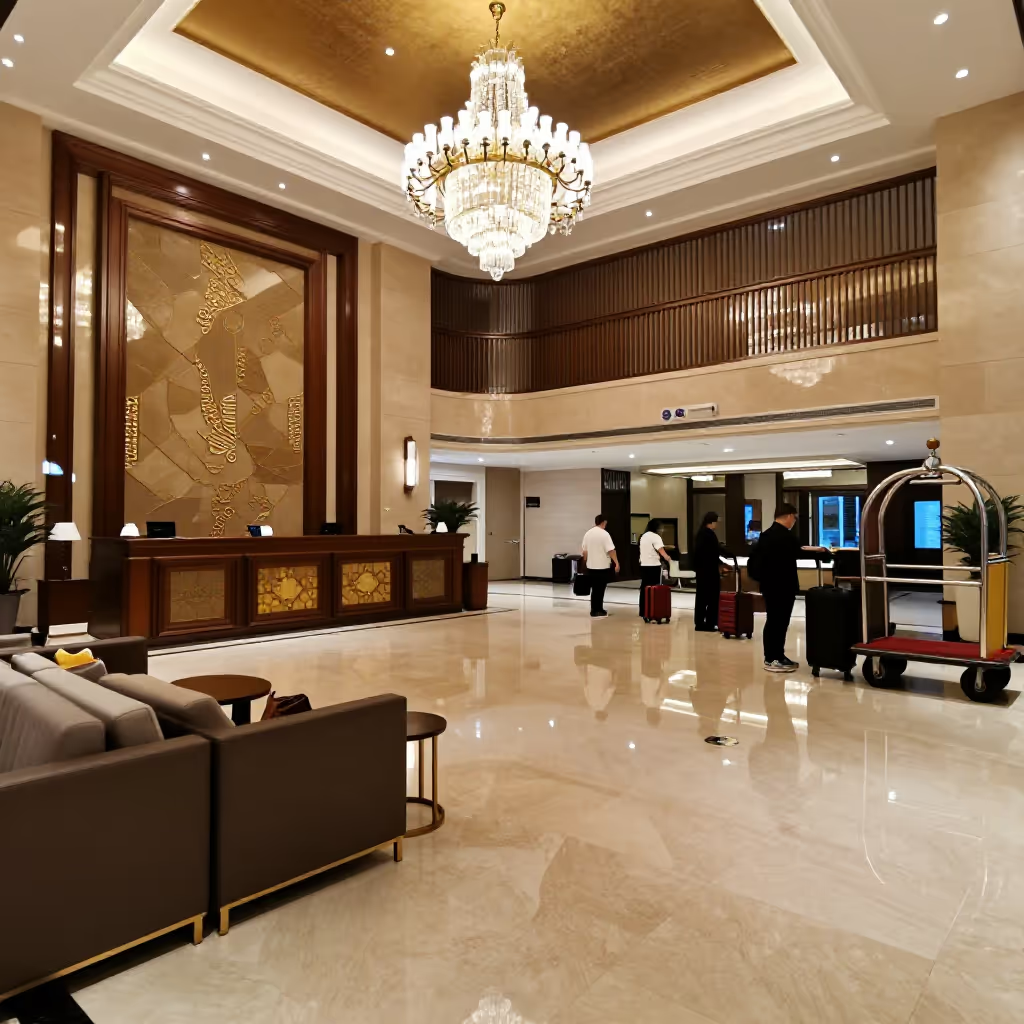
An 'Eingangshalle' (entrance hall) is typically found in large, public, or representative buildings such as a hotel, train station, airport, or theater.
EXAMPLE
Die Reisegruppe traf sich in der Eingangshalle des Hotels.
The tour group met in the entrance hall of the hotel.
Compare with
synonym · confusable
Eingangshalle vs Halle
hall
'die Halle' and 'die Eingangshalle' can mean almost the same thing when referring to the entrance area of a building. 'Eingangshalle' is more precise because the word directly says that the room is behind the main entrance. In this context, 'Halle' can also be understood this way, but it is more general and can also refer to completely different large rooms. That is why learners may confuse the words. If you want to avoid misunderstandings, use 'Eingangshalle' when you mean the entrance area.
Eingangshalle
Die Besucher treffen sich direkt in der Eingangshalle des Bahnhofs.
The visitors meet directly in the entrance hall of the train station.
Halle
Beim Termin wartet die Klasse in der Halle des Museums.
For the appointment, the class waits in the museum lobby.