

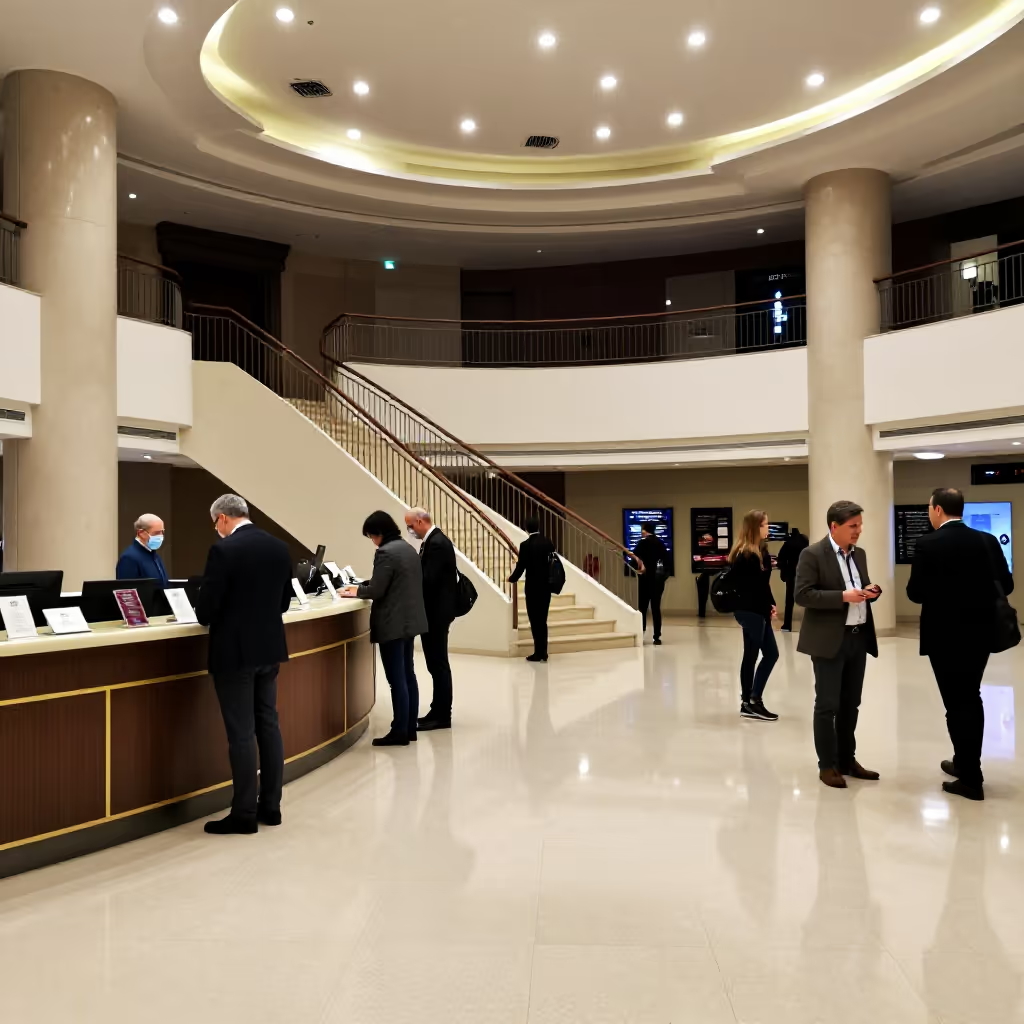
The large entrance hall and waiting/lounge area in public buildings such as theaters, cinemas, hotels, or concert halls.
example
Wir treffen uns in der Pause auf ein Getränk im Foyer des Theaters.
During the intermission, we'll meet for a drink in the theater foyer.
Usage tips
Origin and pronunciation
'Foyer' is a word from French. That is why it is also pronounced in the French way, and the spelling with '-oyer' is retained.
EXAMPLE
Das Foyer des neuen Museums ist sehr modern gestaltet.
The foyer of the new museum has a very modern design.
Typical context
A foyer is typically found in public buildings used for culture or events. These include, for example, theaters, cinemas, opera houses, concert halls, and large hotels.
EXAMPLE
In der Pause trafen sich alle Zuschauer im Foyer auf ein Getränk.
During the intermission, all the audience members met in the foyer for a drink.
Correct preposition
To describe a location in the foyer, use 'im Foyer' (in the foyer, dative). To express movement toward it, use 'ins Foyer' (into the foyer, accusative).
EXAMPLE
Warten wir im Foyer auf die anderen?
Shall we wait in the foyer for the others?
Compare with
near_synonym · confusable
Foyer vs Halle
hall
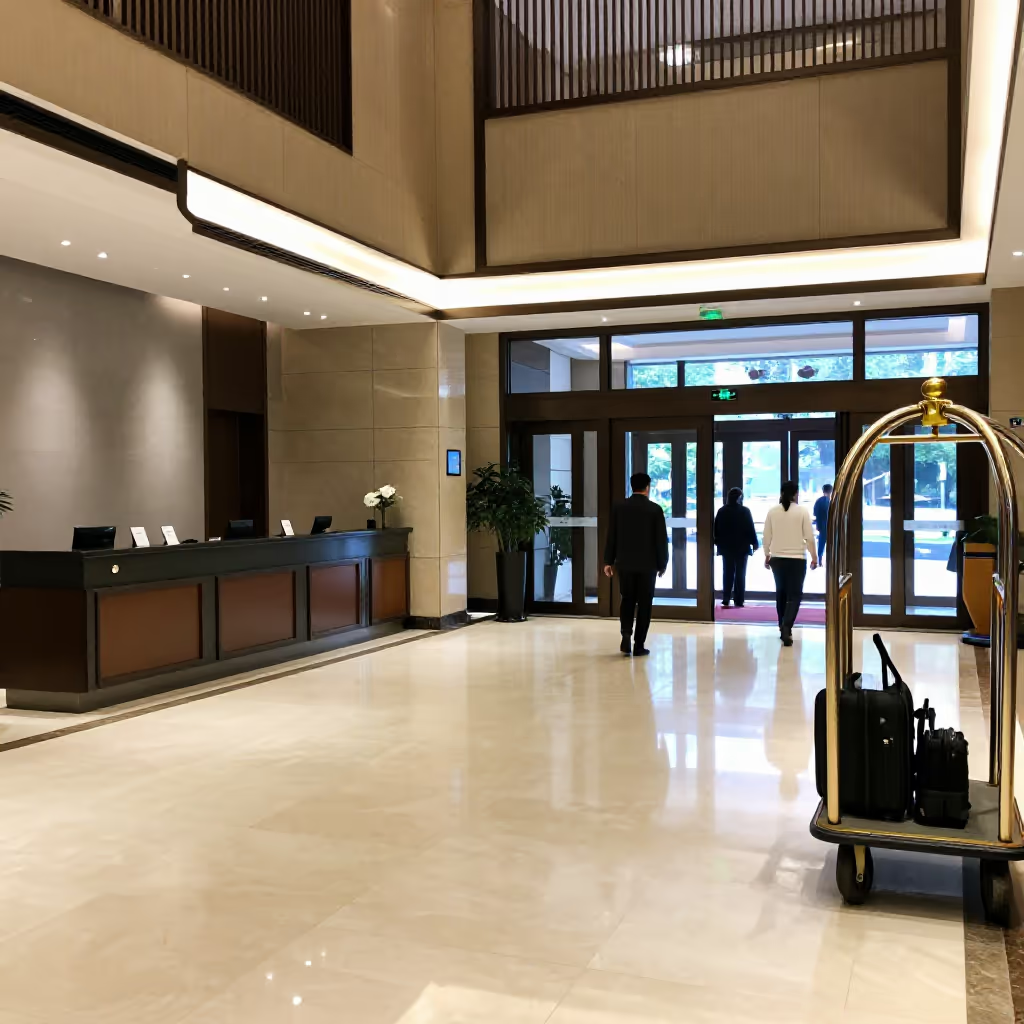
'die Halle' and 'das Foyer' can both refer to the entrance area of a public building. 'Foyer' is used especially for theaters, cinemas, concert halls, or hotels, often for the space where people wait before or after an event. 'Halle' is more general and can also simply mean a large entrance room. The words can be confused because both rooms may be located right by the entrance. When talking about a theater or concert, 'Foyer' often sounds more natural and more precise.
Foyer
Vor dem Film warten wir im Foyer des Kinos auf die anderen.
Before the film, we wait for the others in the cinema foyer.
Halle
In der Halle des Krankenhauses gibt es einen Informationsschalter.
In the hospital lobby, there is an information desk.