

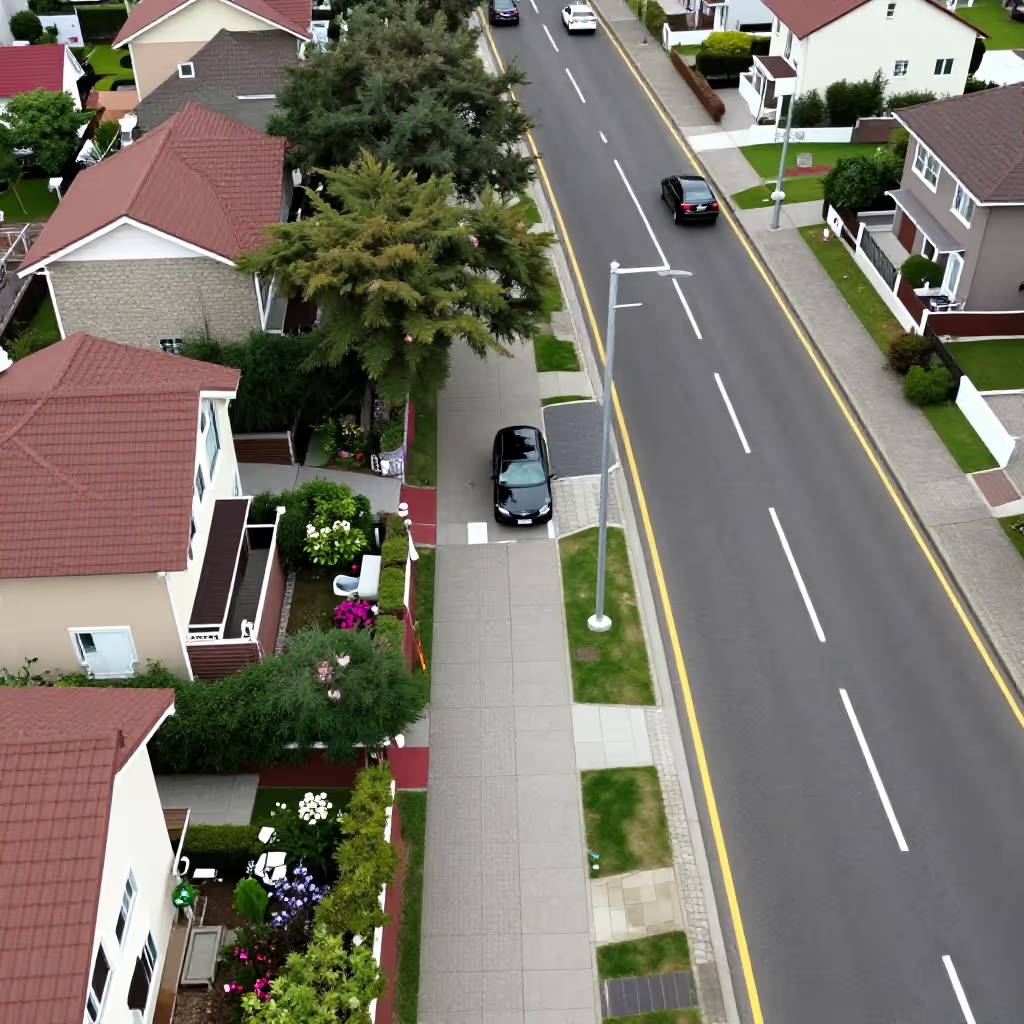
The place where a street or path joins another, usually larger, road. In a figurative sense, also the place where a river flows into another river or body of water.
example
An der nächsten Einmündung müssen Sie links abbiegen.
At the next junction, you need to turn left.
Usage tips
Word structure
The noun 'die Einmündung' (junction) is derived from the verb 'einmünden' (to flow into / to join). The verb means 'to flow into something' or 'to empty into something,' which explains the meaning of the place where things come together.
EXAMPLE
Der kleine Bach mündet hier in den großen Fluss ein.
The small stream flows into the large river here.
Typical prepositions
In the context of roads, the preposition 'an' with the dative is often used to describe position. The typical phrase is 'an der Einmündung' (at the junction).
EXAMPLE
An der Einmündung steht eine Ampel.
There is a traffic light at the junction.
Two main contexts
The word is mainly used in two areas: in road traffic for the meeting of roads, and in geography for the confluence of rivers or bodies of water.
EXAMPLE
Vorsicht, die Einmündung ist schwer einsehbar.
Careful, the junction is hard to see into.
Compare with
near_synonym · confusable
Einmündung vs Kreuzung
intersection / crossing
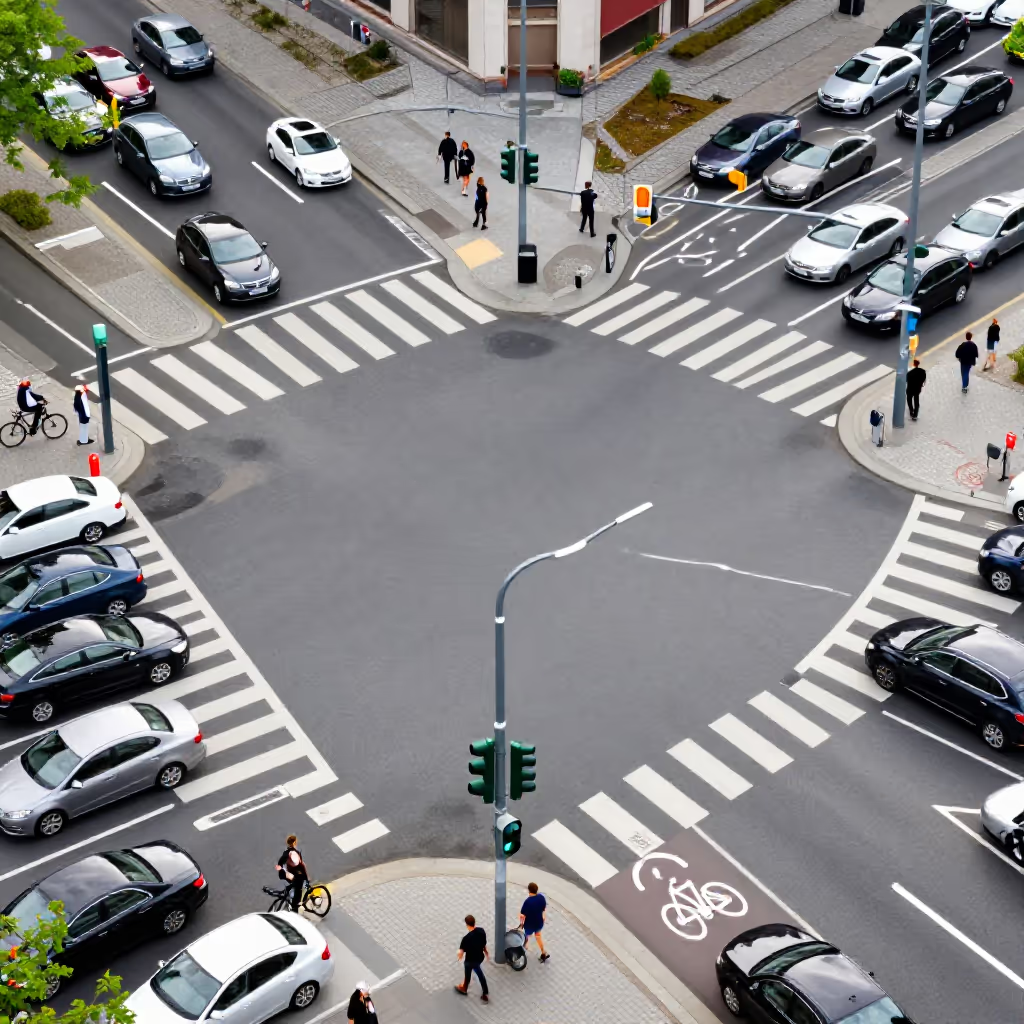
'die Kreuzung' and 'die Einmündung' both describe places in traffic where roads come together. A 'Kreuzung' is typically a point where roads intersect and continue in several directions. An 'Einmündung' is the place where one road joins another road, often like a T. Learners may confuse the words because both can look similar. If one road only leads into another, 'Einmündung' is more precise; if roads really cross, 'Kreuzung' is more natural.
Einmündung
Kurz vor der Einmündung müssen die Autos langsamer fahren.
Shortly before the junction, the cars have to slow down.
Kreuzung
Die Ampel an der großen Kreuzung ist seit heute kaputt.
The traffic light at the large intersection has been broken since today.