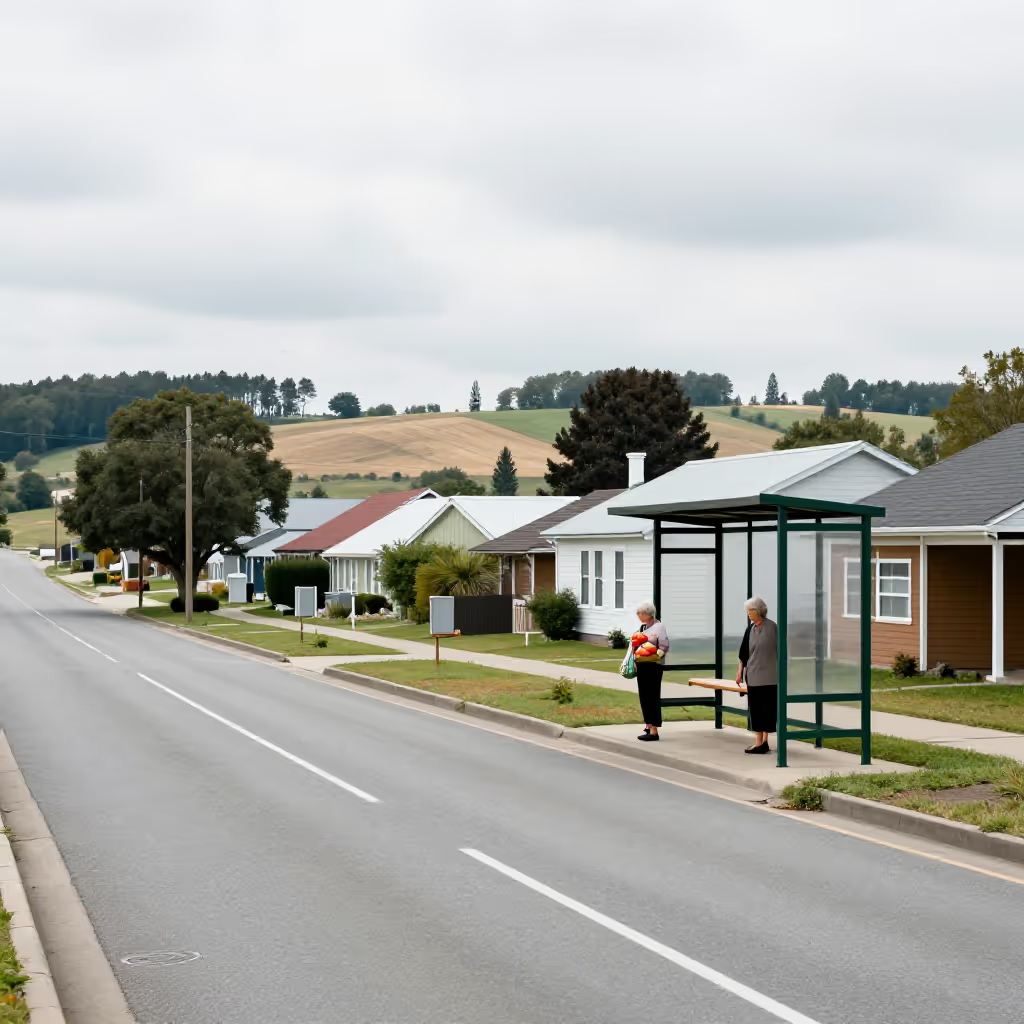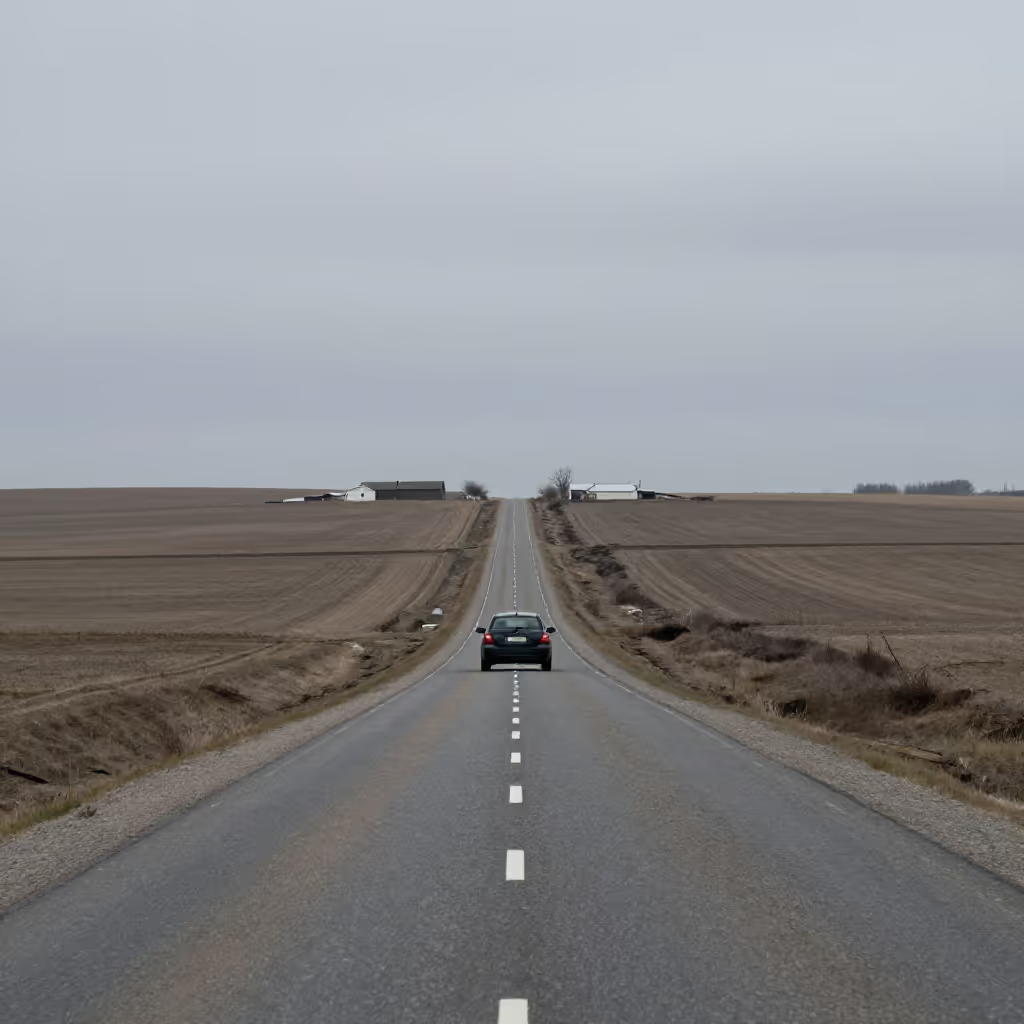
Colloquial, often disparaging term for a remote, sparsely populated, and monotonous area; the flat countryside far away from urban centers.
example
Wir mussten bis in die tiefste Pampa fahren, um ihn zu besuchen.
We had to drive all the way out to the middle of nowhere to visit him.
Usage tips
Origin of the word
The word 'Pampa' comes from the South American Quechua language and means 'plain' or 'flat land'. The colloquial German meaning for a remote area is a figurative transfer of this geographical term.
EXAMPLE
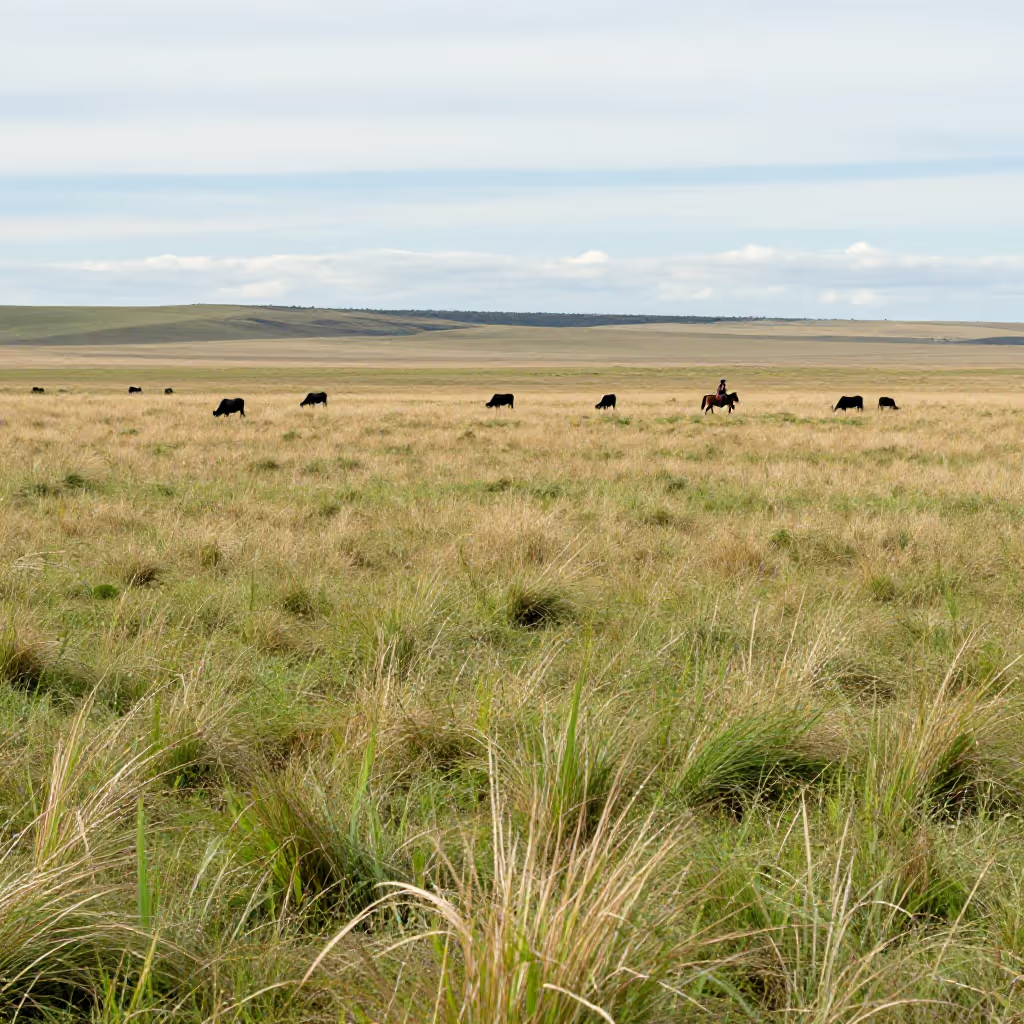
Die Weite der Pampa in Argentinien ist beeindruckend.
The vastness of the Pampas in Argentina is impressive.
Context clue
You can often recognize the geographical meaning from additions like 'argentinische Pampa' (Argentine Pampas) or from words like 'Gauchos' (gauchos) and 'Südamerika' (South America). The colloquial meaning is usually used without any geographical reference and simply describes a place that is far away from everything.
EXAMPLE
Er wohnt irgendwo in der Pampa, ohne direkten Anschluss an öffentliche Verkehrsmittel.
He lives somewhere out in the boonies, with no direct connection to public transportation.
Register and use
This meaning is purely colloquial and is often meant in a slightly disparaging or humorous way. It is almost always used with the definite article and the preposition 'in', so 'in der Pampa' (out in the boonies).
EXAMPLE
Sein neues Haus liegt mitten in der Pampa, der nächste Supermarkt ist 20 Kilometer entfernt.
His new house is right in the middle of nowhere; the nearest supermarket is 20 kilometers away.
Fixed expression
A very common fixed expression is 'in der tiefsten Pampa' (way out in the middle of nowhere). This reinforces the idea that a place is extremely remote and rural.
EXAMPLE
Ich kann nicht glauben, dass das Festival in der tiefsten Pampa stattfindet.
I can't believe the festival is taking place way out in the middle of nowhere.
Compare with
near_synonym · confusable
Pampa vs Provinz
province
'Provinz' and 'Pampa' can both mean an area that is far away from big cities. 'Provinz' is the more neutral or mildly judgmental expression for this; it describes areas outside the capital and major centers. 'Pampa' is colloquial and often derogatory. It refers to a very remote, boring, or sparsely populated area. In addition, 'die Pampa' is also a real landscape in South America. The words can be confused because both have to do with the countryside and distance from the city. In factual texts, 'Provinz' is usually more appropriate; in informal, critical language, 'Pampa' is more likely.
Pampa
Ohne Auto kommt man in dieser Pampa kaum zum nächsten Bahnhof.
Without a car, it is hard to get from these boonies to the nearest train station.
Provinz
Nach dem Studium zog Lena aus der Großstadt in die Provinz.
After university, Lena moved from the big city to the provinces.