

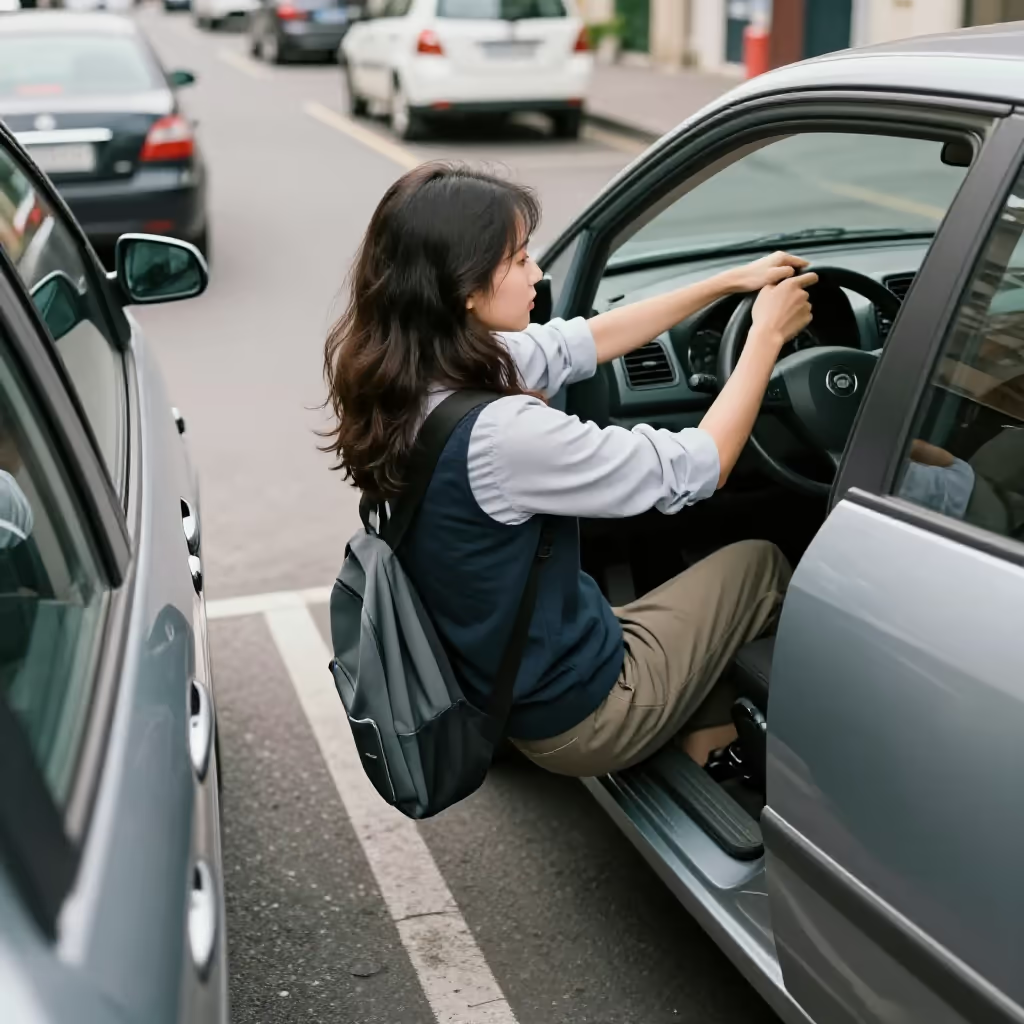
einparken
to park
To maneuver a vehicle, especially a car, into a parking space or parking spot.
EXAMPLE
Er hat Schwierigkeiten, rückwärts in die enge Lücke einzuparken.
He has trouble parking backwards into the tight space.
to park
Loading your saved state.
to park
To maneuver a vehicle, especially a car, into a parking space or parking spot.
Er hat Schwierigkeiten, rückwärts in die enge Lücke einzuparken.
He has trouble parking backwards into the tight space.
'Einparken' (to park) is a separable verb. The prefix 'ein-' emphasizes movement into an enclosed space — in this case, the parking space. In a main clause, the prefix goes at the end.
Ich parke schnell am Straßenrand ein.
I'll quickly park by the side of the road.
As a separable verb, 'einparken' (to park) changes its form depending on the sentence type. In a main clause it separates, in a subordinate clause it stays together, and in the infinitive with 'zu', 'zu' goes in the middle.
Sie parkt ihr Auto ein.
She parks her car.
'Einparken' (to park) is often combined with adverbs that describe the direction or type of maneuver. Common phrases are 'rückwärts einparken' (to reverse park), 'vorwärts einparken' (to park forwards), and 'seitwärts einparken' (to parallel park / park sideways).
In der Fahrschule lernt man, rückwärts seitwärts einzuparken.
In driving school, you learn to parallel park in reverse.
to park
Both words can refer to leaving a car in a parking space. „Einparken“ primarily emphasizes maneuvering into the parking space, while „parken“ refers to the entire process or the state afterward. „Einparken“ is appropriate for the movement into the space, while „parken“ is used for leaving the car there.
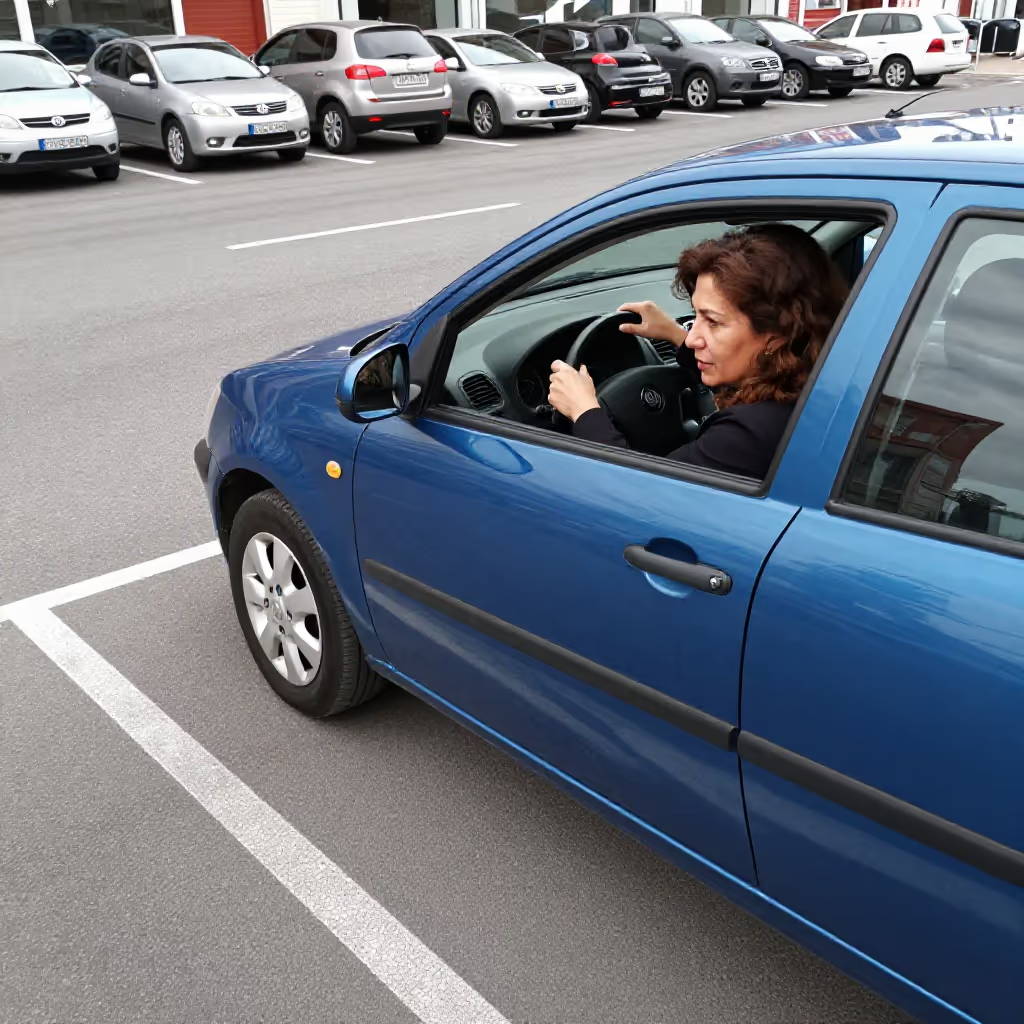
Ich musste langsam einparken, weil die Parklücke sehr eng war.
I had to park slowly because the parking space was very narrow.
Nach dem Einparken parkte ich das Auto den ganzen Nachmittag auf dem Parkplatz.
After parking the car, I left it in the parking lot all afternoon.