

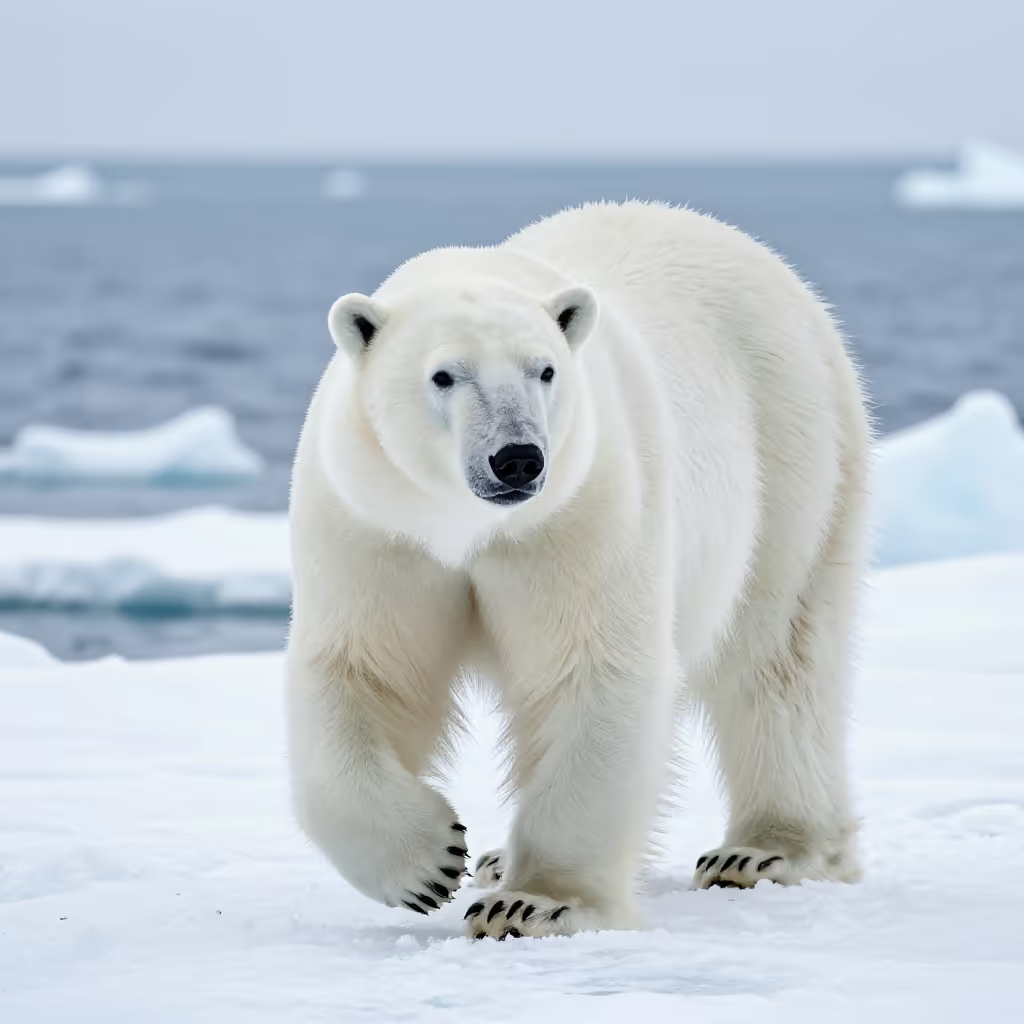
der Eisbär
polar bear
A large, carnivorous species of bear that lives in the Arctic regions and has characteristic white fur.
Im Zoo konnten wir die Eisbären beim Schwimmen beobachten.
At the zoo, we were able to watch the polar bears swimming.
polar bear
der Eisbär, die Eisbären
Loading your saved state.

polar bear
A large, carnivorous species of bear that lives in the Arctic regions and has characteristic white fur.
Im Zoo konnten wir die Eisbären beim Schwimmen beobachten.
At the zoo, we were able to watch the polar bears swimming.
| gender | masculine der |
|---|---|
| plural | die Eisbären |
| genitive | des Eisbären |
| singular | plural | |
|---|---|---|
| nominative | der Eisbär | die Eisbären |
| accusative | den Eisbären | die Eisbären |
| dative | dem Eisbären | den Eisbären |
| genitive | des Eisbären | der Eisbären |
The article changes with the case; it is shown in colour.
The word 'Eisbär' (polar bear) is a compound noun made from 'das Eis' (ice) and 'der Bär' (bear). So it literally describes a bear that lives in the ice.
Der Eisbär ist perfekt an das Leben in der Kälte angepasst.
The polar bear is perfectly adapted to life in the cold.
Common word combinations describe the habitat and characteristics of the polar bear. These include 'in der Arktis leben' (to live in the Arctic), 'Robben jagen' (to hunt seals), and 'ein weißes Fell haben' (to have white fur).
Eisbären leben in den Polarregionen der Nordhalbkugel.
Polar bears live in the polar regions of the Northern Hemisphere.
The polar bear has become an important symbol of climate change. Its melting habitat is often cited as an example of the consequences of global warming.
Viele Organisationen nutzen das Bild des Eisbären, um auf den Klimawandel aufmerksam zu machen.
Many organizations use the image of the polar bear to draw attention to climate change.