


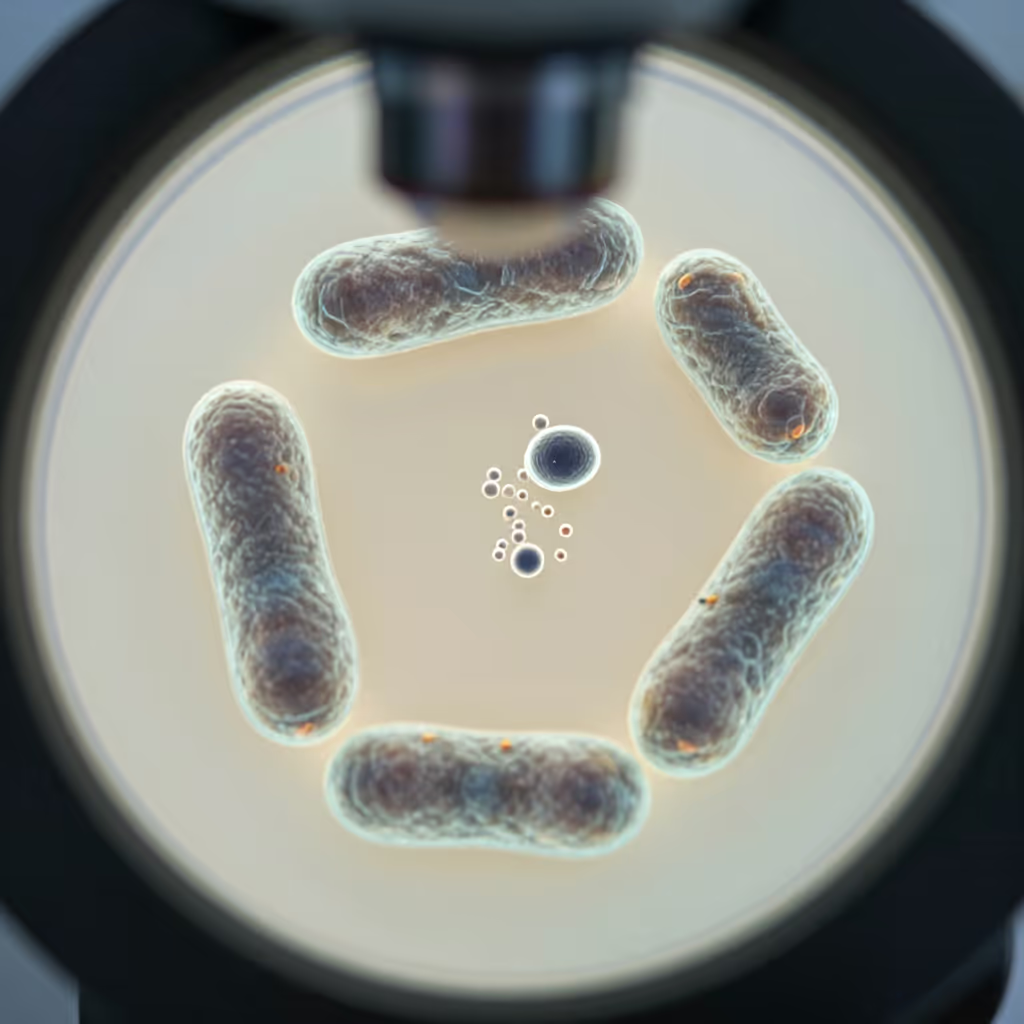
A microorganism, such as a bacterium, virus, or fungus, that can cause a disease. It is the medical technical term for a disease-causing agent.
example
Das Labor untersucht die Probe auf gefährliche Erreger.
The lab is testing the sample for dangerous pathogens.
Usage tips
Word family
'Der Erreger' (pathogen) is derived from the verb 'erregen', which here means 'verursachen' (to cause). So the pathogen is literally 'der Verursacher' (the cause) of a disease. The ending '-er' indicates the acting thing or person.
EXAMPLE
Das Virus ist der Erreger der Grippe.
The virus is the pathogen that causes the flu.
Technical context
This word belongs to the technical language of medicine and biology. You often find it in medical reports, scientific texts, or news about epidemics.
EXAMPLE
Im Krankenhaus wird nach dem genauen Erreger der Infektion gesucht.
In the hospital, they are looking for the exact pathogen causing the infection.
Typical collocations
Common combinations include 'Krankheitserreger' (pathogen) as a compound word, as well as verbs like 'einen Erreger nachweisen' (to detect a pathogen), 'übertragen' (to transmit), or 'bekämpfen' (to fight).
EXAMPLE
Mücken können gefährliche Krankheitserreger übertragen.
Mosquitoes can transmit dangerous pathogens.
Compare with
near_synonym · confusable
Erreger vs Virus
virus
'Virus' and 'Erreger' can both be used in connection with diseases. 'Virus' names a specific type of pathogen. 'Erreger' is more general and can be a virus, a bacterium, or even a fungus. The word often sounds more medical and is used when the exact type is not yet known or when speaking generally about the cause of a disease. Learners may confuse the words because every disease-causing virus is an 'Erreger'. But not every 'Erreger' is a virus.
Erreger
Im Labor wird geprüft, welcher Erreger die Krankheit ausgelöst hat.
The lab is checking which pathogen caused the disease.
Virus
Gegen dieses Virus gibt es inzwischen eine Impfung.