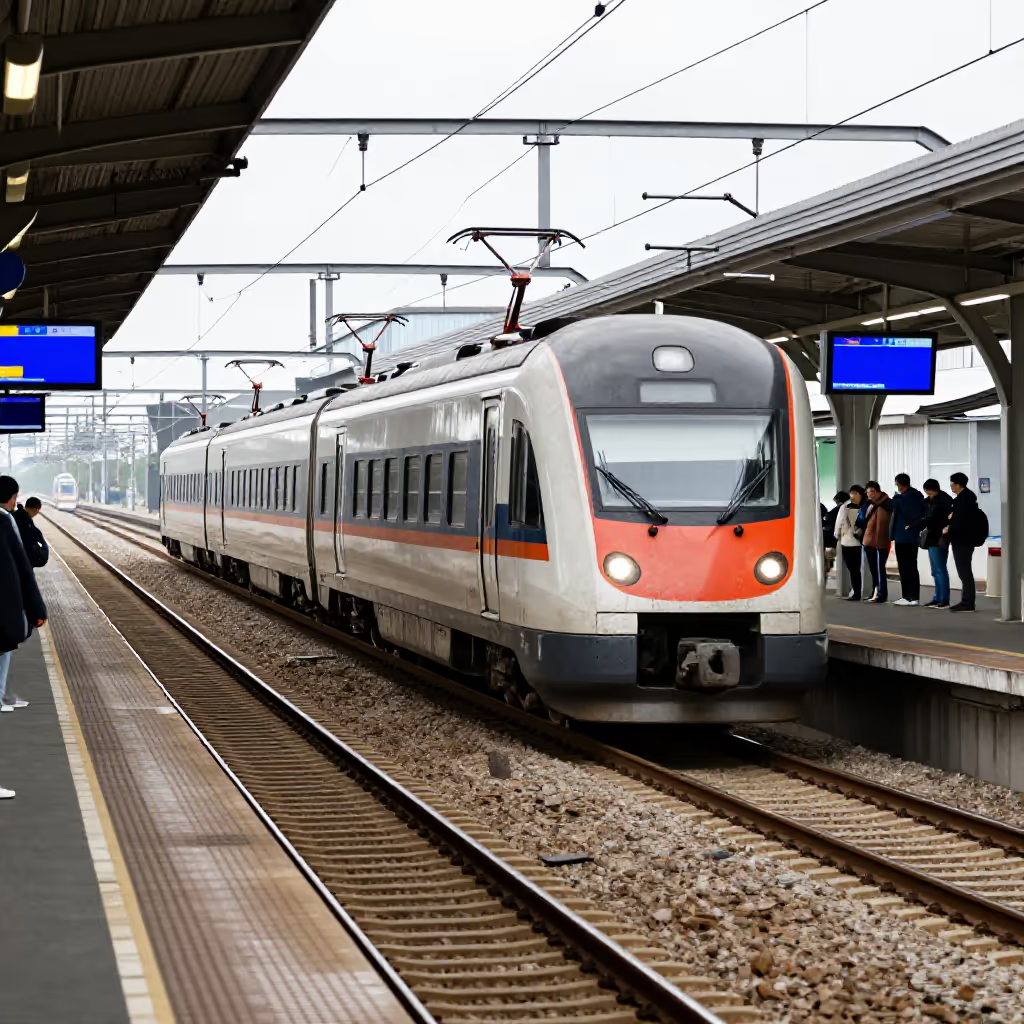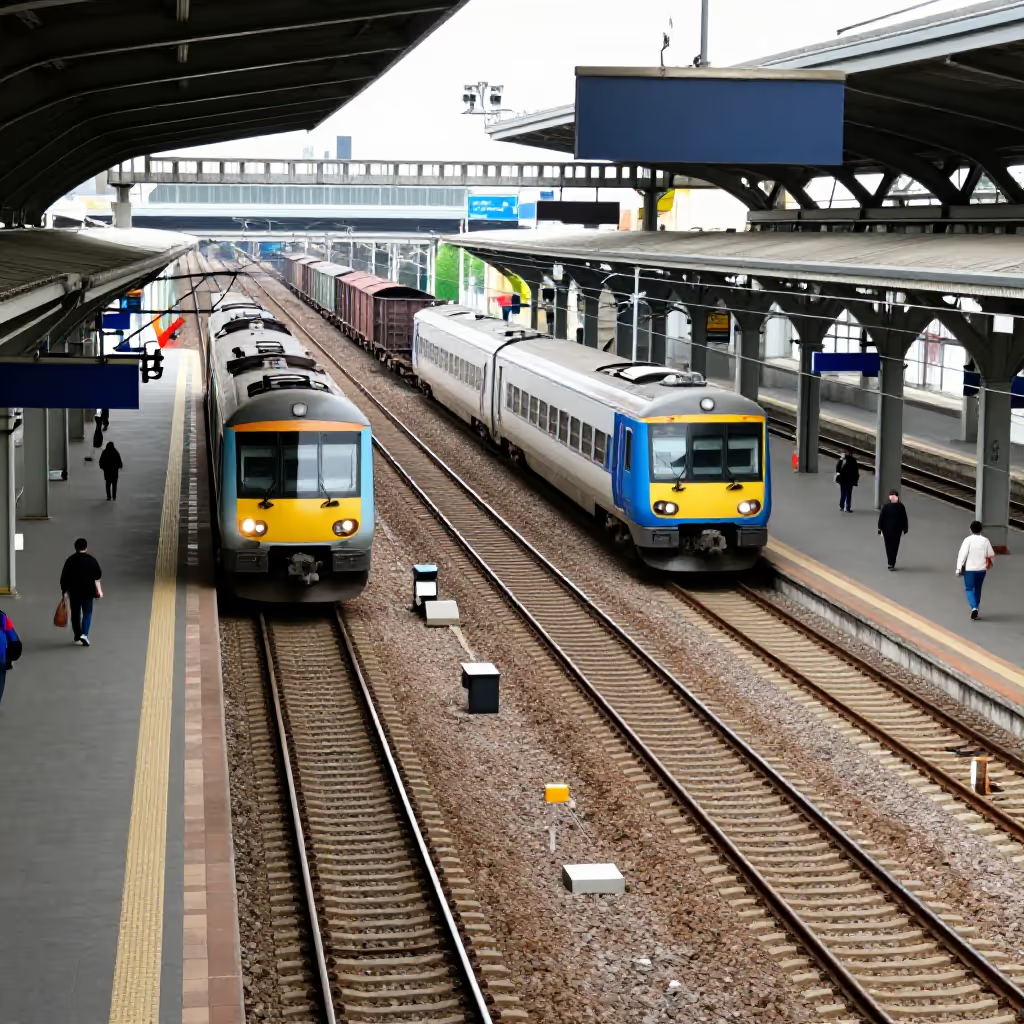
A transportation system that uses trains on rails to carry people and goods.
example
Die Erfindung der Eisenbahn hat die industrielle Revolution maßgeblich beschleunigt.
The invention of the railway significantly accelerated the Industrial Revolution.
Usage tips
Word composition
The word 'Eisenbahn' (railway) is a compound of 'Eisen' (iron) and 'Bahn' (track/railway). It literally describes a 'track made of iron' and refers to the rails on which trains travel.
EXAMPLE
Im 19. Jahrhundert wurde das Eisenbahnnetz in Europa stark ausgebaut.
In the 19th century, the railway network in Europe was greatly expanded.
Typical use
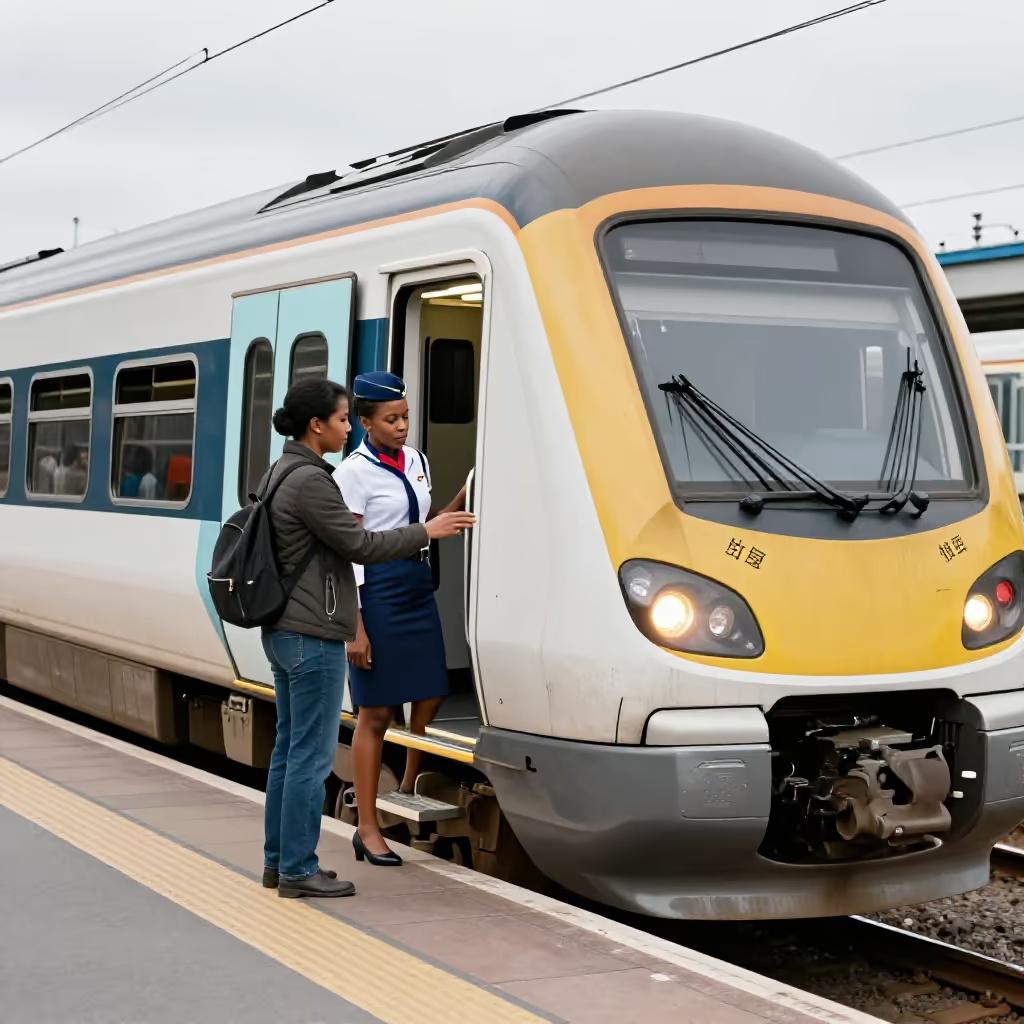
To express that you use this means of transportation, you often use the phrase 'mit der Eisenbahn fahren' (to travel by railway/train) or 'mit der Eisenbahn reisen' (to travel by railway/train).
EXAMPLE
Früher sind die Menschen oft mit der Eisenbahn in den Urlaub gefahren.
In the past, people often traveled by railway when going on vacation.
Register and style
When 'Eisenbahn' (train) means an individual train, it can sound somewhat formal or old-fashioned in some contexts. However, it is still used in timetables or official announcements.
EXAMPLE
Achtung, die Eisenbahn nach Hamburg hat 15 Minuten Verspätung.
Attention, the train to Hamburg is delayed by 15 minutes.
Typical collocations
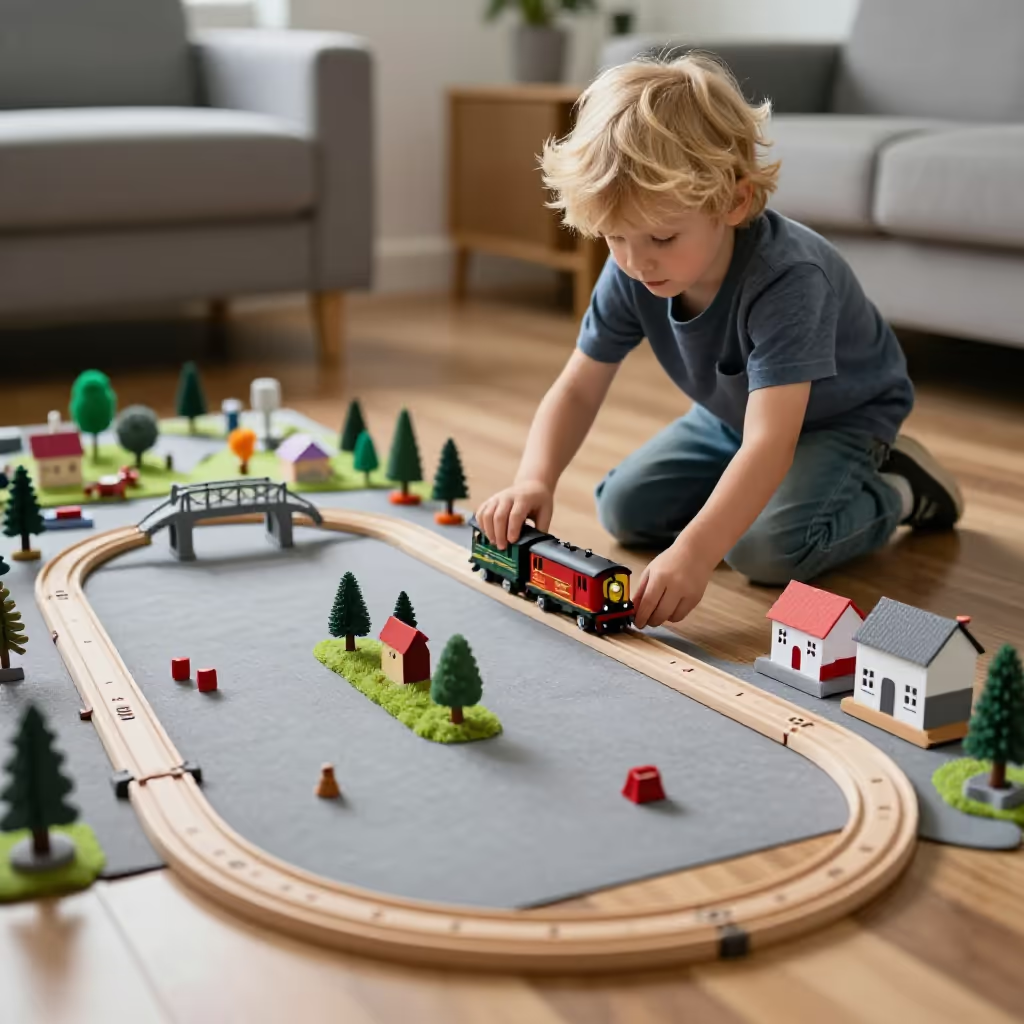
In the context of toys, 'Eisenbahn' (model train) is often used with 'elektrisch' (electric) or as part of the word 'Modelleisenbahn' (model railway). A typical action is 'mit der Eisenbahn spielen' (to play with the model train).
EXAMPLE
Mein Opa hat eine große Modelleisenbahn im Keller aufgebaut.
My grandpa has set up a large model railway in the basement.
Compare with
near_synonym · confusable
Eisenbahn vs Bahn
train / track
'die Bahn' and 'die Eisenbahn' can both refer to transport by trains on rails. 'die Bahn' is shorter and very common in everyday language; it can mean a train, S-Bahn, subway, or also the railway company. 'die Eisenbahn' sounds more precise when you mean the transportation system with trains on rails, but in everyday language it is a little less direct. The words can be confused because both stand for rail transport. If you are simply saying how you travel, 'mit der Bahn' (by train) usually sounds more natural. 'Eisenbahn' works well when you are talking about the system, the history, or sometimes also an individual train.
Eisenbahn
Im Museum lernen die Kinder viel über die Geschichte der Eisenbahn.
At the museum, the children learn a lot about the history of the railway.
Bahn
Nach dem Unterricht fährt sie mit der Bahn nach Hause.