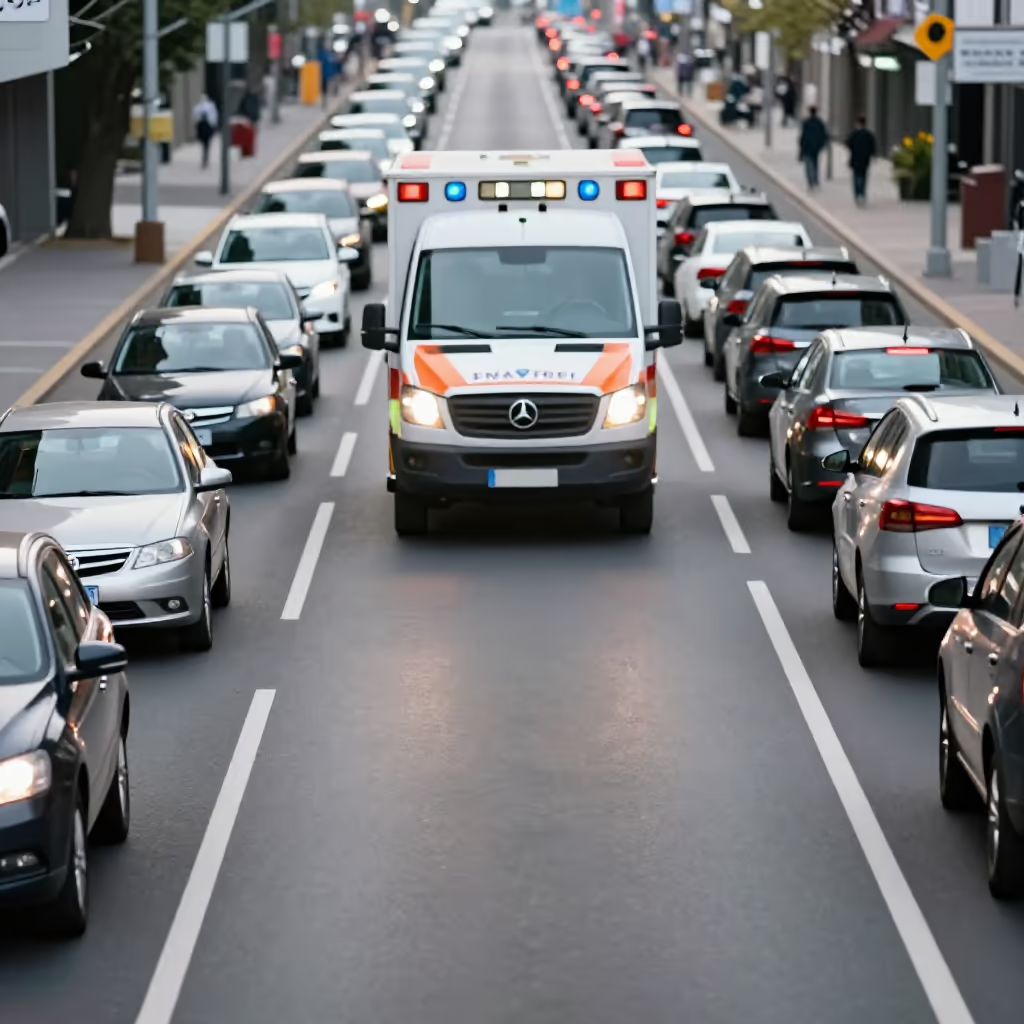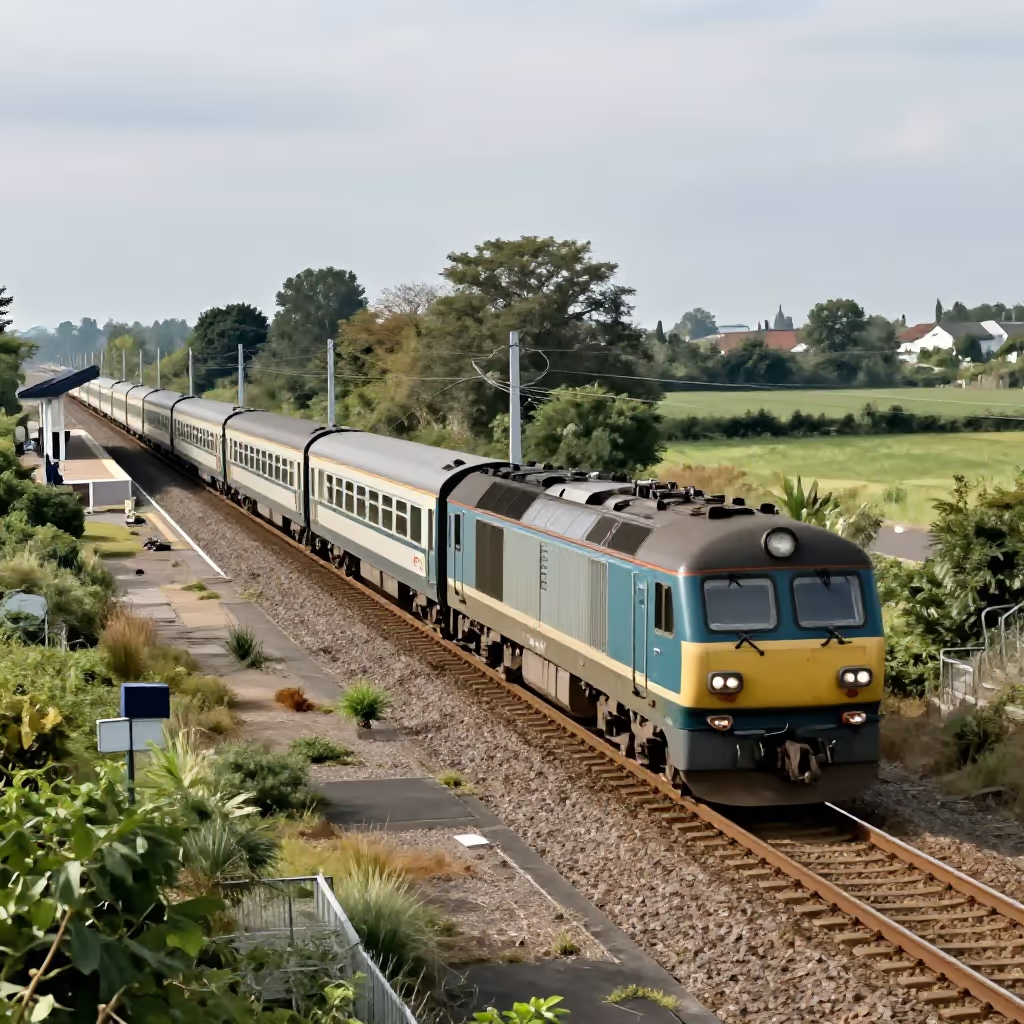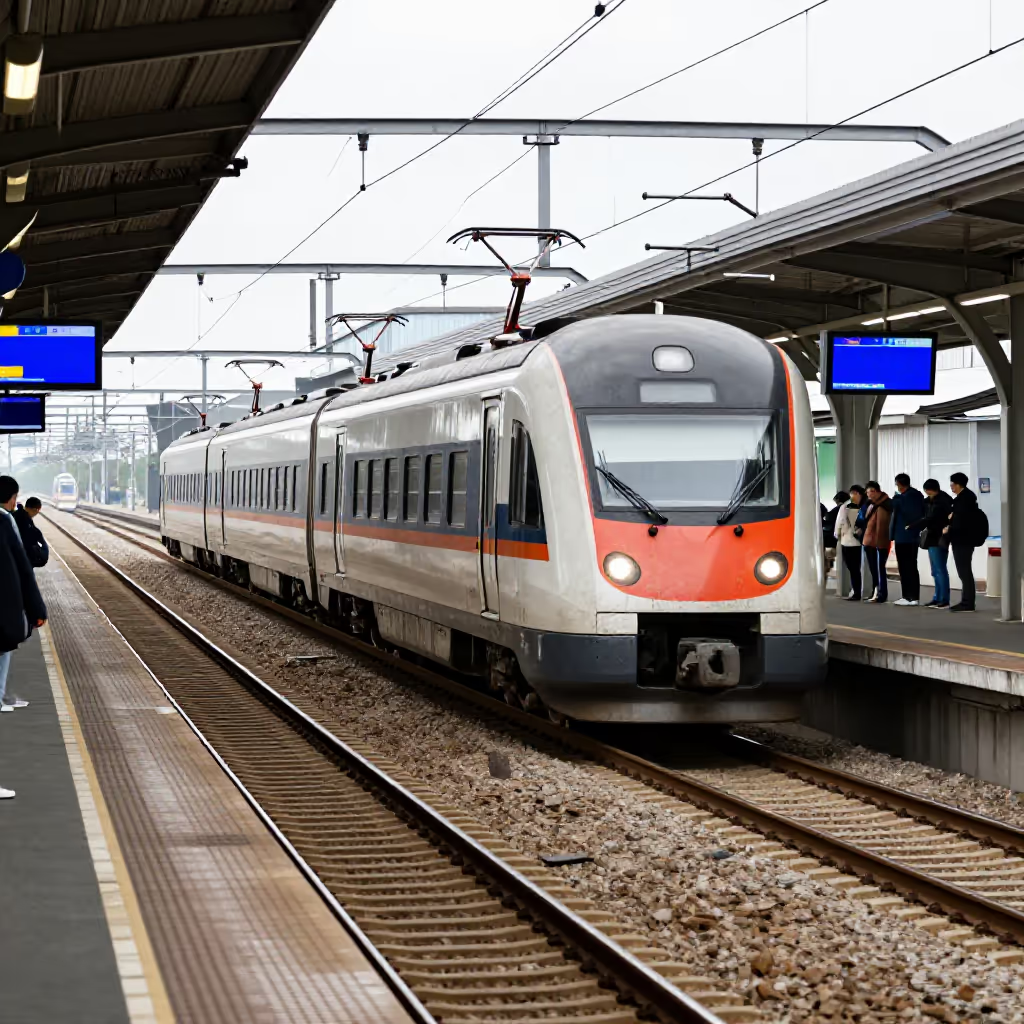
A rail-based means of transport such as a train, S-Bahn, or subway. It often also refers to the entire railway system or the company (e.g. Deutsche Bahn).
example
Ich fahre jeden Morgen mit der Bahn zur Arbeit.
I take the train to work every morning.

Usage tips
Context clues
You can easily recognize the meaning of 'Bahn' from context. If it is about transport or travel, it means the train. In the context of sports, it refers to a lane or track (e.g. in a swimming pool). In science (astronomy), it means the orbit of a planet.
EXAMPLE
Die Bahn nach Hamburg hat heute 20 Minuten Verspätung.
The train to Hamburg is 20 minutes late today.
Typical prepositions
When 'Bahn' means train, the prepositions are important. You travel 'mit der Bahn' (by train), sit 'in der Bahn' (in the train), and wait at the platform 'auf die Bahn' (for the train).
EXAMPLE
Fährst du lieber mit dem Auto oder mit der Bahn in den Urlaub?
Do you prefer going on vacation by car or by train?
Cultural note
In everyday life in Germany, 'die Bahn' often does not just mean any train, but is a short form for the company 'Deutsche Bahn' (DB).
EXAMPLE
Die Bahn hat mal wieder die Preise erhöht.
Deutsche Bahn has raised its prices yet again.
Fixed expression
The idiom 'jemanden oder etwas aus der Bahn werfen' means that a person or a plan is badly thrown off course by an unexpected event.
EXAMPLE
Die plötzliche Krankheit hat ihn völlig aus der Bahn geworfen.
The sudden illness completely threw him off course.
Fixed expression
The expression 'freie Bahn haben' means that you have no obstacles and can move freely or pursue a goal without hindrance.
EXAMPLE
Nachdem die Ampel auf Grün schaltete, hatten die Radfahrer freie Bahn.
After the traffic light turned green, the cyclists had a clear path.
Fixed expression
The idiom 'etwas in die richtigen Bahnen lenken' means to guide a process or development so that it proceeds positively and in an orderly way.
EXAMPLE
Der Mediator half dabei, das Gespräch wieder in die richtigen Bahnen zu lenken.
The mediator helped get the conversation back on track.
Compare with
near_synonym · confusable
Bahn vs Zug
train / move / draft
'die Bahn' and 'der Zug' both have to do with rail transport. 'der Zug' is the specific vehicle you ride in. 'die Bahn' can mean a means of transport such as a train, S-Bahn, or subway, but also the whole system or the company. That is why people often say 'mit der Bahn fahren' when they mean rail transport in general. 'mit dem Zug fahren' is more precise when an actual train is meant. Learners confuse the words because both are often used for travel in everyday life.
Bahn
Morgen fahre ich mit der Bahn zur Arbeit, weil mein Auto in der Werkstatt ist.
Tomorrow I’m taking the train to work because my car is in the repair shop.
Zug
Unser Zug nach Hamburg fährt heute von Gleis 7 ab.
Our train to Hamburg leaves from platform 7 today.