der Zug
train
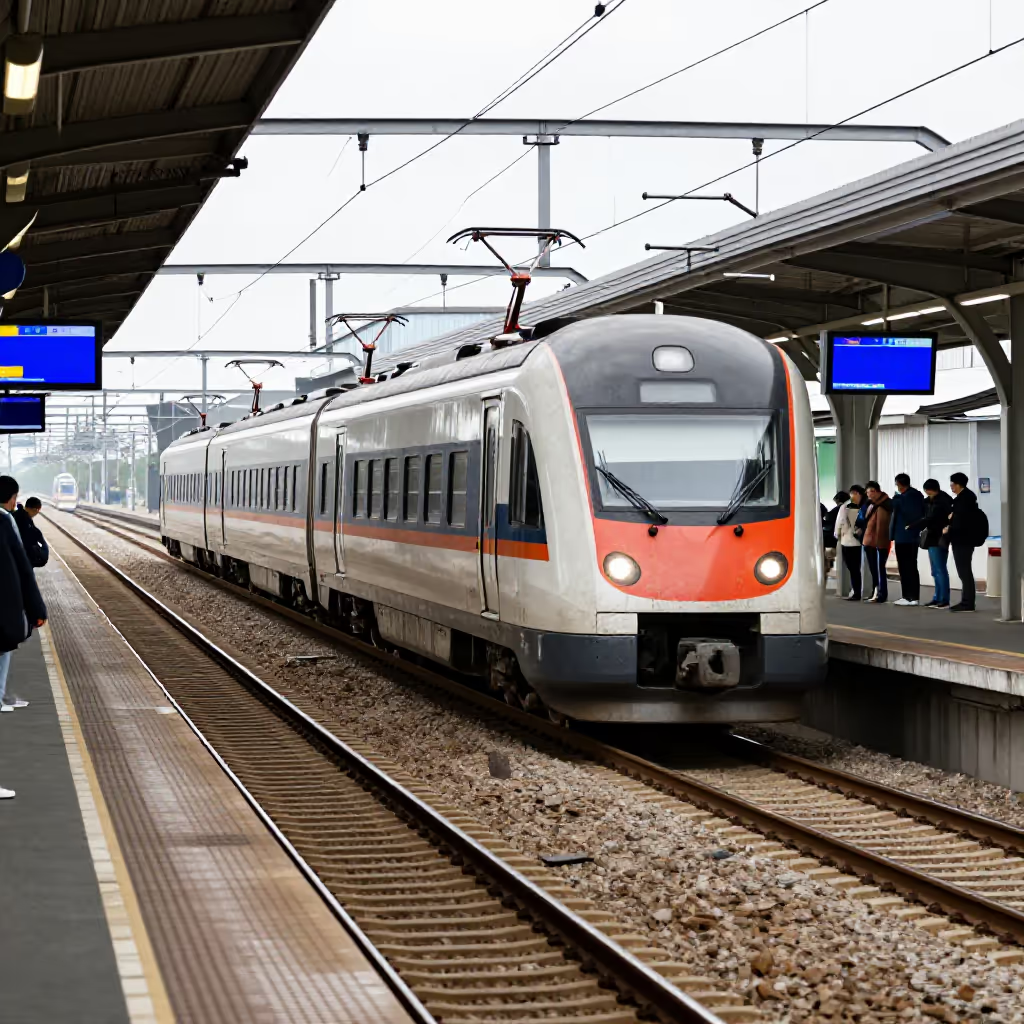
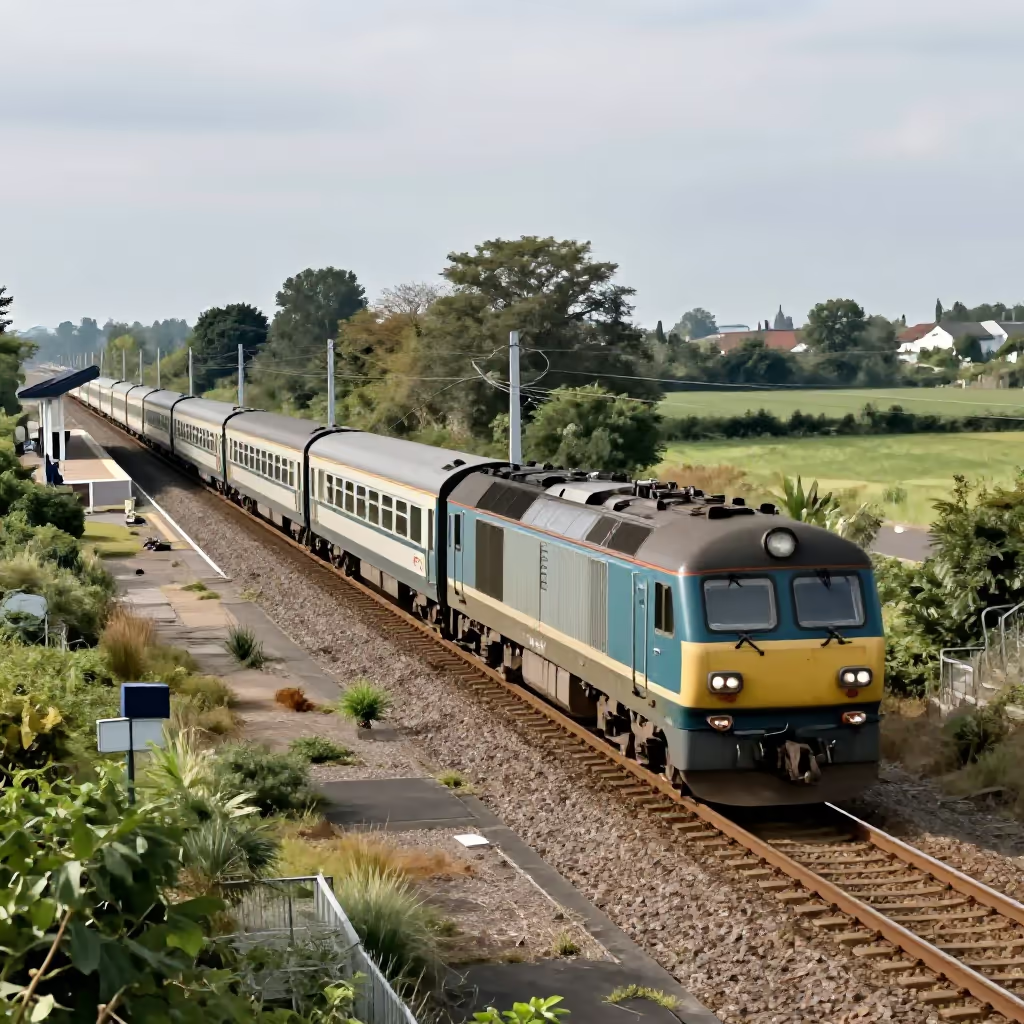
A rail vehicle consisting of one or more locomotives and attached carriages or cars, used to transport people or goods.
Der Zug nach München hat leider 20 Minuten Verspätung.
The train to Munich is unfortunately 20 minutes late.


train / move / draft
Loading your saved state.
train
A rail vehicle consisting of one or more locomotives and attached carriages or cars, used to transport people or goods.
Der Zug nach München hat leider 20 Minuten Verspätung.
The train to Munich is unfortunately 20 minutes late.

Almost all meanings of 'der Zug' derive from the verb 'ziehen' (to pull, to move). A train is pulled, you draw smoke into your lungs, you move a game piece, air moves through the room, and a festive procession moves through the city.
Die Pferde ziehen den Wagen den Berg hinauf.
The horses pull the cart up the hill.
In connection with the means of transport, typical verbs are 'den Zug nehmen' (to take the train), 'den Zug verpassen' (to miss the train), 'in den Zug einsteigen' (to get on the train), or 'mit dem Zug fahren' (to travel by train).
Wenn wir uns nicht beeilen, verpassen wir den Zug.
If we don't hurry, we'll miss the train.
The sentence 'Ich sitze im Zug' can be ambiguous. Most of the time it means that you are sitting on the train. But if the context contains words like 'kalt' (cold), 'Fenster' (window), or 'erkältet' (having a cold), a cold current of air is probably meant.
Mach bitte die Tür zu, es gibt hier einen schrecklichen Zug!
Please close the door; there's a terrible draft here!
When it is about inhaling smoke, the phrases 'einen Zug nehmen' (to take a drag) or 'einen tiefen Zug machen' (to take a deep drag) are often used.
Er nahm einen letzten Zug von seiner Zigarette und warf sie weg.
He took one last drag from his cigarette and threw it away.
In games like chess, people say 'am Zug sein' (to be one's turn) when it is your turn. A single movement is called 'einen Zug machen' (to make a move). A good or bad action can also be described as a 'guter/schlechter Zug' (good/bad move).
Warte, überlege gut, bevor du deinen nächsten Zug machst.
Wait, think carefully before you make your next move.
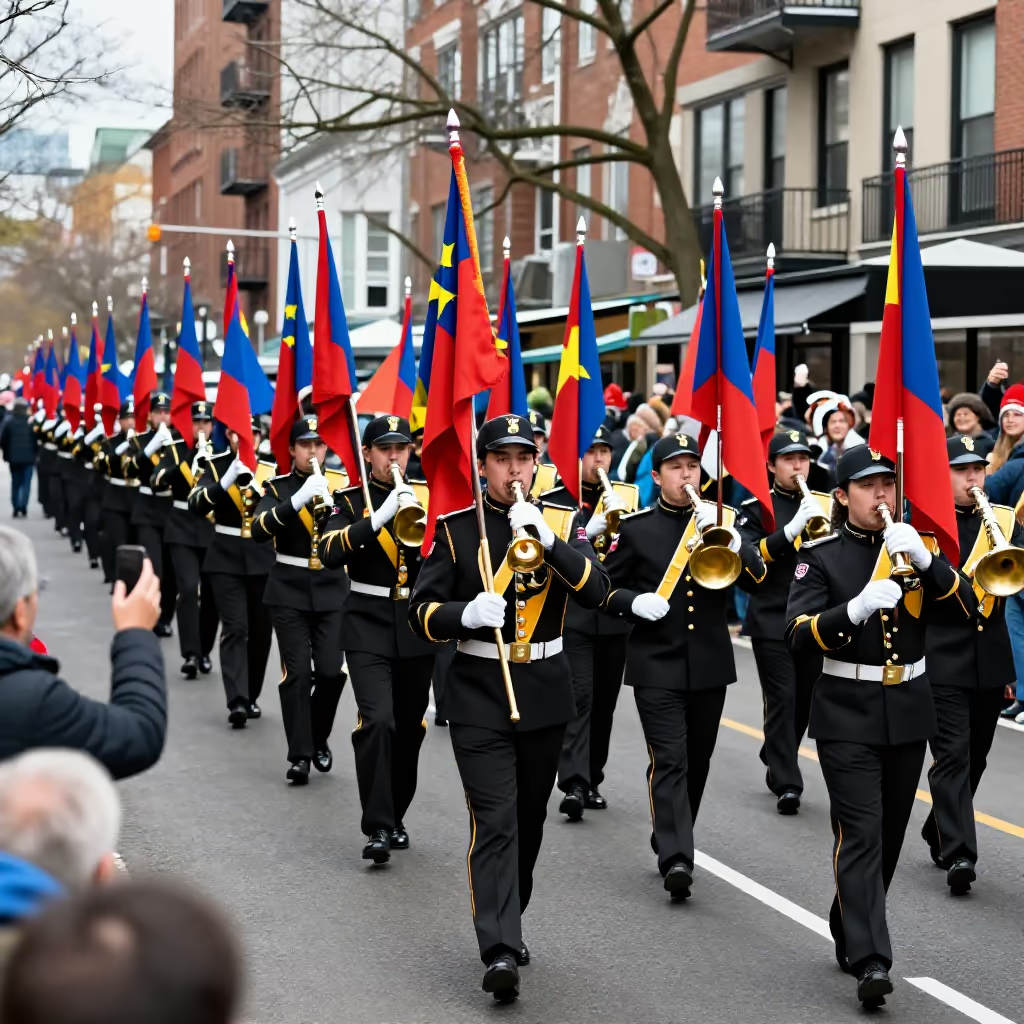
In the meaning of 'Prozession' (procession), 'Zug' is often used as part of compound words, for example 'Festzug' (festive procession), 'Karnevalszug' (carnival parade), 'Umzug' (parade/procession), or 'Trauerzug' (funeral procession).
Die Kinder freuten sich auf den bunten Karnevalszug.
The children were looking forward to the colorful carnival parade.
When 'Zug' describes a facial feature, it is almost always used in the plural ('die Züge', features). People also often speak of 'Gesichtszüge' (facial features).
Sie hat die sanften Züge ihrer Mutter geerbt.
She inherited her mother's gentle features.
The idiom 'in einem Zug' (in one go) means to do something without a pause or interruption. It is often used in connection with drinking, eating, or reading.
Er war so durstig, dass er das ganze Glas Wasser in einem Zug leerte.
He was so thirsty that he emptied the whole glass of water in one go.
The idiom 'in den letzten Zügen liegen' (to be on its last legs / in its final stages) means that something or someone is close to the end, completion, or death. It can refer to projects, processes, or living beings.
Das alte Auto liegt in den letzten Zügen und muss bald ersetzt werden.
The old car is on its last legs and will soon have to be replaced.
group
'die Gruppe' and 'der Zug' can both refer to several people, but only in a specific situation. 'Gruppe' is general: people are together or belong together. 'Zug' here means an ordered line or formation of people moving together, for example in a parade, demonstration, or festive procession. The words can be confused because a 'Zug' made up of people is of course also a group. But 'Zug' mainly describes the movement and order. If people are just standing together or working together, you say 'Gruppe'.

Bei der Demonstration zog ein langer Zug durch die Innenstadt.
During the demonstration, a long procession moved through the city center.
Vor dem Termin wartete eine kleine Gruppe im Flur.
Before the appointment, a small group was waiting in the hallway.