

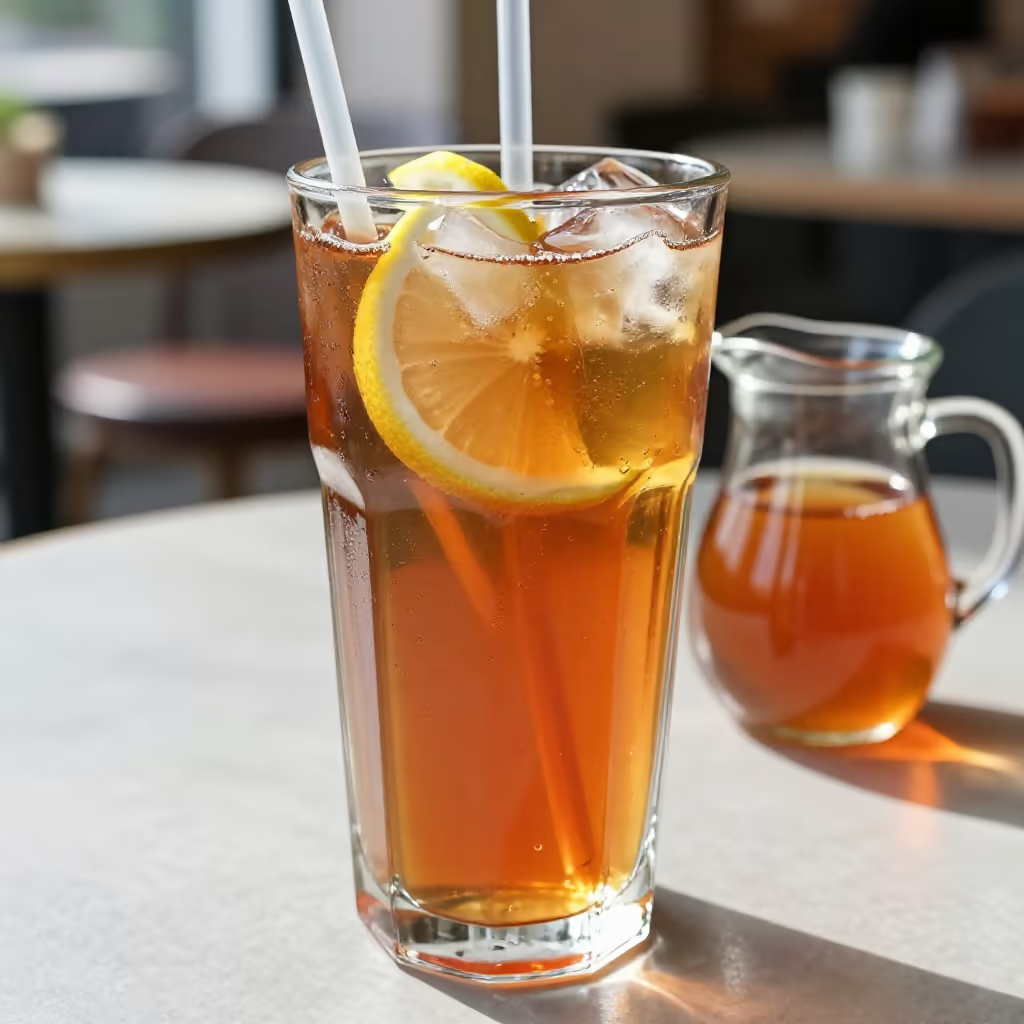
A cold tea drink that is often sweetened and flavored with things like lemon or peach.
example
An heißen Tagen trinke ich am liebsten einen erfrischenden Eistee mit Zitrone.
On hot days, I prefer drinking a refreshing iced tea with lemon.
Usage tips
Word composition
'Eistee' (iced tea) is a typical German compound made up of 'Eis' (ice) and 'Tee' (tea). In German, such terms are often combined into a single word.
EXAMPLE
Im Sommer gibt es nichts Besseres als ein Glas kalten Eistee.
In summer, there's nothing better than a glass of cold iced tea.
Typical collocations
The most popular flavors are often attached directly to the word. The most common are 'Eistee Zitrone' (lemon iced tea) and 'Eistee Pfirsich' (peach iced tea). The adjective 'erfrischend' (refreshing) is also often used.
EXAMPLE
Ich hätte gern einen Eistee Pfirsich, bitte.
I'd like a peach iced tea, please.
Cultural context
In everyday German, 'Eistee' (iced tea) very often refers to the ready-made, heavily sweetened drink from the supermarket. Homemade, unsweetened cold tea is also called that, but the association with the packaged product is stronger.
EXAMPLE
Viele Jugendliche trinken in der Pause Eistee aus der PET-Flasche.
Many teenagers drink iced tea from a PET bottle during the break.
Compare with
confusable
Eistee vs Tee
tea
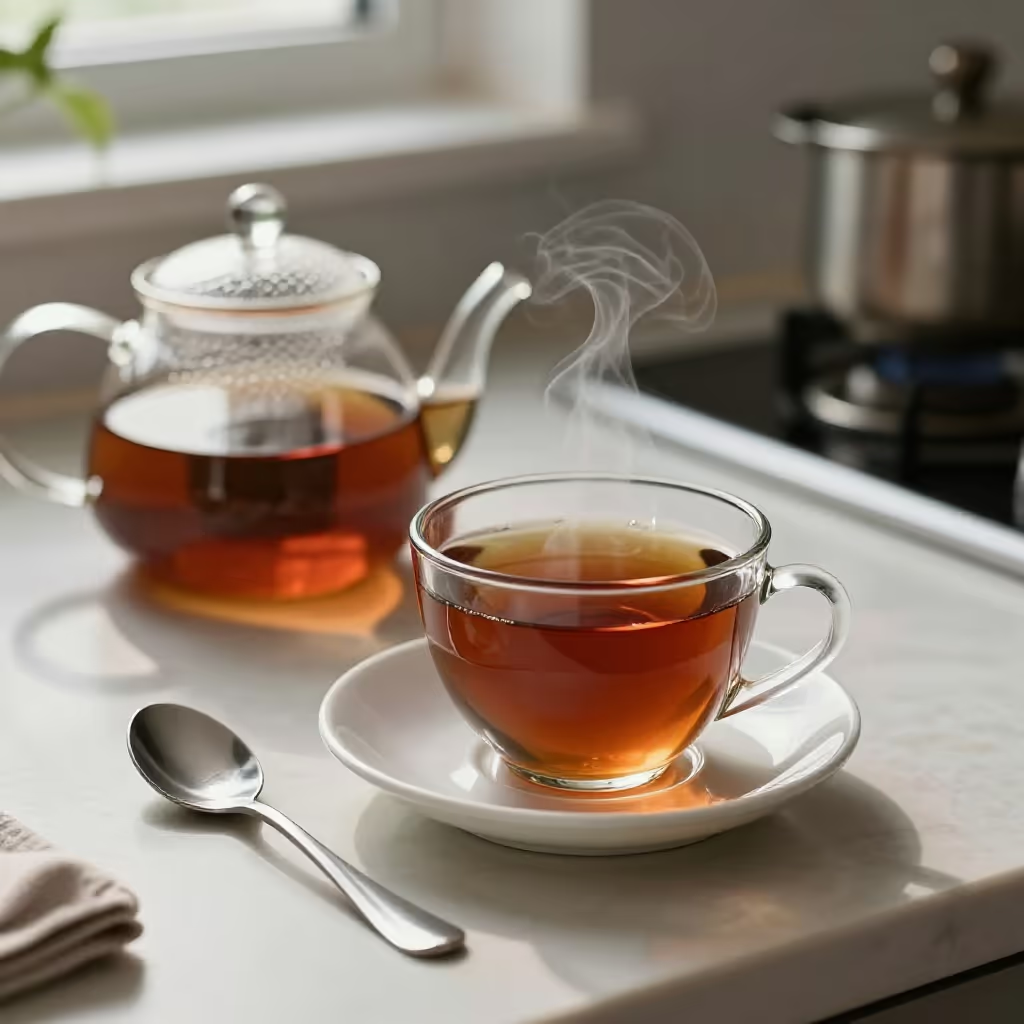
'der Tee' and 'der Eistee' are both tea-based drinks. The most important difference is the temperature, and often also the type of drink. 'Tee' usually means a hot drink that you freshly prepare by pouring water over it. 'Eistee' is cold and often sweet, for example with lemon or peach. Learners may confuse the words because both contain 'Tee'. If you mean a warm drink, say 'Tee'. If you mean a cold, sweet tea drink, say 'Eistee'.
Eistee
Am Bahnhof hat Emma einen Eistee mit Pfirsich gekauft.
At the train station, Emma bought an iced tea with peach.
Tee
Nach dem Spaziergang trinkt Luis einen heißen Tee.