

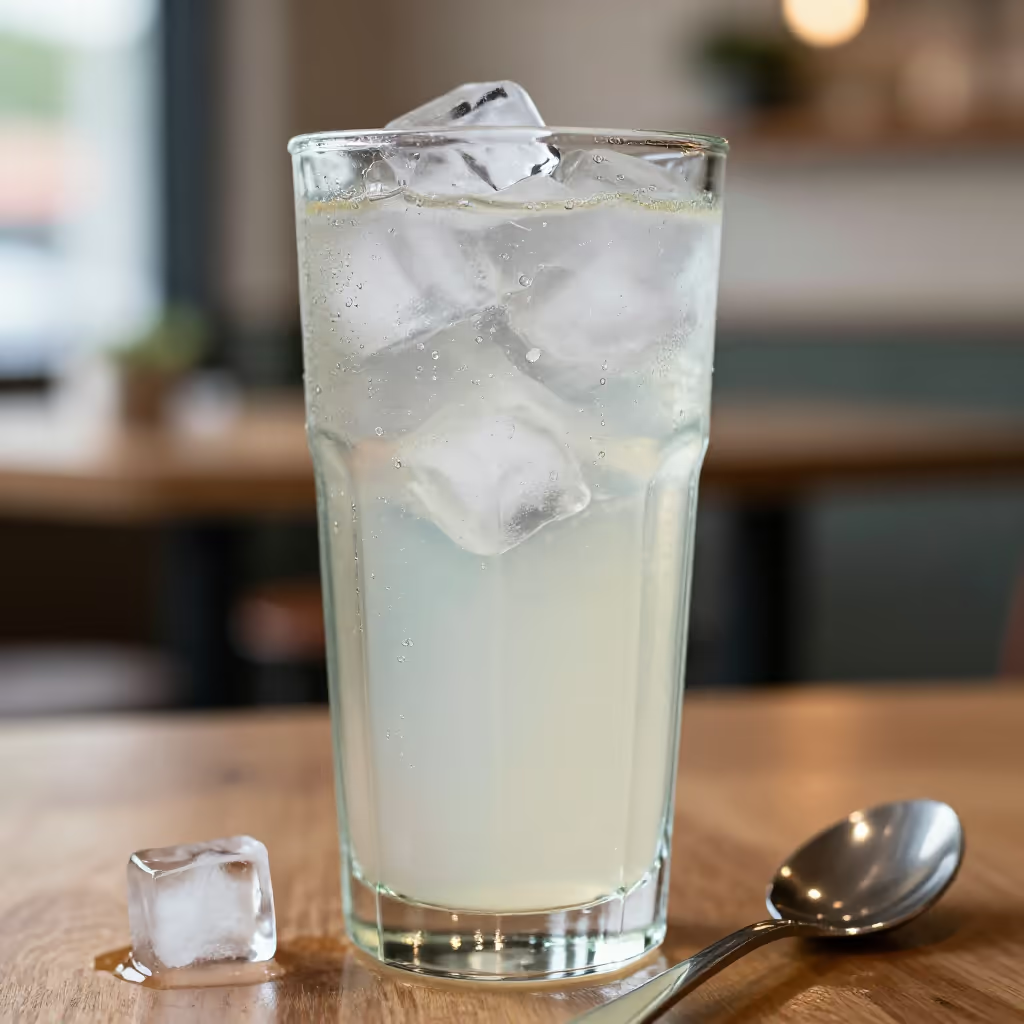
der Eiswürfel
ice cube
A small, usually cube-shaped block of frozen water used to cool drinks.
EXAMPLE
Ich hätte gerne eine Cola mit Zitrone und zwei Eiswürfeln.
I'd like a Coke with lemon and two ice cubes.
ice cube
Loading your saved state.
ice cube
A small, usually cube-shaped block of frozen water used to cool drinks.
Ich hätte gerne eine Cola mit Zitrone und zwei Eiswürfeln.
I'd like a Coke with lemon and two ice cubes.
This word is a simple compound made from 'Eis' (ice) and 'Würfel' (cube). So it literally means 'ice in the shape of a cube'.
Für den Cocktail brauchen wir noch Eiswürfel.
We still need ice cubes for the cocktail.
'Eiswürfel' (ice cube) is almost always used in connection with drinks. A typical question in a restaurant is: 'Möchten Sie Ihr Getränk mit oder ohne Eiswürfel?' (Would you like your drink with or without ice cubes?)
Einen Orangensaft, bitte, aber ohne Eiswürfel.
An orange juice, please, but without ice cubes.
Common combinations are 'Eiswürfel in ein Glas geben' (to put ice cubes into a glass), 'ein Getränk mit Eiswürfeln bestellen' (to order a drink with ice cubes), or 'Eiswürfel machen' (to make ice cubes, in the freezer).
Kannst du bitte noch ein paar Eiswürfel ins Wasser geben?
Can you please put a few more ice cubes in the water?
ice / ice cream
Eis and Eiswürfel can both be used to cool a drink. Eis refers to cooling in general or to ice as a whole, whereas an Eiswürfel is a single countable piece of frozen water. Use Eis for the quantity as a whole and Eiswürfel when you mean individual pieces.

Bitte geben Sie zwei Eiswürfel in meinen Saft, damit er schön kalt bleibt.
Please put two ice cubes in my juice so it stays nice and cold.
Bitte geben Sie etwas Eis in meinen Saft, damit er schön kalt bleibt.
Please put some ice in my juice so it stays nice and cold.