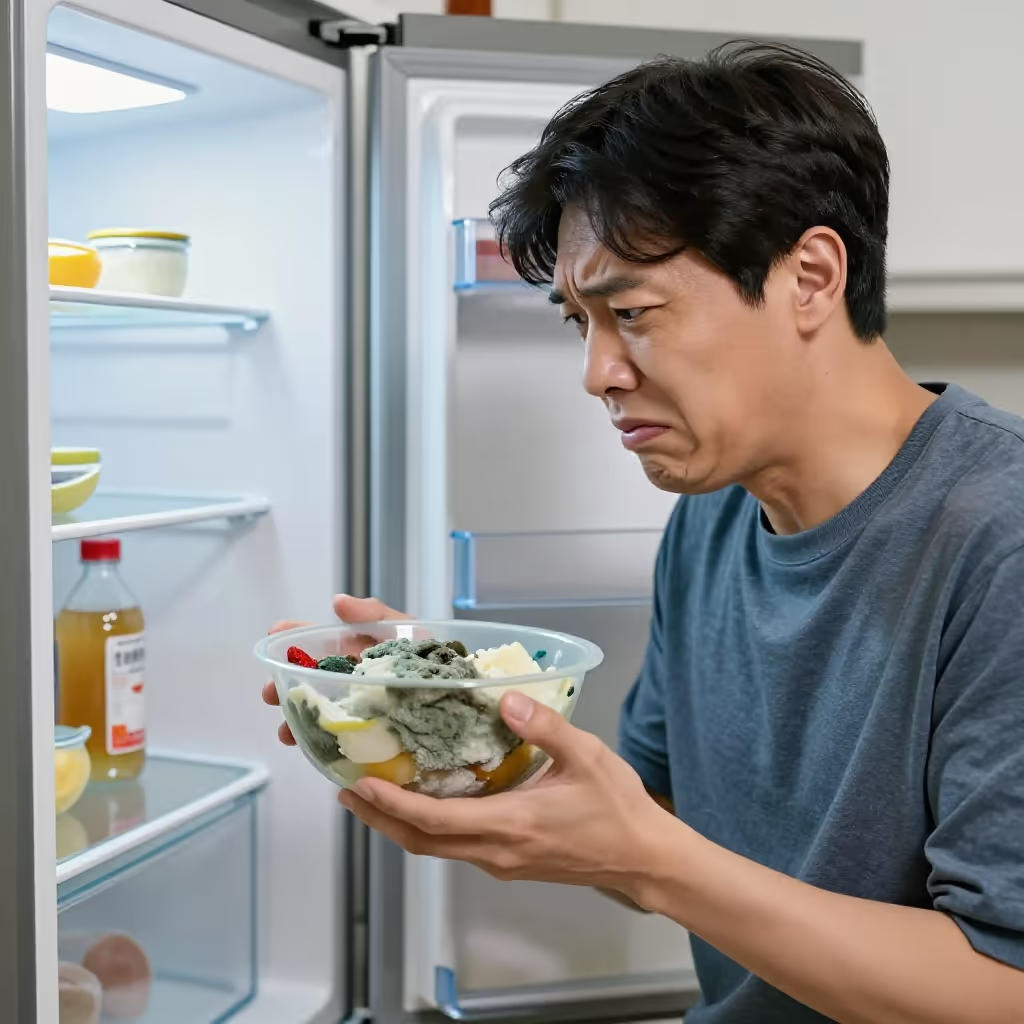
Causing strong aversion or disgust, often referring to taste, smell, or appearance. It describes something that is physically repulsive.
example
Das alte Essen im Kühlschrank roch wirklich ekelig.
The old food in the fridge smelled really disgusting.

Usage tips
Word family
The adjective 'ekelig' (disgusting) is derived from the noun 'der Ekel' (disgust, revulsion). The ending '-ig' turns the noun into an adjective and literally means 'causing disgust'.
EXAMPLE
Allein der Gedanke an die Prüfung löst bei mir Ekel aus.
Just the thought of the exam fills me with disgust.
Context clue
Whether 'ekelig' (disgusting) describes a physical or moral aversion depends on the context. If it refers to things, food, or smells, the physical meaning is intended. If it refers to a person's behavior, the moral meaning is intended.
EXAMPLE
Der Geruch aus der Mülltonne ist wirklich ekelig.
The smell from the garbage can is really disgusting.
Typical collocations
In its physical meaning, 'ekelig' (disgusting) is often connected with sensory perceptions or unpleasant things. Typical combinations are 'ein ekeliger Geruch' (a disgusting smell), 'ein ekeliger Geschmack' (a disgusting taste), or also 'ekeliges Wetter' (nasty weather).
EXAMPLE
Nach dem Regen war das Wetter draußen kalt und ekelig.
After the rain, the weather outside was cold and nasty.
Sentence structure and use
To express moral outrage, 'ekelig' (disgusting) is often used in the structure 'Ich finde es ekelig, dass/wie ...' (I find it disgusting that/how ...). This construction introduces a subordinate clause that describes the repulsive behavior.
EXAMPLE
Ich finde es ekelig, wie er mit seinen Mitarbeitern umgeht.
I find it disgusting how he treats his employees.
Compare with
antonym
ekelig vs fair
fair
'fair' and 'ekelig' are opposites here when 'ekelig' describes behavior. 'fair' means just and decent. 'ekelig' then means unpleasant, repulsive, or unfair behavior. The word sounds strongly emotional and negative. Important: 'ekelig' is also very often used for things that cause disgust, for example smells or food. In this comparison, however, the focus is on the person or their behavior.
ekelig
Es war ekelig, wie er den Fehler sofort seiner Kollegin zuschob.
It was disgusting how he immediately pushed the blame for the mistake onto his colleague.
fair
Er will bei der Arbeit eine faire Lösung für beide Seiten finden.
He wants to find a fair solution for both sides at work.