


die Elle
ulna
In anatomy, one of the two bones of the forearm, located on the side of the little finger. The other bone is the radius.
Bei dem Sturz vom Fahrrad hat er sich die Elle gebrochen.
He broke his ulna when he fell off his bicycle.
ulna / ell
Loading your saved state.

ulna
In anatomy, one of the two bones of the forearm, located on the side of the little finger. The other bone is the radius.
Bei dem Sturz vom Fahrrad hat er sich die Elle gebrochen.
He broke his ulna when he fell off his bicycle.

ell
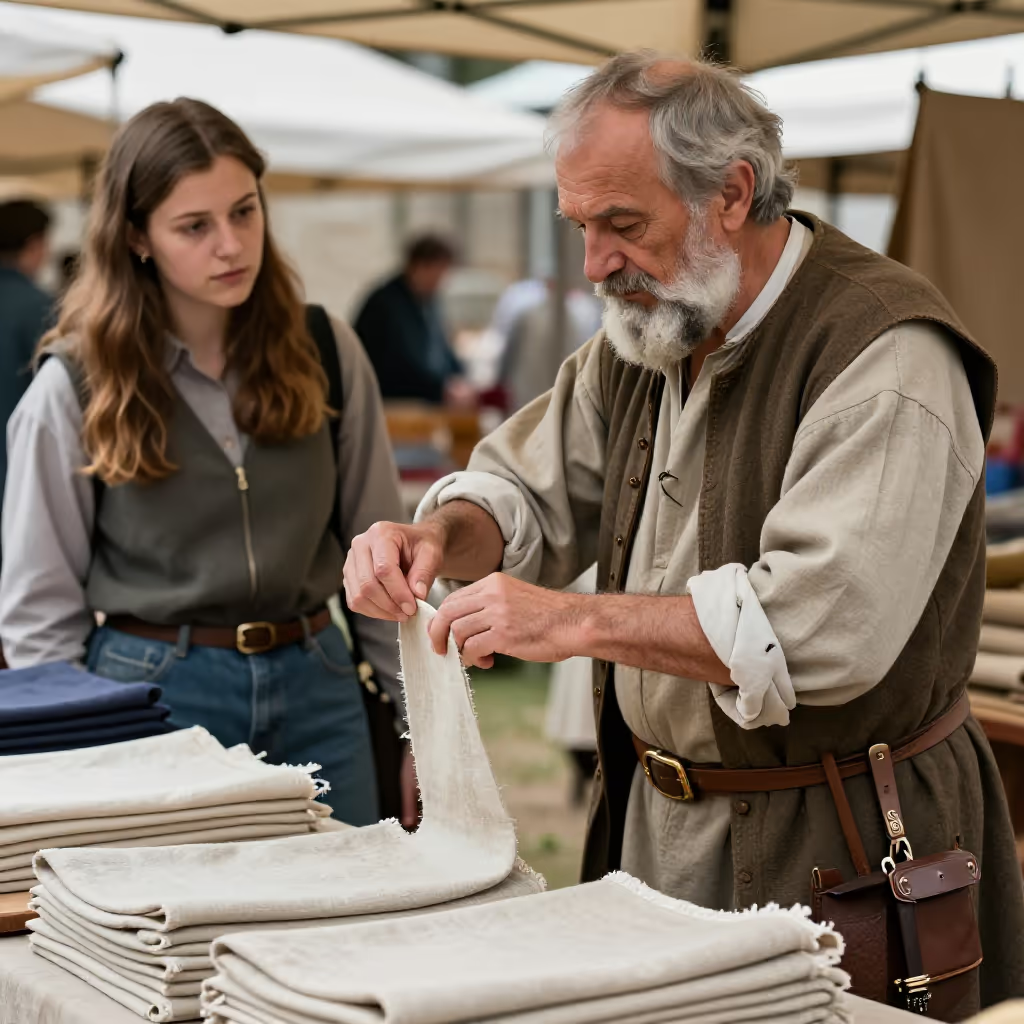
An old unit of length that was originally based on the length of the forearm. The exact length varied from region to region, but was usually between 50 and 80 centimeters.
Früher wurde Stoff nicht in Metern, sondern nach der Elle verkauft.
In the past, fabric was sold not by the meter, but by the ell.
The word 'Elle' (ulna) is part of the word 'Ellenbogen' (elbow). If you think of the elbow, it helps you remember the meaning of the bone in the forearm.
Ich habe mich am Tisch gestoßen und jetzt tut mein Ellenbogen weh.
I bumped myself on the table, and now my elbow hurts.
You can easily recognize the meaning from context. If people are talking about the body, an accident, or doctors, the bone is meant. If it is about history, fabric, or old measurements, the unit of length is meant.
Der Arzt auf dem Röntgenbild die gebrochene Elle.
The doctor saw the broken ulna on the X-ray.
In medical contexts, the pair of bones 'Elle und Speiche' (ulna and radius) is often mentioned together. A typical injury is 'sich die Elle brechen' (to break one's ulna).
Bei dem Sturz hat er sich sowohl Elle als auch Speiche gebrochen.
In the fall, he broke both his ulna and his radius.
When 'Elle' (ell) is used as a unit of length, it often appears with verbs like 'messen' (to measure), 'kaufen' (to buy), or 'verkaufen' (to sell) and the preposition 'nach' (by/according to).
Der Händler verkaufte das Tuch nach der Elle.
The merchant sold the cloth by the ell.