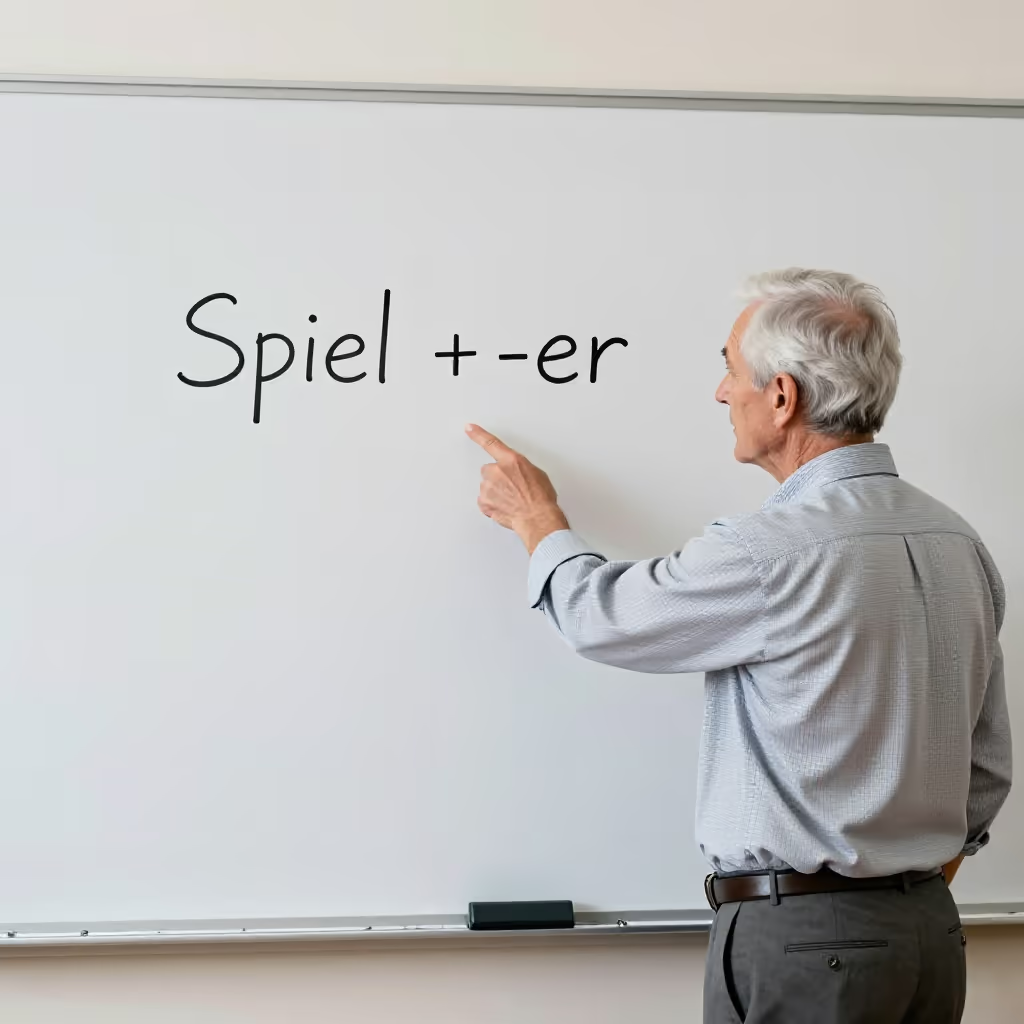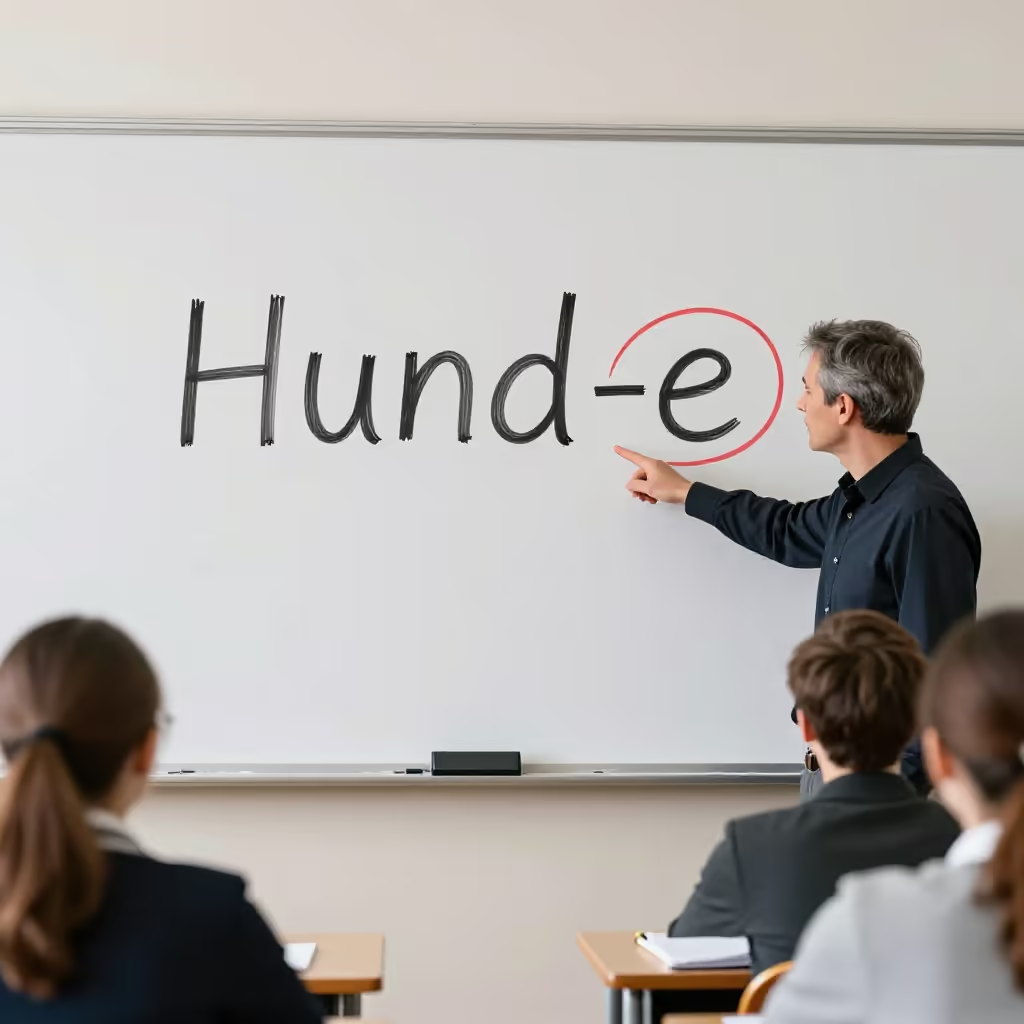
In linguistics, the changeable part at the end of a word that indicates grammatical features such as case, number, gender, or person.
example
Bei der Konjugation von Verben im Präsens ändert sich die Endung je nach Person.
When conjugating verbs in the present tense, the ending changes depending on the person.
Usage tips
Word structure
The word 'Endung' (ending) is derived from the word 'Ende' (end). The suffix '-ung' turns it into a feminine noun that often describes the result of something or a concrete object—here, the last part of a word.
EXAMPLE
Die Endung „-ung“ deutet oft auf ein feminines Nomen hin.
The ending '-ung' often points to a feminine noun.
Context clue
By far the most common meaning of 'Endung' (ending) is the grammatical one. If you hear or read the word in the context of language, grammar, verbs, nouns, or adjectives, this is always the meaning intended.
EXAMPLE
Achte beim Schreiben auf die richtige Adjektivendung.
Pay attention to the correct adjective ending when writing.
Typical collocations
In a grammatical context, 'Endung' (ending) is often combined with other words to specify the type, e.g. 'Adjektivendung' (adjective ending), 'Verbendung' (verb ending), or 'Pluralendung' (plural ending).
EXAMPLE
Die Verbendung im Präsens für „ich“ ist meistens „-e“.
The present-tense verb ending for 'ich' (I) is usually '-e'.
Compare with
near_synonym · confusable
Endung vs Ende
end
'das Ende' and 'die Endung' both refer to something at the end. 'das Ende' is the general word for the last part or final point of something. 'die Endung' is used mainly in grammar for the final changeable part of a word, for example with verbs or adjectives. More rarely, 'Endung' can also mean a conclusion in a general sense, but 'Ende' is usually more natural then. Learners easily confuse the words because they look similar. As a simple rule: for films, paths, events, or situations, use 'Ende'. For word forms, use 'Endung'.
Endung
Im Deutschkurs üben wir heute die Endung der Adjektive.
In German class, we are practicing adjective endings today.
Ende
Der Gast verpasste das Ende der Führung, weil sein Zug früher fuhr.
The guest missed the end of the tour because his train left earlier.