

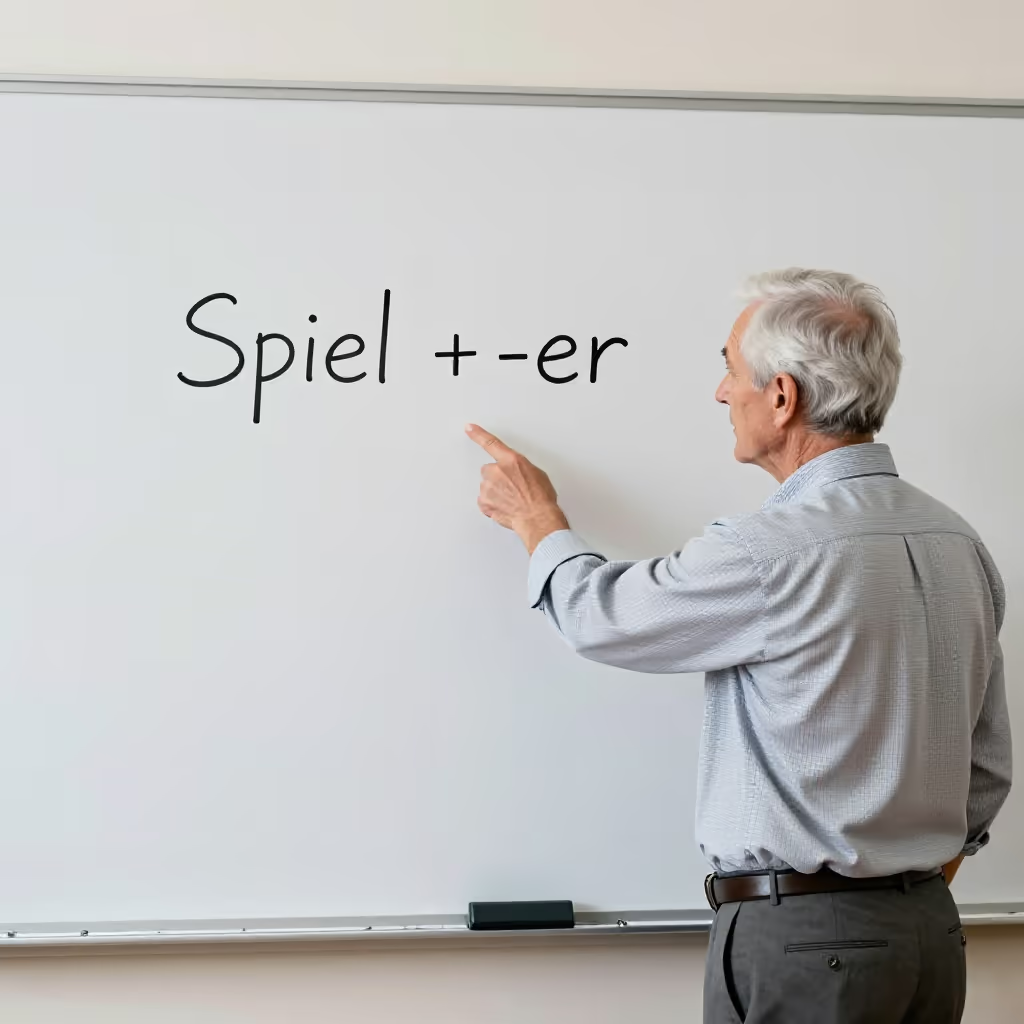
A linguistic element (an ending) that is attached to the end of a word stem in order to form a new word or change the grammatical function.
example
Das Suffix '-heit' wird verwendet, um aus Adjektiven wie 'frei' Nomen wie 'Freiheit' zu bilden.
The suffix '-heit' is used to form nouns like 'Freiheit' from adjectives like 'frei'.
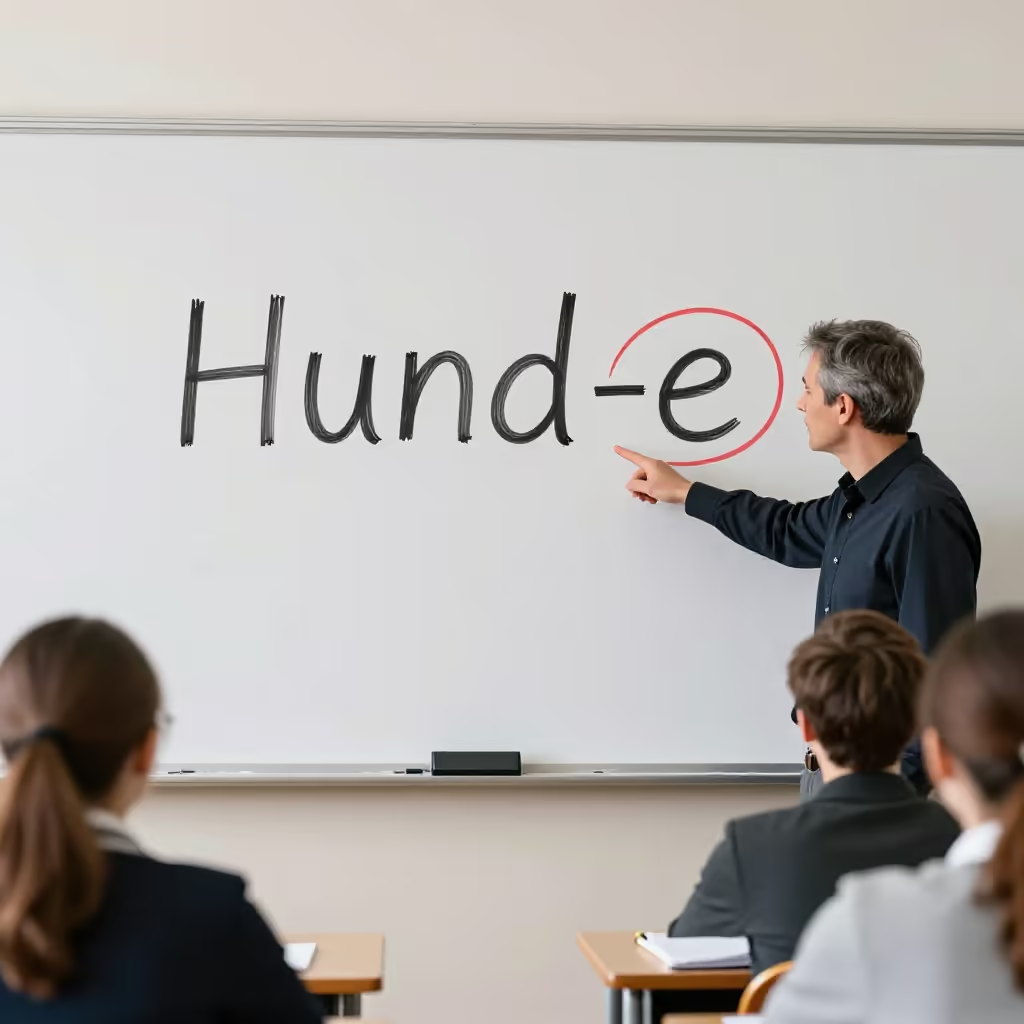
Usage tips
Technical term
'Suffix' is a technical term from language science (linguistics). In everyday usage, the word 'Nachsilbe' (ending, suffix) is often used instead.
EXAMPLE
Im Deutschunterricht analysierten wir Wörter und ihre Suffixe.
In German class, we analyzed words and their suffixes.
Function of a suffix
A suffix can change the part of speech. For example, the suffix '-lich' turns a noun (Freund) into an adjective (freundlich).
EXAMPLE
Das Suffix '-ung' wird oft verwendet, um aus einem Verb ein Nomen zu machen, wie bei 'planen' und 'Planung'.
The suffix '-ung' is often used to turn a verb into a noun, as in 'planen' and 'Planung'.
Typical verbs
In connection with 'Suffix' (suffix), the verbs 'anhängen' (to attach), 'anfügen' (to add), or 'bilden' (to form) are often used.
EXAMPLE
Um ein Adjektiv zu steigern, hängt man das Suffix '-er' an.
To form the comparative of an adjective, you attach the suffix '-er'.
Compare with
near_synonym · confusable
Suffix vs Endung
ending
'die Endung' and 'das Suffix' both stand at the end of a word, so they are easily confused. 'Endung' is often used when talking about grammar, for example to show case, number, person, or tense. 'Suffix' is a word-forming element at the end of a word stem; it can form a new word or change the function of the word. In practical terms: in forms like 'machst', you would more likely talk about an 'Endung', while in word formation like 'freundlich', you would talk about a 'Suffix'.
Suffix
Das Suffix „-heit“ macht aus dem Adjektiv „frei“ das Nomen „Freiheit“.
The suffix “-heit” turns the adjective “frei” into the noun “Freiheit.”
Endung
Im Satz „ich gehe“ zeigt die Endung des Verbs die Person an.
In the sentence “ich gehe,” the ending of the verb indicates the person.