

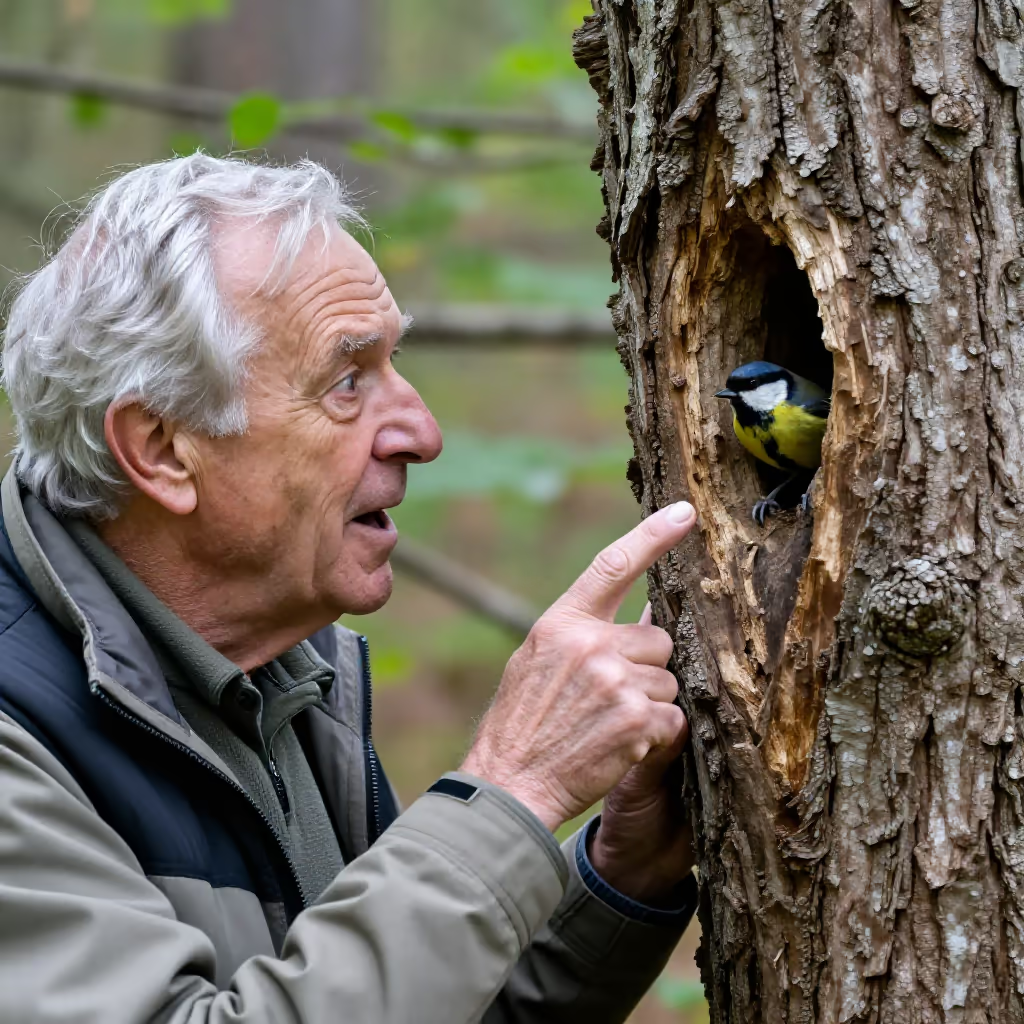
entdecken
to discover
To find something or someone that was previously unknown.
EXAMPLE
Marie Curie hat das Element Radium entdeckt.
Marie Curie discovered the element radium.
to discover
Loading your saved state.
to discover
To find something or someone that was previously unknown.
Marie Curie hat das Element Radium entdeckt.
Marie Curie discovered the element radium.

to discover
To notice or find something that was hidden or that you were looking for.
Beim Aufräumen habe ich unter dem Bett einen alten Brief entdeckt.
While tidying up, I discovered an old letter under the bed.

to discover
To recognize a previously unknown ability, inclination, or quality in oneself or others.
Im Urlaub hat sie ihre Leidenschaft für das Tauchen entdeckt.
On vacation, she discovered her passion for diving.
The verb 'entdecken' literally means 'to free something from its cover' or 'to uncover'. The prefix 'ent-' means 'away' here, and 'decken' means 'to cover'. This origin helps you understand the meaning 'to find something hidden or unknown'.
Archäologen haben eine alte Ruine unter der Erde entdeckt.
Archaeologists discovered an old ruin underground.
The prefix 'ent-' is inseparable. It remains firmly attached to the verb 'decken' in all sentence forms and tenses and is never placed at the end of the sentence.
Ich habe entdeckt, dass ich gerne koche.
I discovered that I like cooking.
The object of the verb gives a clue to the exact meaning. Major scientific finds are, for example, 'einen Planeten entdecken' (to discover a planet). Personal, chance finds are 'einen Fehler entdecken' (to discover an error). Abstract realizations are 'eine Leidenschaft entdecken' (to discover a passion).
Der Wissenschaftler hat eine neue Spezies entdeckt.
The scientist discovered a new species.
This meaning is often used for personal and abstract things. Typical combinations are 'seine Leidenschaft für etwas entdecken' (to discover one's passion for something), 'ein Talent entdecken' (to discover a talent), or 'eine neue Seite an sich entdecken' (to discover a new side of oneself).
Er hat seine Liebe zur Natur beim Wandern entdeckt.
He discovered his love of nature while hiking.
to find
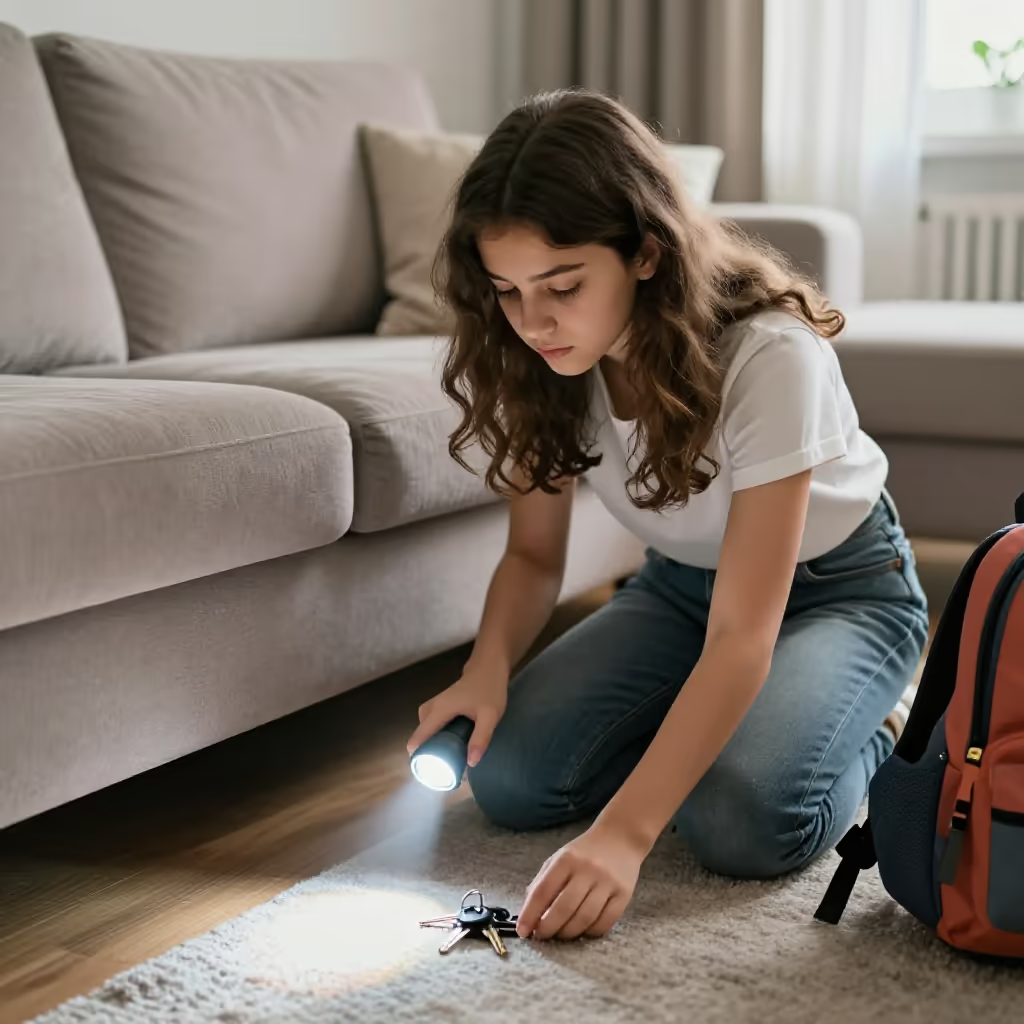
Finden mainly emphasizes successfully locating something, often after a search. Entdecken additionally emphasizes that something was previously hidden or unknown. If only the result of the search matters, finden is appropriate; for something surprising or previously unnoticed, entdecken is more precise.
Beim Staubsaugen entdeckte ich unter dem Sofa einen alten Brief.
While vacuuming, I discovered an old letter under the sofa.
Nach langem Suchen fand ich den Schlüssel unter dem Sofa.
After searching for a long time, I found the key under the sofa.