

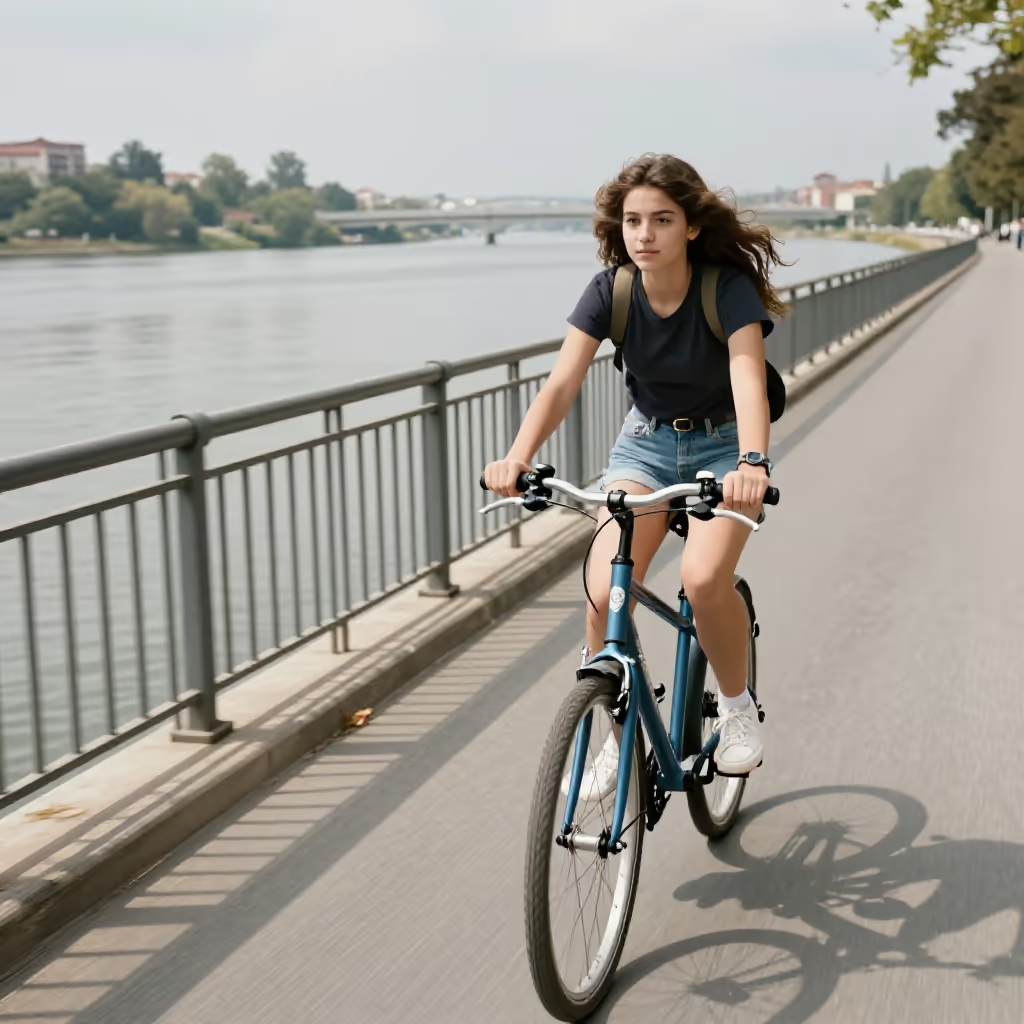
entlang
along
As a postposition (placed after the noun) with the accusative, to describe movement parallel to something long.
EXAMPLE
Wir sind gestern den ganzen Fluss entlang gewandert.
Yesterday we hiked along the entire river.
along
Loading your saved state.
along
As a postposition (placed after the noun) with the accusative, to describe movement parallel to something long.
Wir sind gestern den ganzen Fluss entlang gewandert.
Yesterday we hiked along the entire river.
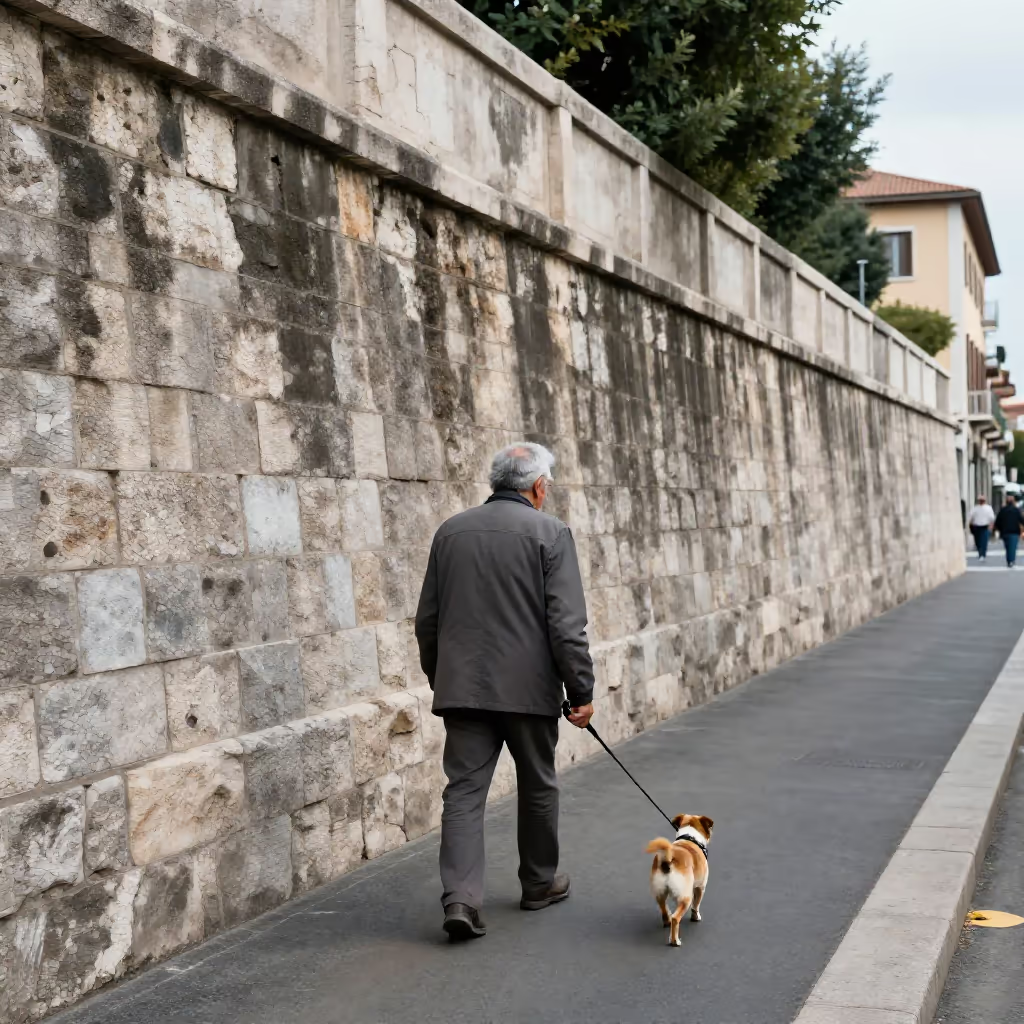
along
As a preposition (placed before the noun) with the dative, to describe movement or position parallel to something.
Entlang dem Weg standen viele alte Eichen.
Along the path stood many old oak trees.
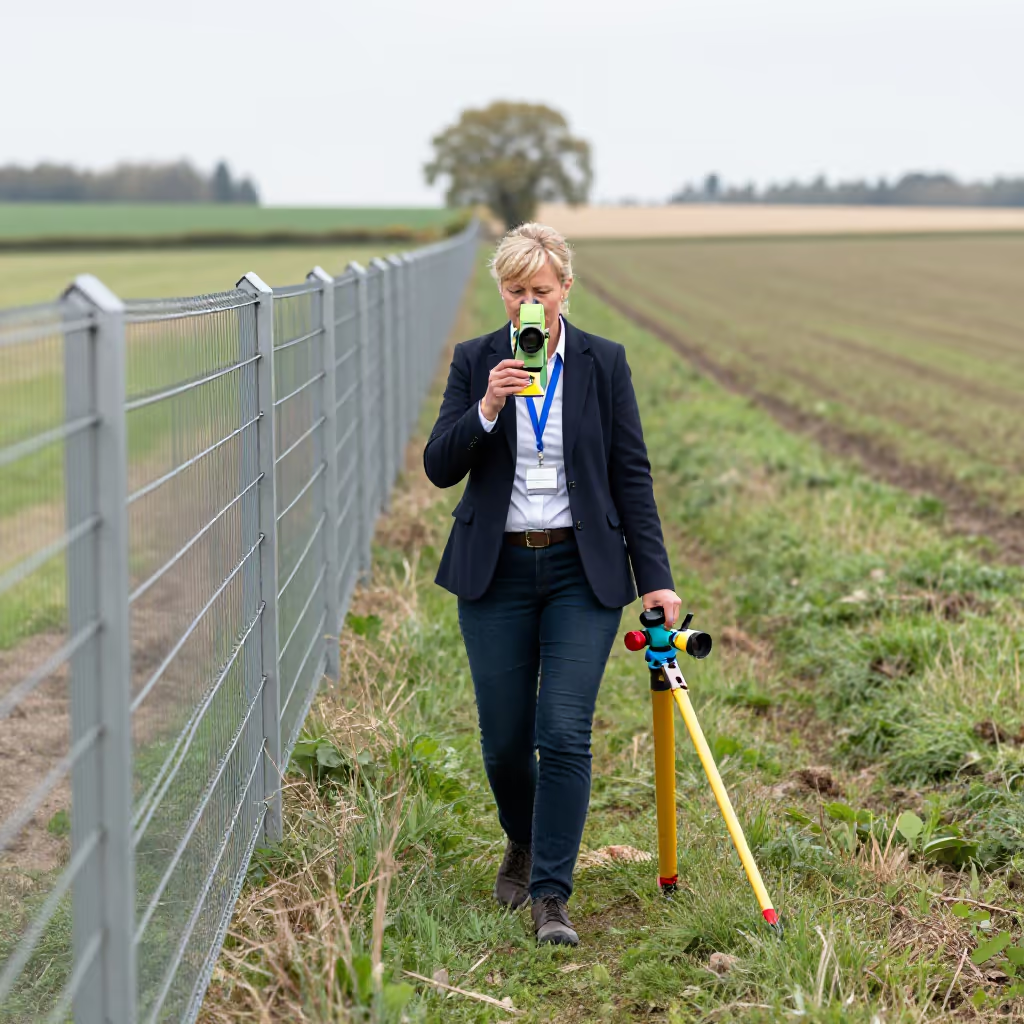
along
As a preposition (placed before the noun) with the genitive, to describe movement or position parallel to something. This form is more formal and less common.
Die Demonstration zog entlang des Boulevards.
The demonstration moved along the boulevard.
The word 'entlang' (along) is a compound of 'ent-' and 'lang' (long). It describes a movement or position that extends over the length of something, in other words parallel to it.
Eine lange Allee führte zum Schloss.
A long avenue led to the castle.
The most common and a special use of 'entlang' (along) is after the noun. In this case, 'entlang' always requires the accusative. This word order is unusual for a preposition in German.
Wir spazierten die Promenade entlang.
We walked along the promenade.
When 'entlang' (along) comes before the noun, it is used like a normal preposition. In modern language, it then usually takes the dative.
Entlang dem Flussufer gibt es einen schönen Radweg.
Along the riverbank there is a beautiful bike path.
Using 'entlang' (along) before the noun with the genitive is also correct, but is considered very formal or literary. It is rare in normal usage.
Entlang des alten Kanals standen prächtige Villen.
Along the old canal stood magnificent villas.
long
Entlang and lang can describe movement parallel to a river or path. Entlang is a preposition placed before or after the noun and changes the form of the noun phrase, while lang is an adverb that comes after the noun. Both forms are possible, but their placement differs.

Wir gingen den Fluss entlang.
We walked along the river.
Wir gingen den Fluss lang.
We walked along the river.