

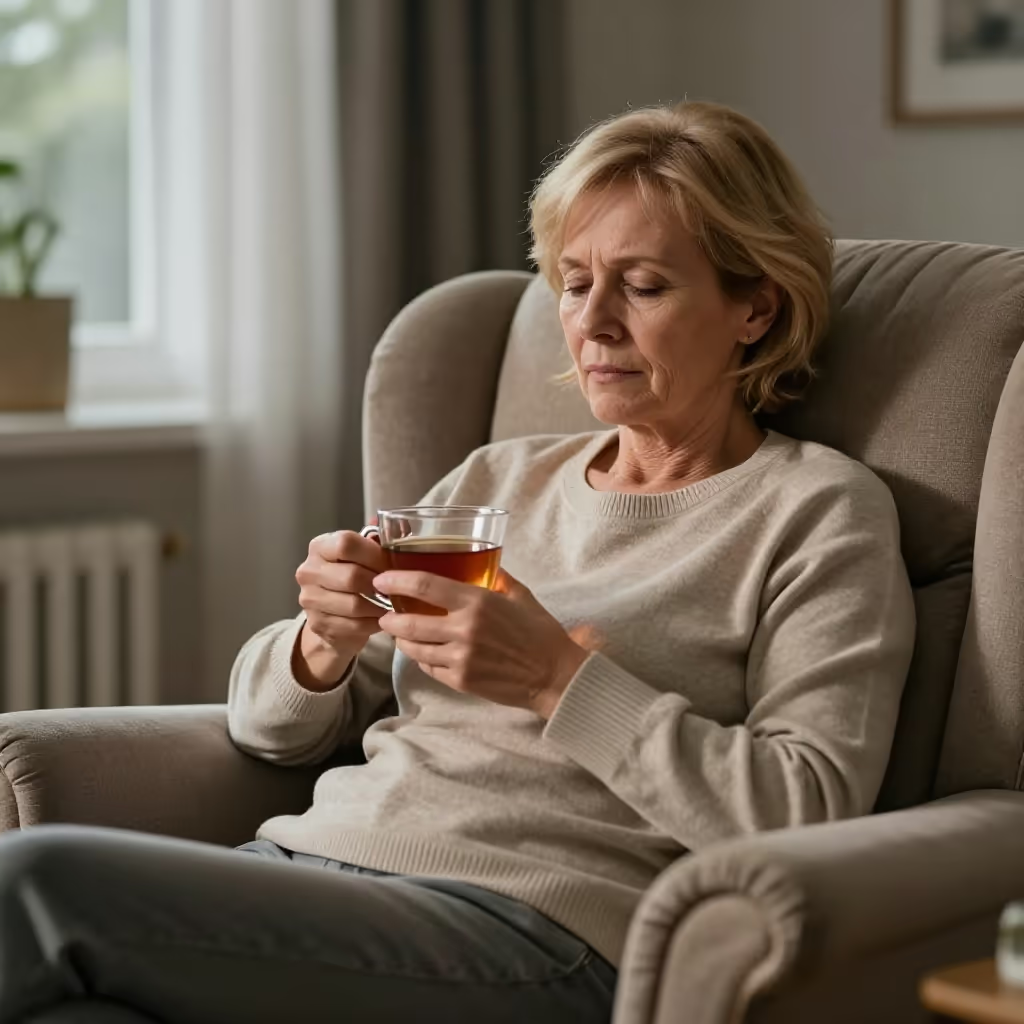
sich entspannen
to relax
To recover, calm down, and reduce physical or mental tension.
EXAMPLE
Nach einem langen Arbeitstag entspanne ich mich gerne mit einem guten Buch.
After a long day at work, I like to relax with a good book.
to relax
Loading your saved state.
to relax
To recover, calm down, and reduce physical or mental tension.
Nach einem langen Arbeitstag entspanne ich mich gerne mit einem guten Buch.
After a long day at work, I like to relax with a good book.
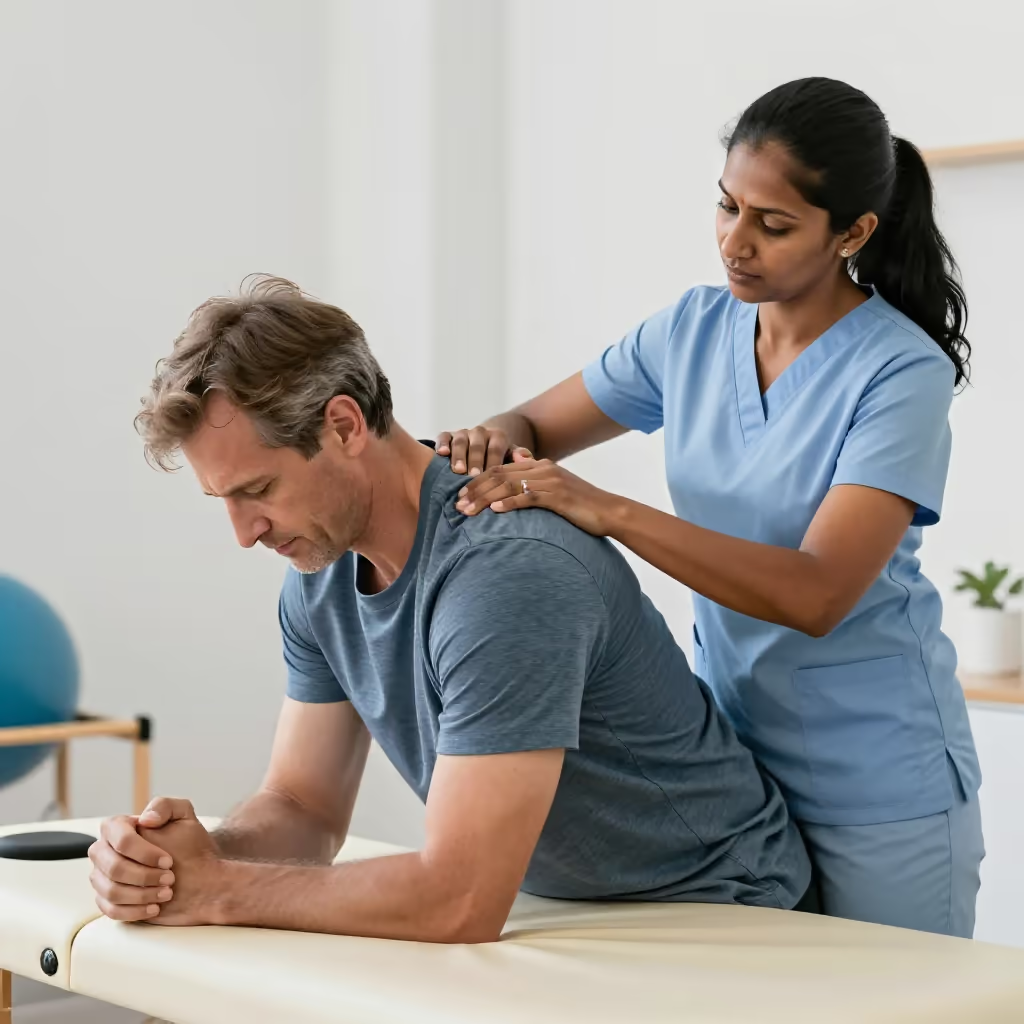
to ease
To loosen something that is tense (e.g., muscles) or to calm a tense situation.
Ein Witz half, die angespannte Atmosphäre im Raum zu entspannen.
A joke helped ease the tense atmosphere in the room.
The verb consists of the prefix 'ent-' and the stem 'spannen' (to tense/stretch). The prefix 'ent-' often means the opposite or the removal of something. Since 'spannen' means 'anspannen' (to tense), 'entspannen' literally means 'to take away tension'.
Eine Massage kann helfen, verspannte Muskeln zu entspannen.
A massage can help relax tense muscles.
Pay attention to the difference: 'sich entspannen' (to relax) is reflexive and means that a person calms down. 'Etwas entspannen' (to ease/relax something) is transitive and means that you loosen a thing or ease a situation.
Ich entspanne mich am Abend gerne auf dem Sofa.
I like to relax on the sofa in the evening.
When someone relaxes, the way they do it is often stated with the prepositions 'bei' (while/during) or 'mit' (with). Typical phrases are 'sich bei einem Spaziergang entspannen' (to relax during a walk) or 'sich mit Musik entspannen' (to relax with music).
Am Wochenende entspanne ich mich am liebsten bei der Gartenarbeit.
On the weekend, I most like to relax by gardening.
When 'entspannen' (to ease/relax) has an object, that object can be literal, such as 'die Muskeln' (the muscles) or 'die Hand' (the hand). But it can also be used figuratively, for example 'die Lage' (the situation), 'die Atmosphäre' (the atmosphere), or 'die Beziehungen' (the relations).
Der Mediator versuchte, die angespannte Lage zwischen den Parteien zu entspannen.
The mediator tried to ease the tense situation between the parties.
to recover
Sich entspannen primarily means reducing physical or mental tension and calming down. Sich erholen places greater emphasis on regaining strength and well-being after exertion, illness, or a shock. Use entspannen for a short period of rest, and erholen when the focus is on recovery.

Nach dem stressigen Arbeitstag entspanne ich mich eine Stunde bei ruhiger Musik.
After a stressful day at work, I relax for an hour while listening to quiet music.
Nach mehreren anstrengenden Arbeitstagen erhole ich mich am Wochenende und komme wieder zu Kräften.
After several exhausting days at work, I recover over the weekend and regain my strength.