

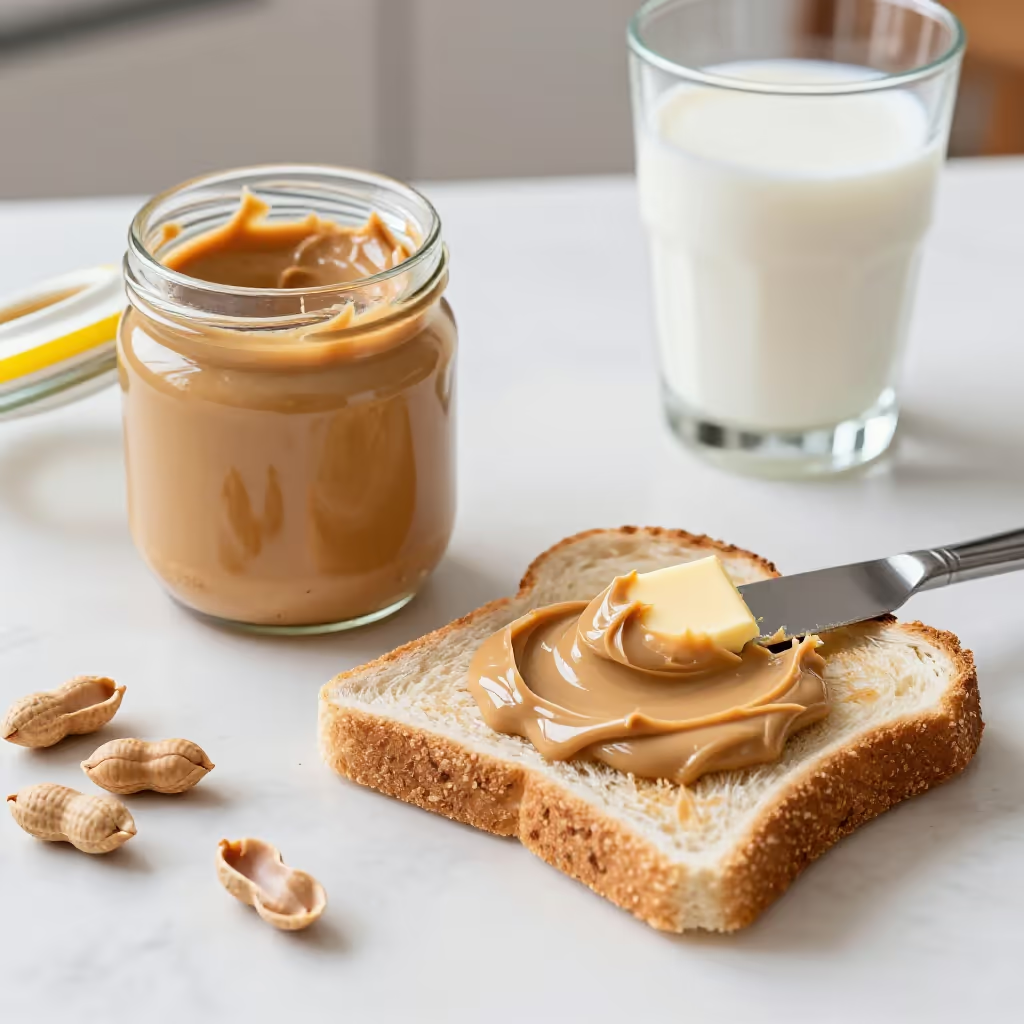
die Erdnussbutter
peanut butter
A spread made from ground and roasted peanuts.
EXAMPLE
Viele Kinder essen gerne ein Brot mit Erdnussbutter und Marmelade.
Many children like eating bread with peanut butter and jam.
peanut butter
Loading your saved state.
peanut butter
A spread made from ground and roasted peanuts.
Viele Kinder essen gerne ein Brot mit Erdnussbutter und Marmelade.
Many children like eating bread with peanut butter and jam.
The word is made up of 'die Erdnuss' (peanut) and 'die Butter' (butter). It logically describes a spread that has a butter-like consistency but is made from peanuts.
Zum Frühstück esse ich am liebsten Erdnussbutter auf meinem Toast.
For breakfast, I like peanut butter on my toast best.
In connection with peanut butter, the verb 'schmieren' (to spread) is often used. You spread peanut butter on bread, toast, or rolls.
Kannst du mir bitte Erdnussbutter auf mein Brot schmieren?
Could you please spread peanut butter on my bread?
In the supermarket, you often find two main types: 'cremige' Erdnussbutter (creamy peanut butter, without pieces) and Erdnussbutter 'mit Stückchen' (peanut butter with pieces).
Ich bevorzuge cremige Erdnussbutter, mein Bruder mag lieber die mit Stückchen.
I prefer creamy peanut butter; my brother likes the kind with pieces better.