

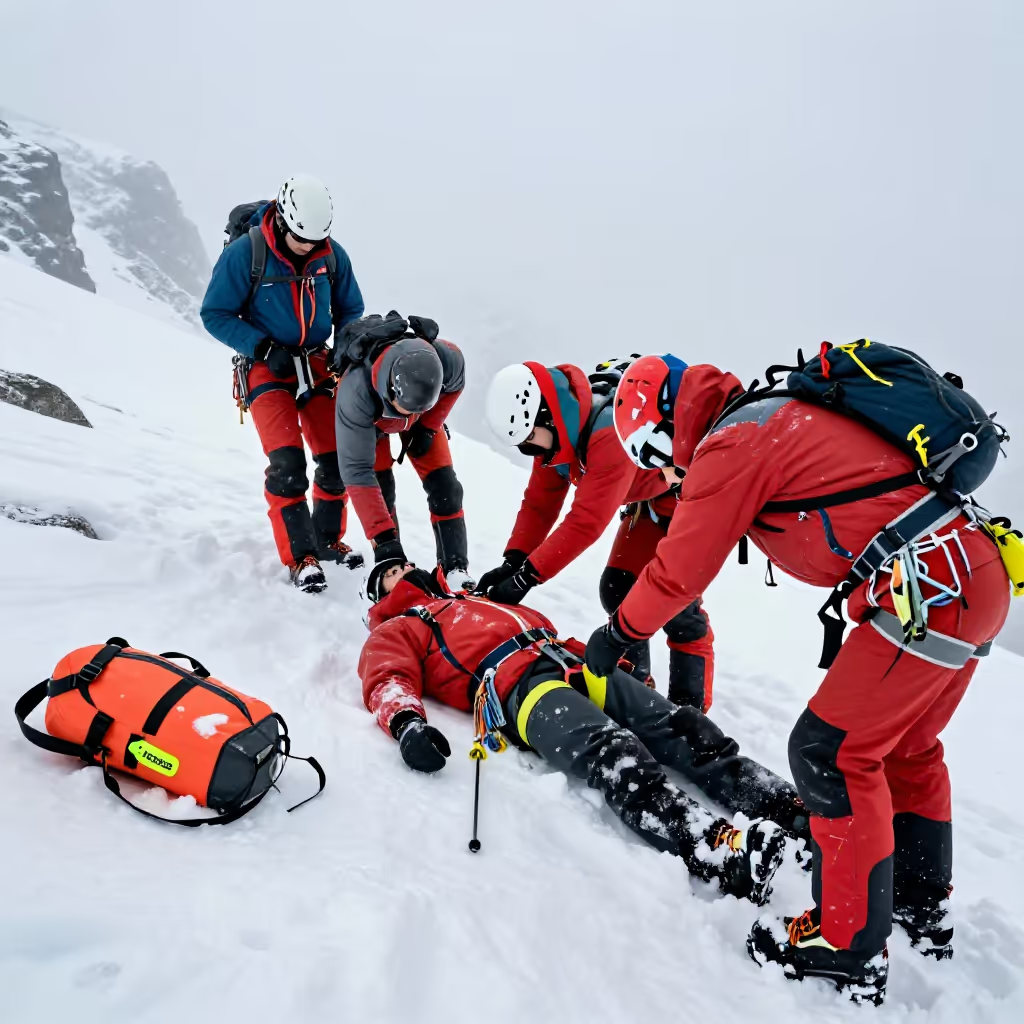
erfrieren
to freeze to death
To die from extreme cold.
EXAMPLE
Ohne Schutzkleidung wäre der Bergsteiger in dem Schneesturm erfroren.
Without protective clothing, the mountaineer would have frozen to death in the snowstorm.
to freeze to death
Loading your saved state.
to freeze to death
To die from extreme cold.
Ohne Schutzkleidung wäre der Bergsteiger in dem Schneesturm erfroren.
Without protective clothing, the mountaineer would have frozen to death in the snowstorm.

to get frostbite
To suffer serious damage to body parts such as fingers or toes due to strong exposure to cold.
Er hat sich bei der Expedition fast die Zehen erfroren.
He almost got frostbite in his toes during the expedition.

to freeze
(Of plants) to die or suffer serious damage from frost.
Die jungen Obstbäume sind im späten Frost leider alle erfroren.
Unfortunately, the young fruit trees all froze in the late frost.
The prefix 'er-' here indicates a result, often with a fatal outcome. Similar to 'erschießen' (to shoot dead; to die by being shot), 'erfrieren' means to die from freezing.
Die Bergsteiger sind im Schneesturm fast erfroren.
The mountaineers almost froze to death in the snowstorm.
When 'erfrieren' means to die from cold, the perfect tense is formed with 'sein' (to be). The reason is that it describes a change of state, from life to death.
Die Katze ist letzte Nacht draußen leider erfroren.
Sadly, the cat froze to death outside last night.
When referring to frostbite on body parts, the verb is used reflexively with the dative: 'sich (Dativ) etwas (Akkusativ) erfrieren' (to get frostbite on something). In this case, the perfect tense is formed with 'haben' (to have).
Ich habe mir beim Skifahren die Nase erfroren.
I got frostbite on my nose while skiing.
You can distinguish the meanings by the sentence structure. If 'erfrieren' stands alone and is used with the auxiliary verb 'sein', it means 'to die'. If it is reflexive with 'haben' and a body part, it refers to a localized injury.
Der Mann ist erfroren.
The man froze to death.
to be cold / freeze
Both words can describe a person being exposed to severe cold. „Frieren“ refers to the feeling of being cold, while „erfrieren“ expresses the possible consequence of extreme cold, namely death. Use „frieren“ for discomfort caused by cold and „erfrieren“ when the danger or consequence is meant.

Der Wanderer könnte ohne seine Jacke in der Kälte erfrieren.
Without his jacket, the hiker could freeze to death in the cold.
Der Wanderer friert wegen des kalten Windes trotz seiner dicken Jacke.
The hiker is cold because of the chilly wind despite his thick jacket.