

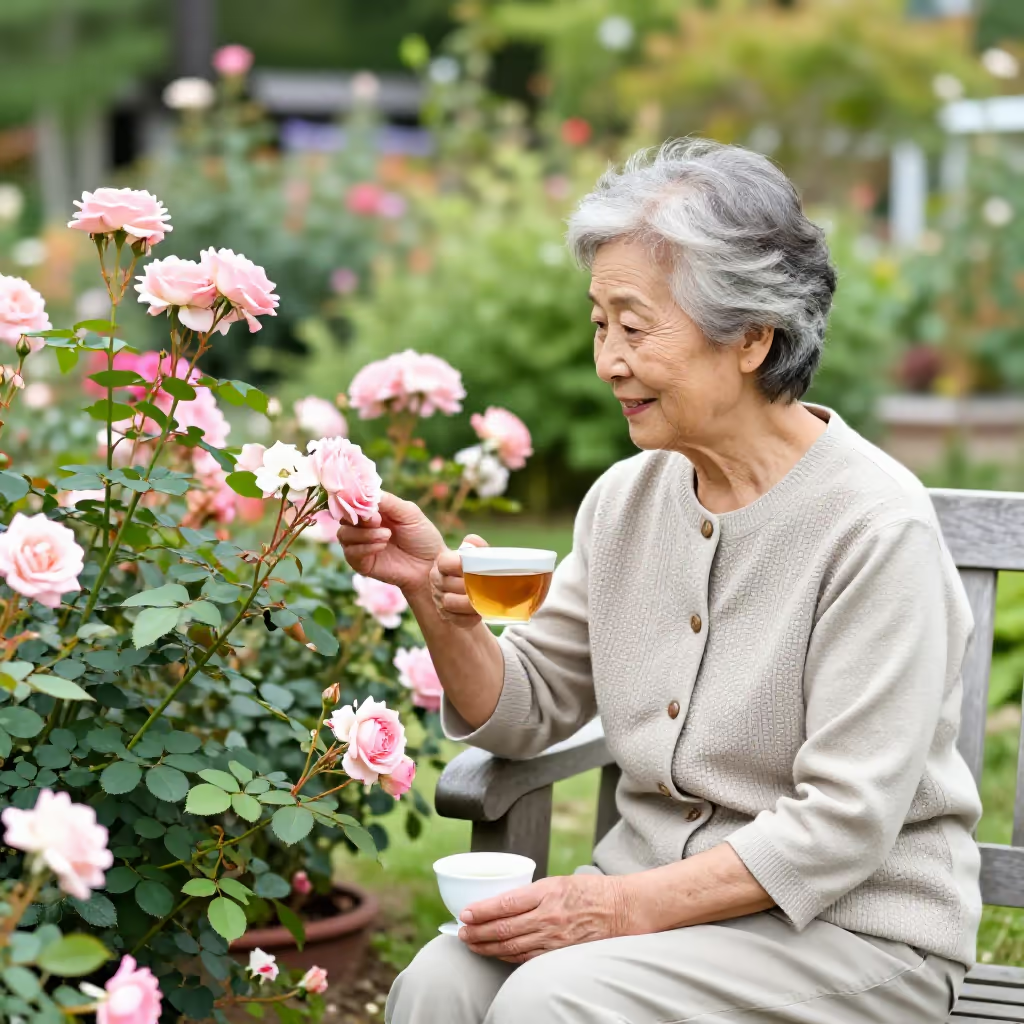
sich erfreuen an
to take delight in
To feel joy or pleasure in something; to enjoy something.
EXAMPLE
Im Frühling erfreue ich mich an den blühenden Blumen im Garten.
In spring, I take delight in the blooming flowers in the garden.
to delight
Loading your saved state.
to take delight in
To feel joy or pleasure in something; to enjoy something.
Im Frühling erfreue ich mich an den blühenden Blumen im Garten.
In spring, I take delight in the blooming flowers in the garden.

to delight someone
To bring joy to another person.
Er wollte seine Frau mit einem Strauß Rosen erfreuen.
He wanted to delight his wife with a bouquet of roses.

to enjoy great popularity
A formal expression meaning that something or someone is very popular.
Der neue Film erfreut sich beim Publikum großer Beliebtheit.
The new film enjoys great popularity with audiences.
'Erfreuen' (to delight) is an inseparable verb made up of the prefix 'er-' and the verb 'freuen' (to be happy / to please). The root of the word is 'die Freude' (joy).
Sein unerwarteter Besuch hat uns sehr erfreut.
His unexpected visit delighted us very much.
The verb has two grammatical patterns: when you yourself feel joy, you use it reflexively with the preposition 'an' + dative. When you bring joy to someone else, you use it transitively with an accusative object.
Sie erfreut sich an den kleinen Dingen des Lebens.
She takes delight in the little things in life.
'Erfreuen' (to delight) is part of an elevated, rather formal style of language. In everyday speech, people would usually use 'sich freuen über' (to be happy about) or 'jemandem eine Freude machen' (to make someone happy).
Wir erfreuen uns bester Gesundheit.
We enjoy the best of health.
The expression 'sich großer Beliebtheit erfreuen' (to enjoy great popularity) is a formal way of saying that something is very popular. The adjective before 'Beliebtheit' can vary, e.g., 'wachsender' (growing) or 'ungebrochener' (unbroken) popularity.
Podcasts erfreuen sich seit Jahren wachsender Beliebtheit.
Podcasts have enjoyed growing popularity for years.
to look forward / to be pleased
Both verbs describe taking pleasure in something that is present or has already happened. „Sich freuen über“ is the usual, neutral form, while „sich erfreuen an“ sounds much more formal and is used with „an“. In everyday speech, „sich freuen“ is usually appropriate; in elevated language, „sich erfreuen“ can also be used.

Die Bewohner erfreuen sich an dem schönen Garten hinter ihrem Haus.
The residents take delight in the beautiful garden behind their house.
Ich freue mich über den schönen Garten hinter unserem Haus.
I am pleased about the beautiful garden behind our house.