


genießen
to enjoy
To experience something as pleasant and good, either through the senses or as a feeling.
EXAMPLE
Ich genieße die Ruhe am Morgen, bevor alle aufwachen.
I enjoy the quiet in the morning before everyone wakes up.
to enjoy
Loading your saved state.
to enjoy
To experience something as pleasant and good, either through the senses or as a feeling.
Ich genieße die Ruhe am Morgen, bevor alle aufwachen.
I enjoy the quiet in the morning before everyone wakes up.
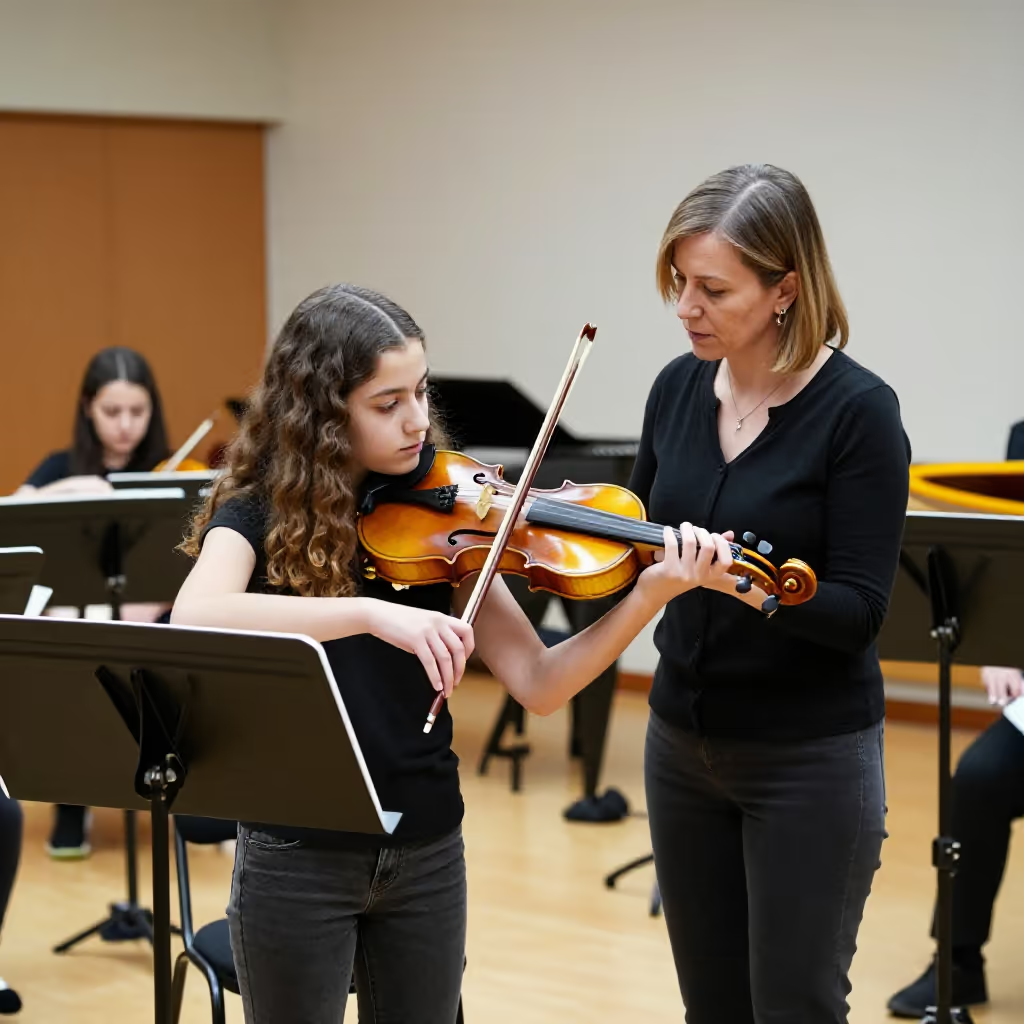
to enjoy
To receive or possess something positive, such as an education, a good reputation, or trust.
Als Experte auf seinem Gebiet genießt er hohes Ansehen.
As an expert in his field, he enjoys high esteem.
The verb 'genießen' (to enjoy) always needs an accusative object. You ask: Whom or what do I enjoy? So the thing you enjoy is in the accusative.
Wir genießen den warmen Sommerabend auf dem Balkon.
We are enjoying the warm summer evening on the balcony.
'Genießen' (to enjoy) belongs to the word family of 'der Genuss' (enjoyment/pleasure). When you enjoy something, you experience pleasure. This helps you remember the meaning.
Ein gutes Essen mit Freunden ist für mich ein echter Genuss.
A good meal with friends is a real pleasure for me.
In its main meaning, 'genießen' (to enjoy) is combined with things that you perceive with the senses or experience as pleasant: die Sonne genießen (to enjoy the sun), ein gutes Buch genießen (to enjoy a good book), die Stille genießen (to enjoy the silence), das Wochenende genießen (to enjoy the weekend).
Am Sonntag genieße ich es, lange zu schlafen.
On Sundays, I enjoy sleeping in.
This meaning is used for abstract, positive things that someone has earned. Typical combinations are: 'Vertrauen genießen' (to enjoy trust), 'einen guten Ruf genießen' (to enjoy a good reputation), or 'Respekt genießen' (to enjoy respect).
Die Professorin genießt bei ihren Studenten großes Vertrauen.
The professor enjoys great trust among her students.
to have
With a good reputation or the trust of others, haben neutrally describes the existing state. Genießen is a common evaluative collocation in this context and emphasizes that the reputation or trust is something positive. Both are possible, but genießen places more emphasis on positive recognition.

Das Hotel genießt bei Familien einen guten Ruf.
The hotel enjoys a good reputation among families.
Das Hotel hat bei Familien einen guten Ruf.
The hotel has a good reputation among families.