

erkranken
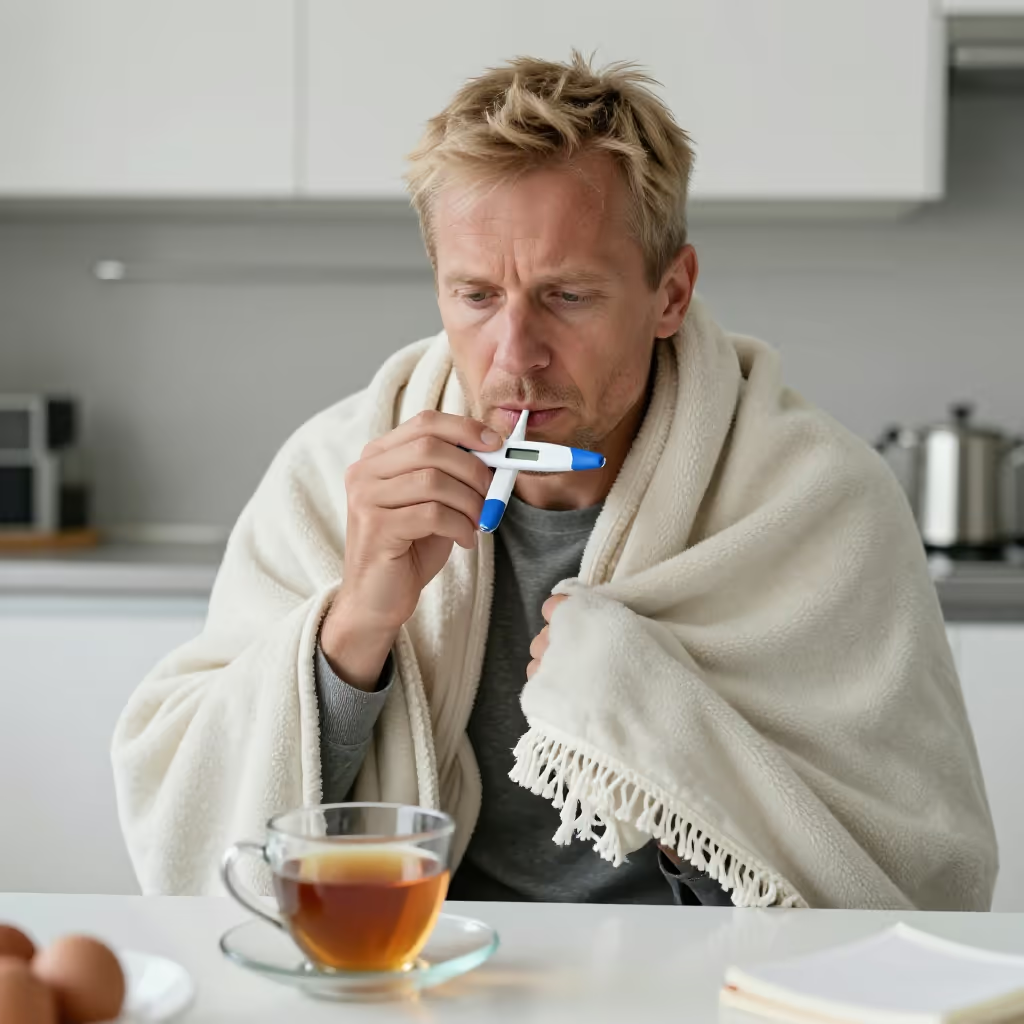
to fall ill
To become sick; to lose one's state of health.
EXAMPLE
Letzte Woche ist er plötzlich erkrankt und musste im Bett bleiben.
Last week he suddenly fell ill and had to stay in bed.
to fall ill
Loading your saved state.
to fall ill
To become sick; to lose one's state of health.
Letzte Woche ist er plötzlich erkrankt und musste im Bett bleiben.
Last week he suddenly fell ill and had to stay in bed.
to contract
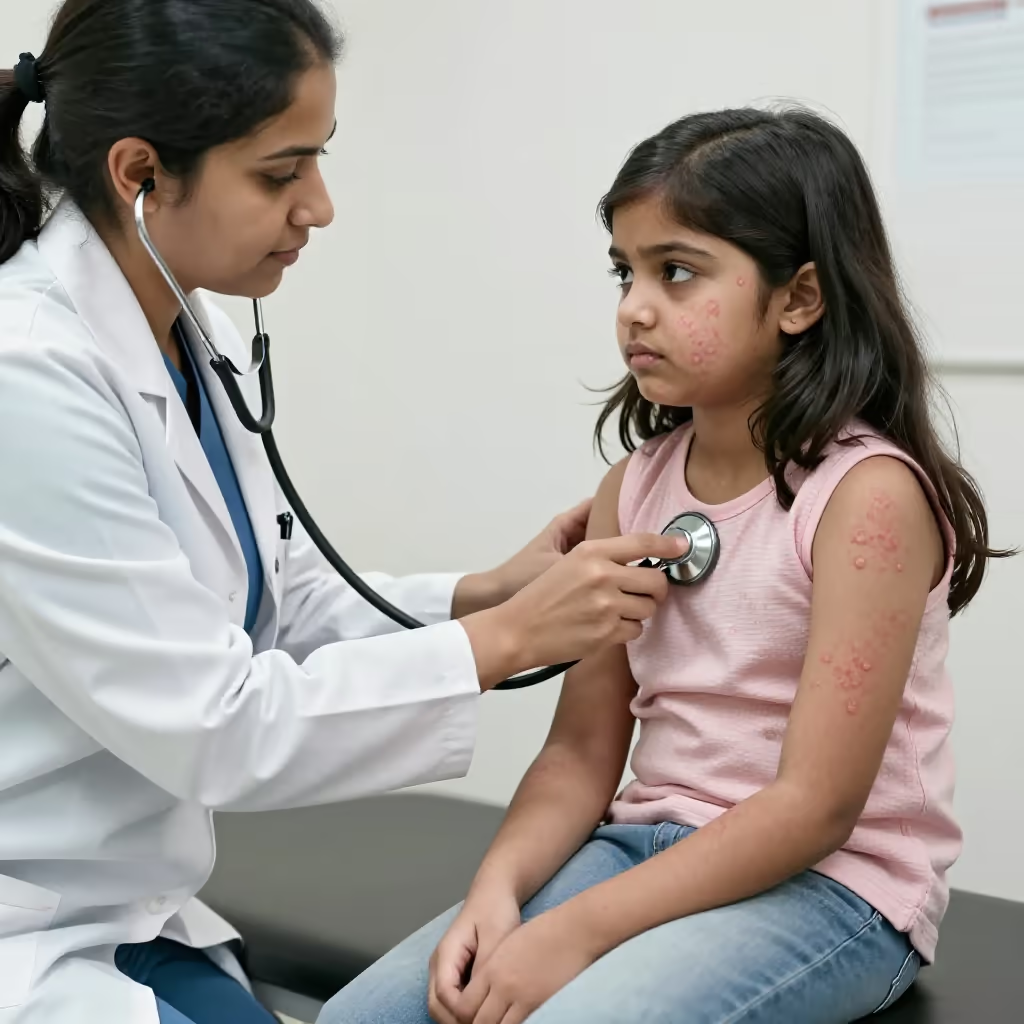
To suffer from or contract a specific illness.
Viele Menschen erkranken jedes Jahr an der Grippe.
Many people contract the flu every year.
The verb is made up of the prefix 'er-' and the adjective 'krank' (sick). Here, the prefix 'er-' expresses the beginning of a state, that is, becoming sick.
Pass auf, dass du dich nicht erkältest und erkrankst.
Be careful that you don't catch a cold and fall ill.
Since 'erkranken' (to fall ill) describes a change of state (from healthy to sick), the perfect tense is always formed with the auxiliary verb 'sein' (to be), not with 'haben' (to have).
Mein Kollege ist letzte Woche an einer Lungenentzündung erkrankt.
My colleague came down with pneumonia last week.
'Erkranken' (to fall ill) is more formal than 'krank werden' (to get sick) and is often used in medical, scientific, or official contexts.
Die Statistik zeigt, wie viele Menschen jährlich an Diabetes erkranken.
The statistics show how many people develop diabetes each year.
To name the specific illness, you always use the preposition 'an' followed by the dative. The structure is: jemand erkrankt an einer Krankheit (someone contracts an illness).
Er ist als Kind an Masern erkrankt.
He contracted measles as a child.
to get / receive
Eine Krankheit bekommen and an einer Krankheit erkranken both describe someone becoming ill. Bekommen is a general, everyday expression. Erkranken sounds more formal and, with a specific illness, is usually used together with an.
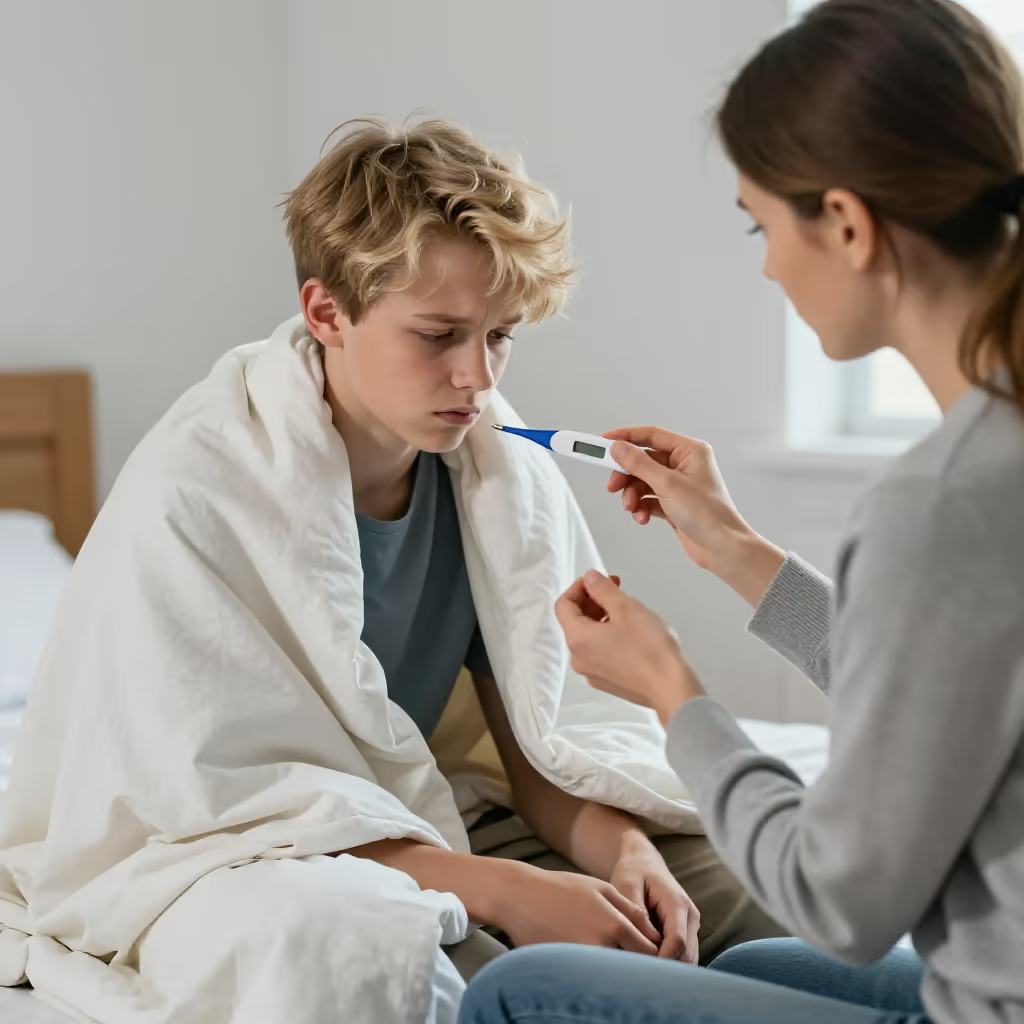
Nach der Reise erkrankte Lara an einer Lungenentzündung.
After the trip, Lara fell ill with pneumonia.
Nach der Reise bekam Lara eine Lungenentzündung.
After the trip, Lara got pneumonia.