


bekommen
to get / receive
To receive something as a gift, by post, or in some other way. Synonymous with 'erhalten' (to receive).
EXAMPLE
Zu Weihnachten habe ich viele Geschenke bekommen.
I got many presents for Christmas.
to get / receive
Loading your saved state.
to get / receive
To receive something as a gift, by post, or in some other way. Synonymous with 'erhalten' (to receive).
Zu Weihnachten habe ich viele Geschenke bekommen.
I got many presents for Christmas.

to get / develop
To reach a certain state or develop an illness.
Zieh dich warm an, damit du keine Erkältung bekommst.
Dress warmly so you don't get a cold.

to get / buy
To acquire or obtain something, often by buying it or as the result of a search.
In diesem Geschäft bekommen Sie frisches Gemüse.
You can get fresh vegetables in this shop.
to agree with
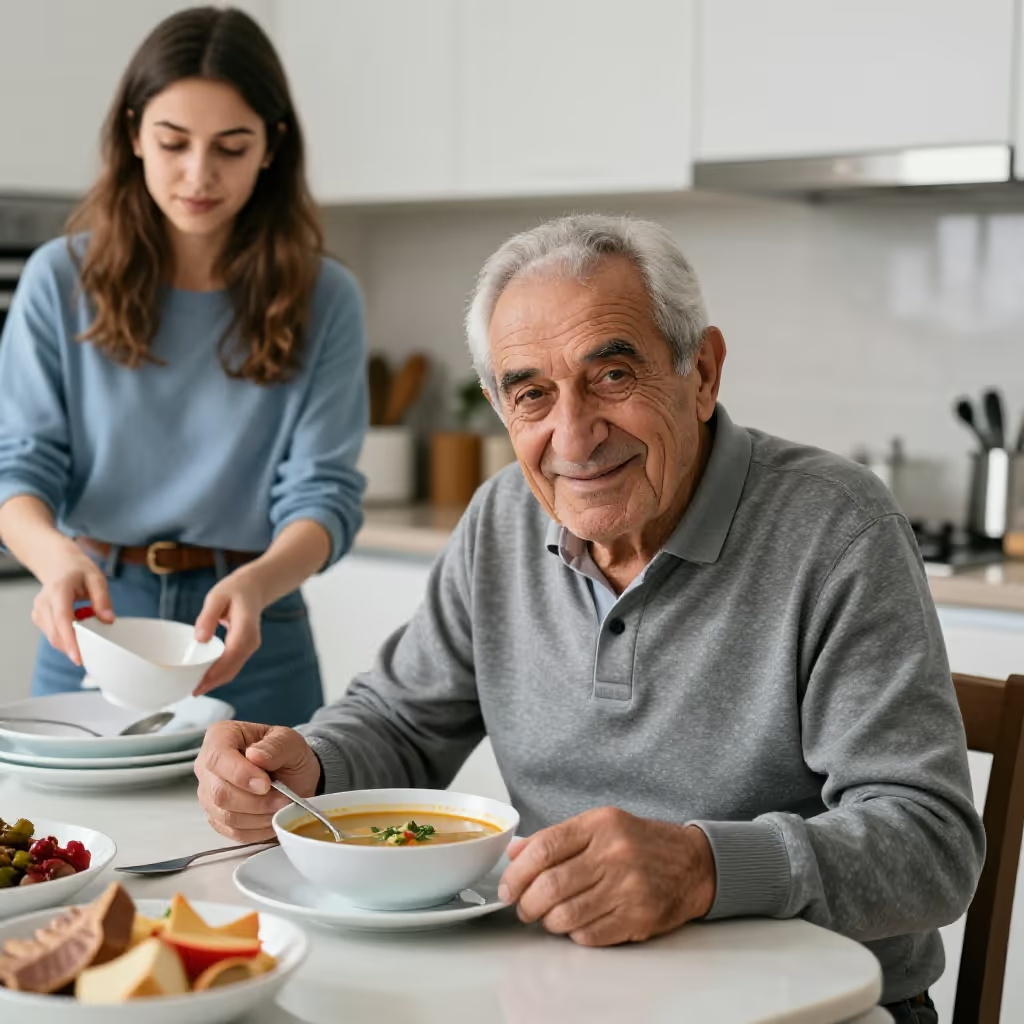
Describes that food or drink agrees with someone and does not cause negative physical reactions.
Das scharfe Essen ist mir leider nicht gut bekommen.
Unfortunately, the spicy food did not agree with me.
to have a baby
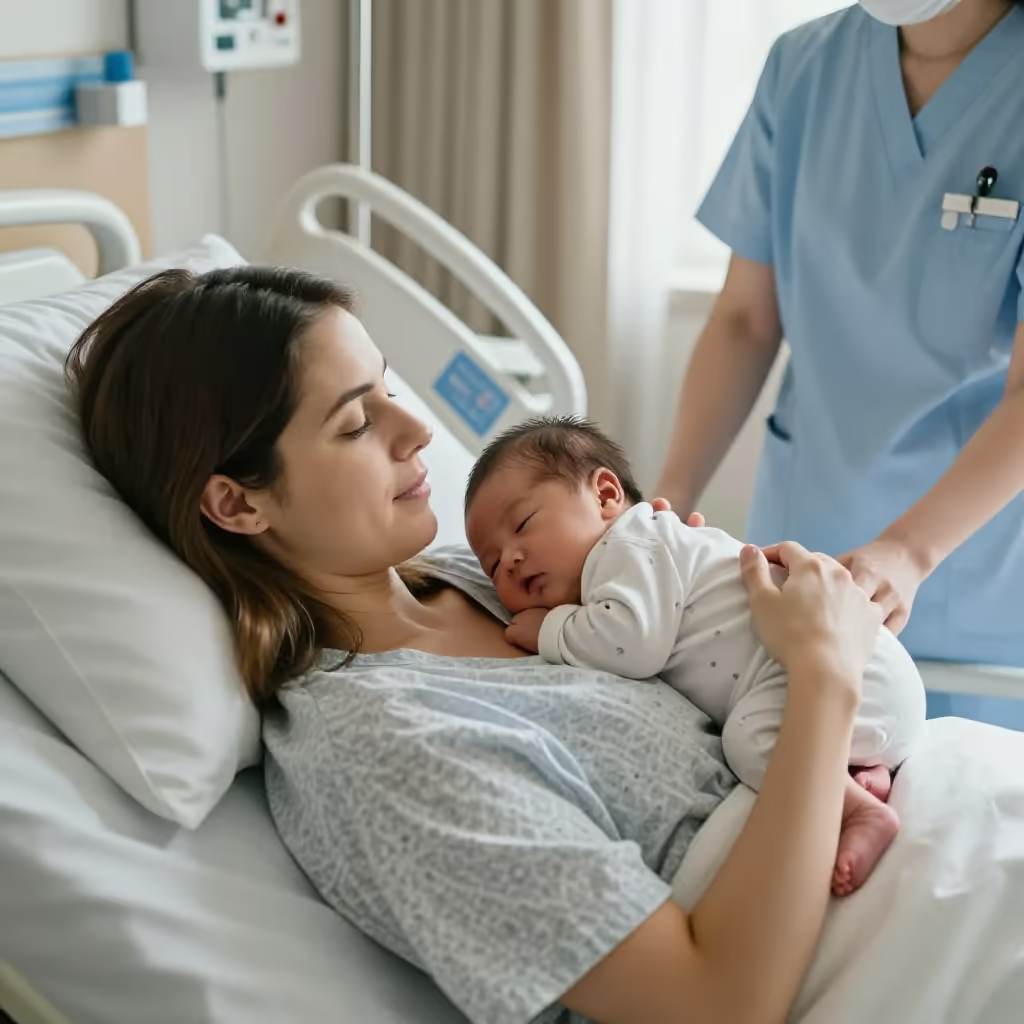
To give birth to a child, or in the case of animals, to young.
Meine Schwester hat letzten Monat Nachwuchs bekommen.
My sister had a baby last month.

to get scared
An idiom meaning that someone suddenly feels very afraid.
Als er die seltsamen Geräusche im Keller hörte, bekam er es mit der Angst zu tun.
When he heard the strange noises in the basement, he got scared.

to get
Used as an auxiliary verb in a passive-like construction (recipient passive) to express that something is done for or given to the subject.
Er bekam das Buch zum Geburtstag geschenkt.
He got the book as a birthday present.
Careful: 'bekommen' does not mean 'to become', but 'to get' or 'to receive'. This is one of the most common mistakes for English speakers. To express 'to become', you use the verb 'werden' (to become).
Ich habe eine E-Mail von meinem Professor bekommen.
I got an email from my professor.
The prefix 'be-' is inseparable. This means it stays firmly attached to the verb 'kommen' (to come) in all tenses and sentence types and is never placed at the end of the sentence.
Sie bekommt morgen ihr Zeugnis.
She gets her report card tomorrow.
In the basic meaning 'to receive', 'bekommen' is combined with many things that one receives. Common examples are: 'einen Brief bekommen' (to get a letter), 'eine Nachricht bekommen' (to get a message), 'eine Antwort bekommen' (to get an answer), 'Besuch bekommen' (to have visitors), or 'eine Chance bekommen' (to get a chance).
Hast du schon eine Antwort auf deine Bewerbung bekommen?
Have you already gotten an answer to your application?
To describe the beginning of a state or an illness, 'bekommen' is often used. Typical combinations are: 'eine Erkältung bekommen' (to get a cold), 'Fieber bekommen' (to get a fever), 'Hunger bekommen' (to get hungry), 'Angst bekommen' (to get scared), or 'schlechte Laune bekommen' (to get into a bad mood).
Wenn ich zu wenig schlafe, bekomme ich schnell Kopfschmerzen.
When I sleep too little, I quickly get headaches.
Whether 'bekommen' means 'to receive' or 'to buy/acquire' depends on the context. When shops, prices, or availability are being discussed, it usually means 'to be able to buy' or 'to be available'.
Frische Brötchen bekommen Sie beim Bäcker um die Ecke.
You can get fresh rolls at the bakery around the corner.
In the phrase 'gut bekommen' (to agree with someone), the person who tolerates or does not tolerate something is in the dative. The food or drink is the subject of the sentence.
Der fettige Fisch ist mir leider nicht gut bekommen.
Unfortunately, the greasy fish did not agree with me.
The expression 'es mit der Angst zu tun bekommen' (to get scared) is a fixed idiom. 'Es' and 'mit der Angst zu tun' are fixed parts, while the subject is the person who suddenly feels afraid.
Als das Licht ausfiel, bekam sie es mit der Angst zu tun.
When the lights went out, she got scared.
'Bekommen' can be used with a past participle to form a kind of passive. This construction emphasizes the person who receives something or for whom something good is done. The subject is the recipient of the action.
Sie bekommt die Haare geschnitten.
She is getting her hair cut.
to become / will
Werden and bekommen can both express the onset of a new state. Werden typically combines with an adjective or participle, whereas bekommen combines with a noun naming the state or an illness. The appropriate form therefore depends on how the change is expressed.
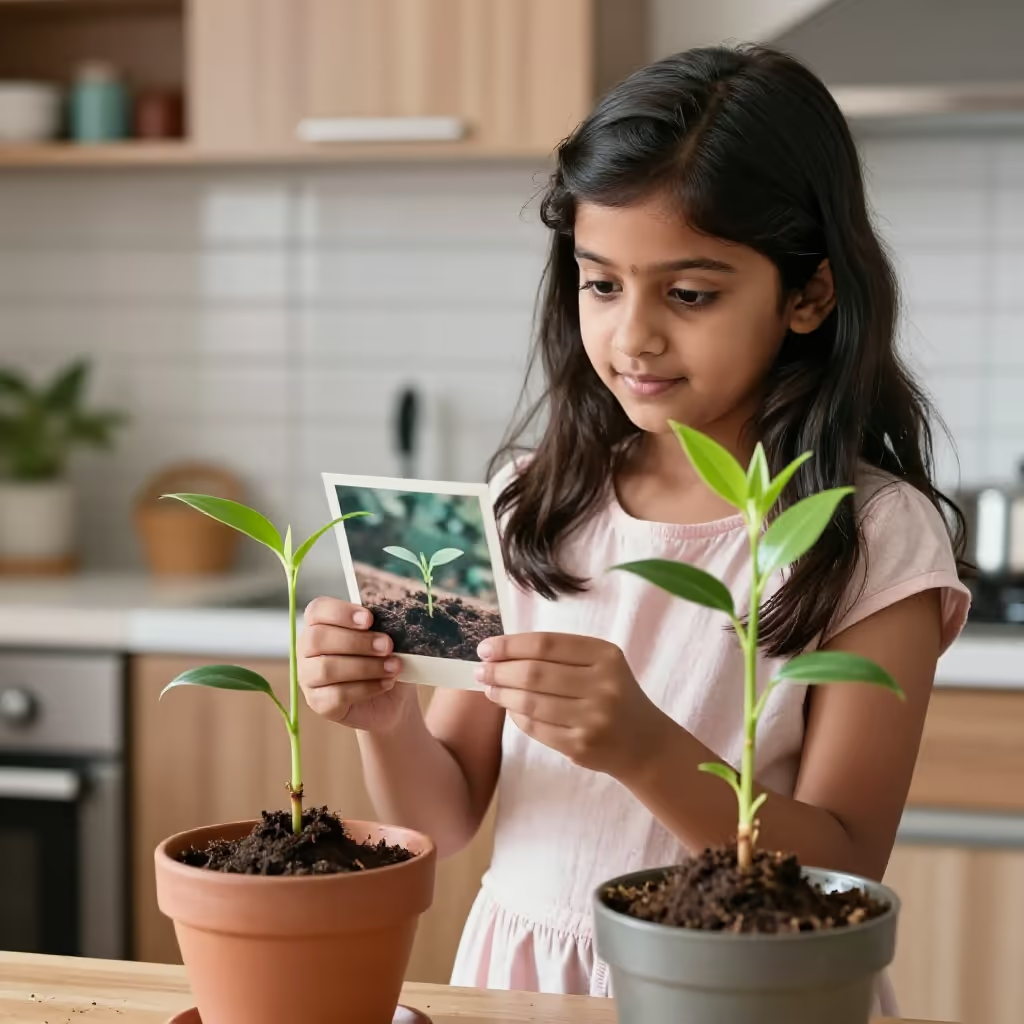
Nach dem langen Lauf bekam Lea plötzlich Kopfschmerzen.
After the long run, Lea suddenly got a headache.
Nach dem langen Lauf wurde Lea plötzlich müde.
After the long run, Lea suddenly became tired.