


erledigt
done
Completed or settled; a task has been finished or a matter no longer requires any further attention.
EXAMPLE
Die Hausaufgaben sind erledigt.
The homework is done.
done / exhausted / finished
Loading your saved state.
done
Completed or settled; a task has been finished or a matter no longer requires any further attention.
Die Hausaufgaben sind erledigt.
The homework is done.
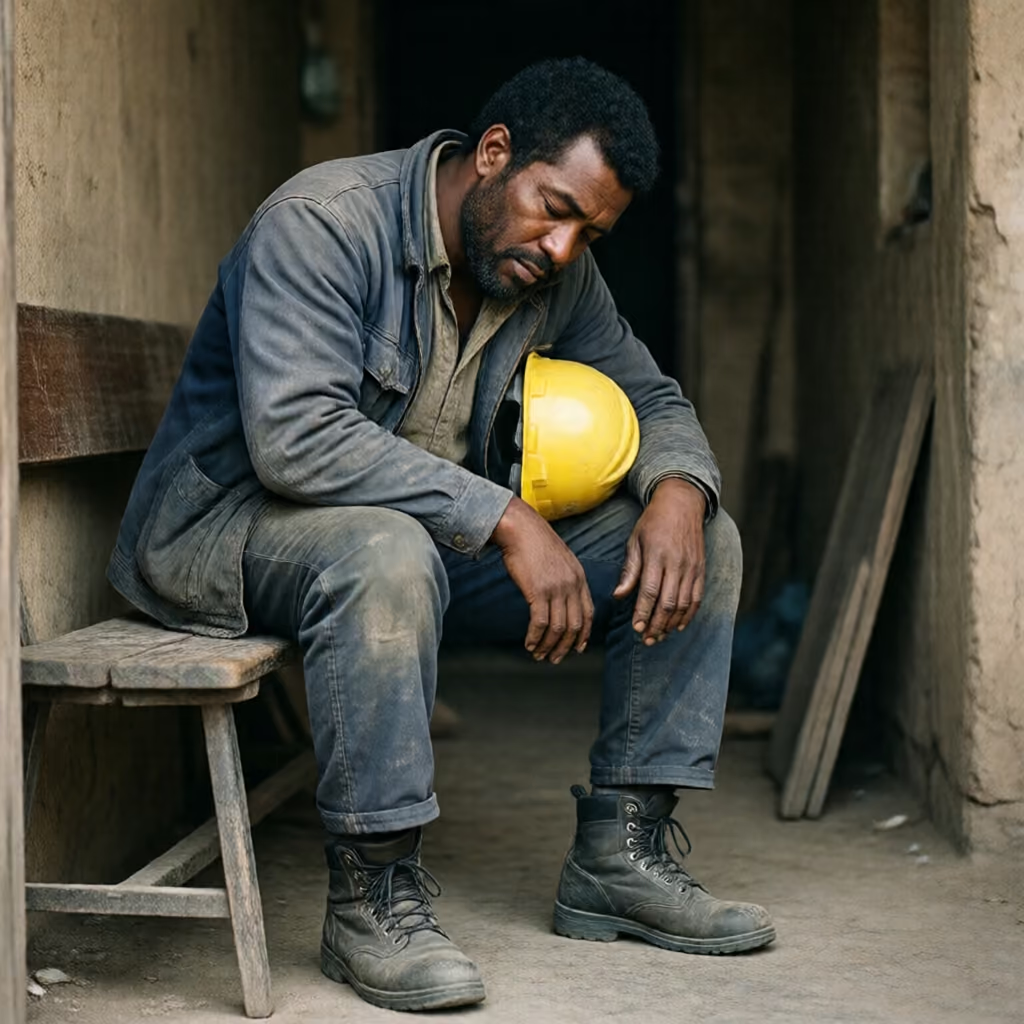
exhausted
Very tired or exhausted, with no energy left.
Nach dem langen Arbeitstag bin ich völlig erledigt.
After the long workday, I was completely exhausted.

finished
Defeated, ruined, or in a hopeless situation; this usage is usually colloquial.
Nach diesem Fehler ist seine Karriere erledigt.
After this mistake, his career is finished.
| basic form | erledigt |
|---|
| masc. | fem. | neut. | plural | |
|---|---|---|---|---|
| nom. | -e | -e | -e | -en |
| acc. | -en | -e | -e | -en |
| dat. | -en | -en | -en | -en |
| gen. | -en | -en | -en | -en |
Add the ending to erledigt.
| masc. | fem. | neut. | plural | |
|---|---|---|---|---|
| nom. | -er | -e | -es | -en |
| acc. | -en | -e | -es | -en |
| dat. | -en | -en | -en | -en |
| gen. | -en | -en | -en | -en |
Add the ending to erledigt.
| masc. | fem. | neut. | plural | |
|---|---|---|---|---|
| nom. | -er | -e | -es | -e |
| acc. | -en | -e | -es | -e |
| dat. | -em | -er | -em | -en |
| gen. | -en | -er | -en | -er |
Add the ending to erledigt.
'Erledigt' (done) very often appears after 'sein' (to be), where it describes the state of a task, a matter, or a person. The subject shows what has been completed, settled, or exhausted.
Nach dem Telefonat war die Angelegenheit endlich erledigt.
After the phone call, the matter was finally settled.
'Erledigt' (done) is especially often used with 'Aufgabe' (task), 'Arbeit' (work), 'Auftrag' (assignment), and 'Formalitäten' (formalities). These combinations show that something has been fully dealt with.
Bis zum Mittag waren alle Formalitäten erledigt.
By noon, all the formalities had been taken care of.
For the meaning 'sehr müde' (very tired), 'erledigt' (exhausted) is usually used with intensifiers such as 'völlig' (completely), 'total' (totally), or 'komplett' (completely). The word then describes a person, rather than a completed task.
Nach dem Umzug war ich völlig erledigt.
After moving house, I was completely exhausted.
The meaning 'besiegt oder ruiniert' (defeated or ruined) is usually colloquial and often refers to a career, reputation, or a person's future. The context often indicates a negative consequence following a mistake or failure.
Nach dem Skandal war seine politische Karriere erledigt.
After the scandal, his political career was finished.
finished / ready
Both words work when a task has been completed. “Fertig” emphasizes that the activity is fully finished and is often used with “mit” (with). “Erledigt” emphasizes that the task or matter needs no further attention. Depending on the sentence, the focus is therefore on either the person or the task.

Der Antrag ist erledigt.
The application has been dealt with.
Ich bin mit dem Antrag fertig.
I'm finished with the application.