

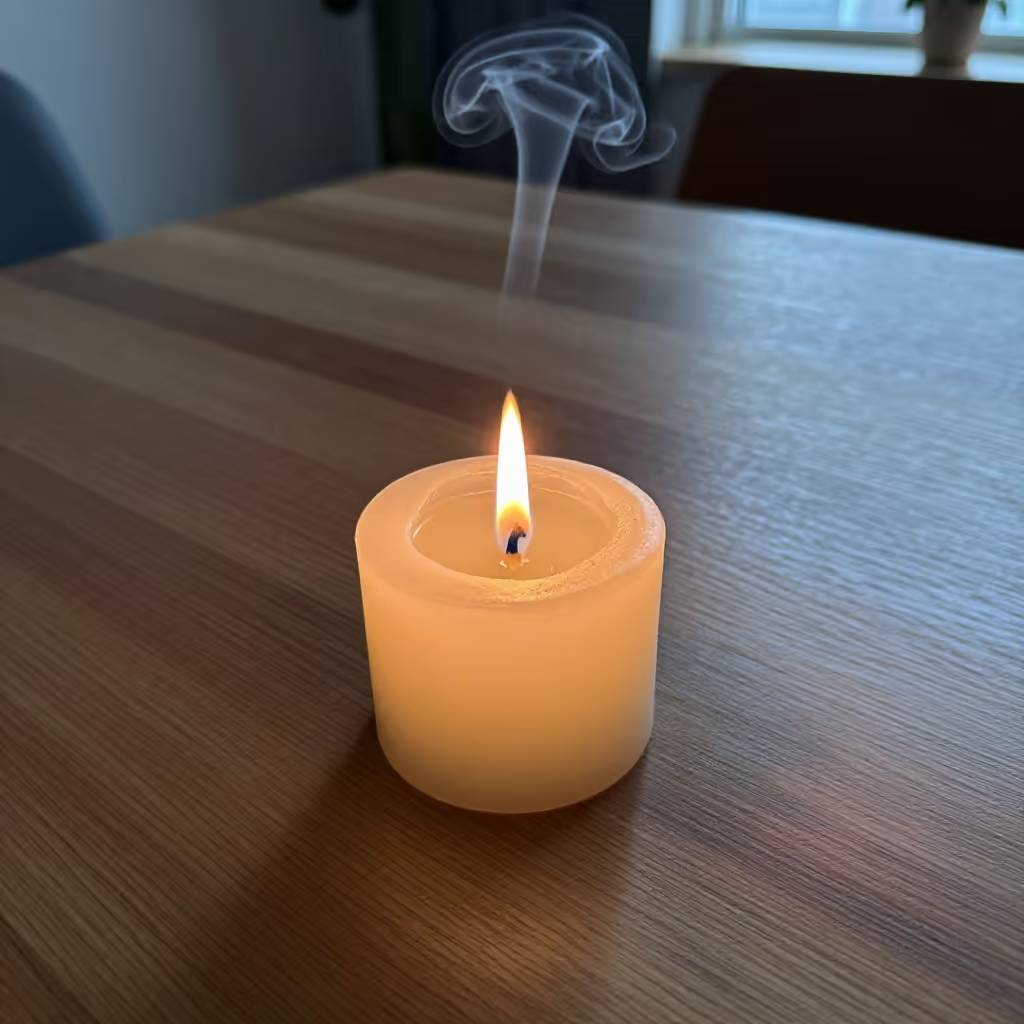
erlöschen
to go out
To stop burning or shining. Refers to fires, candles, lights, or similar things.
EXAMPLE
Als der Wind stärker wurde, ist die Kerze erloschen.
When the wind got stronger, the candle went out.
to go out / expire
Loading your saved state.
to go out
To stop burning or shining. Refers to fires, candles, lights, or similar things.
Als der Wind stärker wurde, ist die Kerze erloschen.
When the wind got stronger, the candle went out.

to expire
(formal, legal) To lose validity or legal force. Refers to contracts, claims, rights, or powers of attorney.
Mit dem Tod des Vollmachtgebers ist die Vollmacht erloschen.
With the death of the person granting the power of attorney, the power of attorney expired.

to fade away
(elevated) To stop existing; to slowly disappear or die. Often refers to feelings, sounds, or life.
Langsam erlosch die Hoffnung in seinen Augen.
Slowly, the hope in his eyes faded away.
'Erlöschen' (to go out / expire) is an inseparable verb with the prefix 'er-'. The base verb 'löschen' (to extinguish) is transitive (someone puts out a fire), but 'erlöschen' is intransitive and describes something going out on its own ('das Feuer erlischt' — the fire goes out).
Bitte lösche die Kerze, bevor du gehst.
Please put out the candle before you leave.
Since 'erlöschen' describes a change of state, the perfect tense is always formed with the auxiliary verb 'sein' (to be). The form is 'ist erloschen' (has gone out / has expired).
Plötzlich sind alle Lichter im Haus erloschen.
Suddenly, all the lights in the house went out.
In its basic meaning, 'erlöschen' is used for things that burn or shine. Typical subjects are 'das Feuer' (the fire), 'die Flamme' (the flame), 'die Glut' (the embers), 'die Kerze' (the candle), or 'das Licht' (the light).
Die Flamme des Feuerzeugs erlosch im Wind.
The flame of the lighter went out in the wind.
This meaning is typical of formal legal and administrative language. It is rarely used in everyday speech.
Der Anspruch auf eine Rückerstattung erlischt nach drei Jahren.
The claim for a refund expires after three years.
In a legal context, the verb is combined with abstract nouns such as 'Anspruch' (claim), 'Recht' (right), 'Vertrag' (contract), 'Garantie' (warranty), or 'Lizenz' (license).
Ohne Verlängerung erlischt Ihre Mitgliedschaft am Ende des Monats.
Without renewal, your membership expires at the end of the month.
In this meaning, 'erlöschen' belongs to elevated or poetic language. It describes the slow disappearance of feelings, life, or sounds.
Nach dem langen Streit war ihre Liebe füreinander erloschen.
After the long argument, their love for each other had faded away.
to go out / run out / assume
When referring to a flame or a light, Ausgehen and erlöschen both mean that it stops burning or shining. Ausgehen is the usual choice in everyday language, while erlöschen sounds more elevated or figurative. The process being described can be the same with both words.
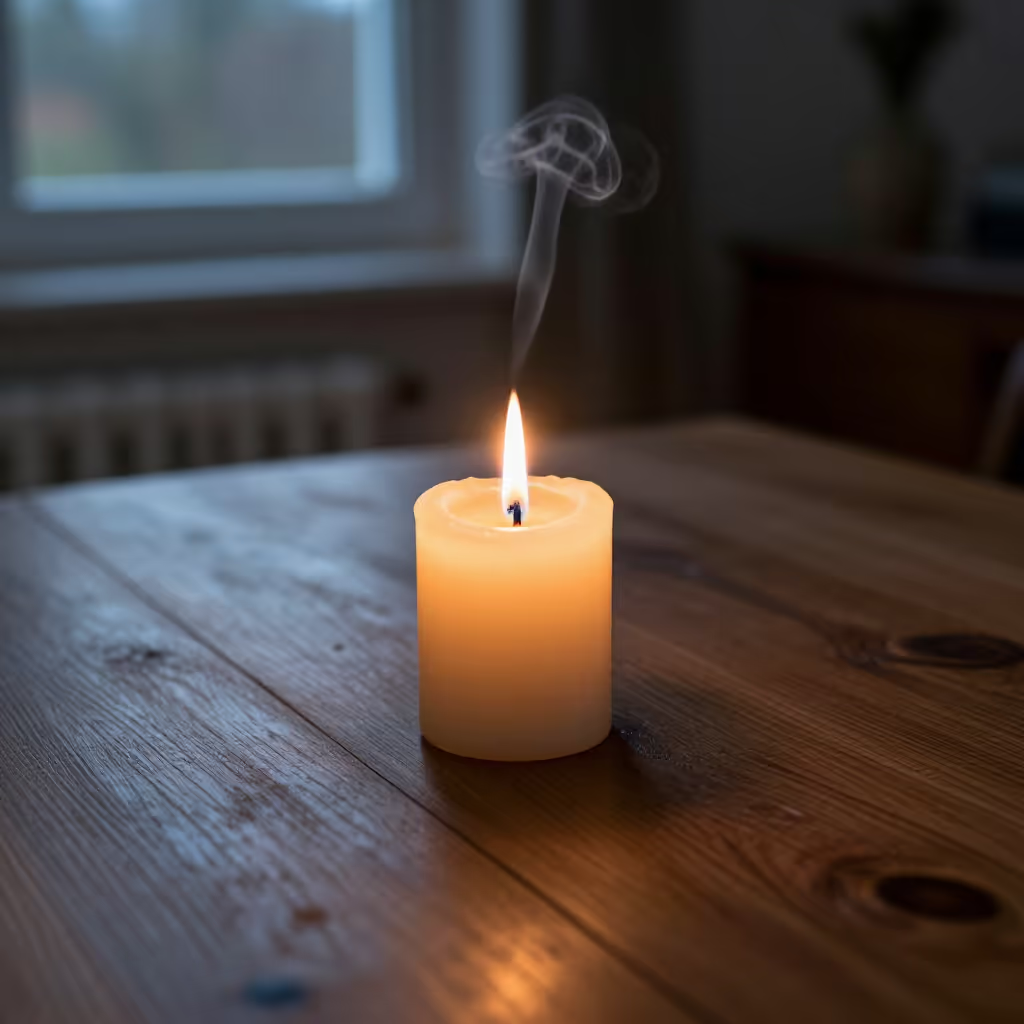
Als der Wind durch das Fenster kam, erlosch die Kerze.
When the wind came through the window, the candle went out.
Als der Wind durch das Fenster kam, ging die Kerze aus.
When the wind came through the window, the candle went out.