

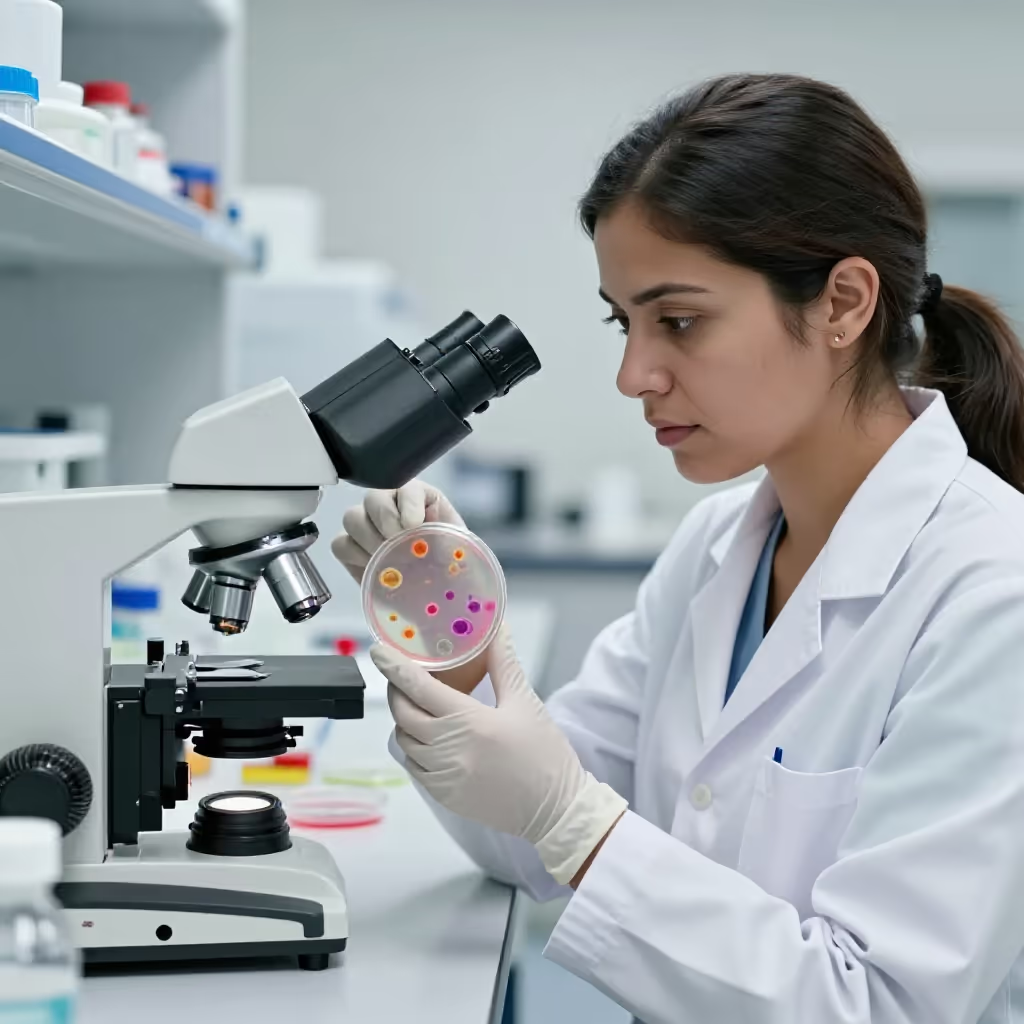
der Keim
germ
A microorganism, especially a bacterium, virus, or fungus, that can cause disease.
EXAMPLE
Regelmäßiges Händewaschen hilft, die Verbreitung von Keimen zu reduzieren.
Regular handwashing helps reduce the spread of germs.
germ / sprout
Loading your saved state.
germ
A microorganism, especially a bacterium, virus, or fungus, that can cause disease.
Regelmäßiges Händewaschen hilft, die Verbreitung von Keimen zu reduzieren.
Regular handwashing helps reduce the spread of germs.
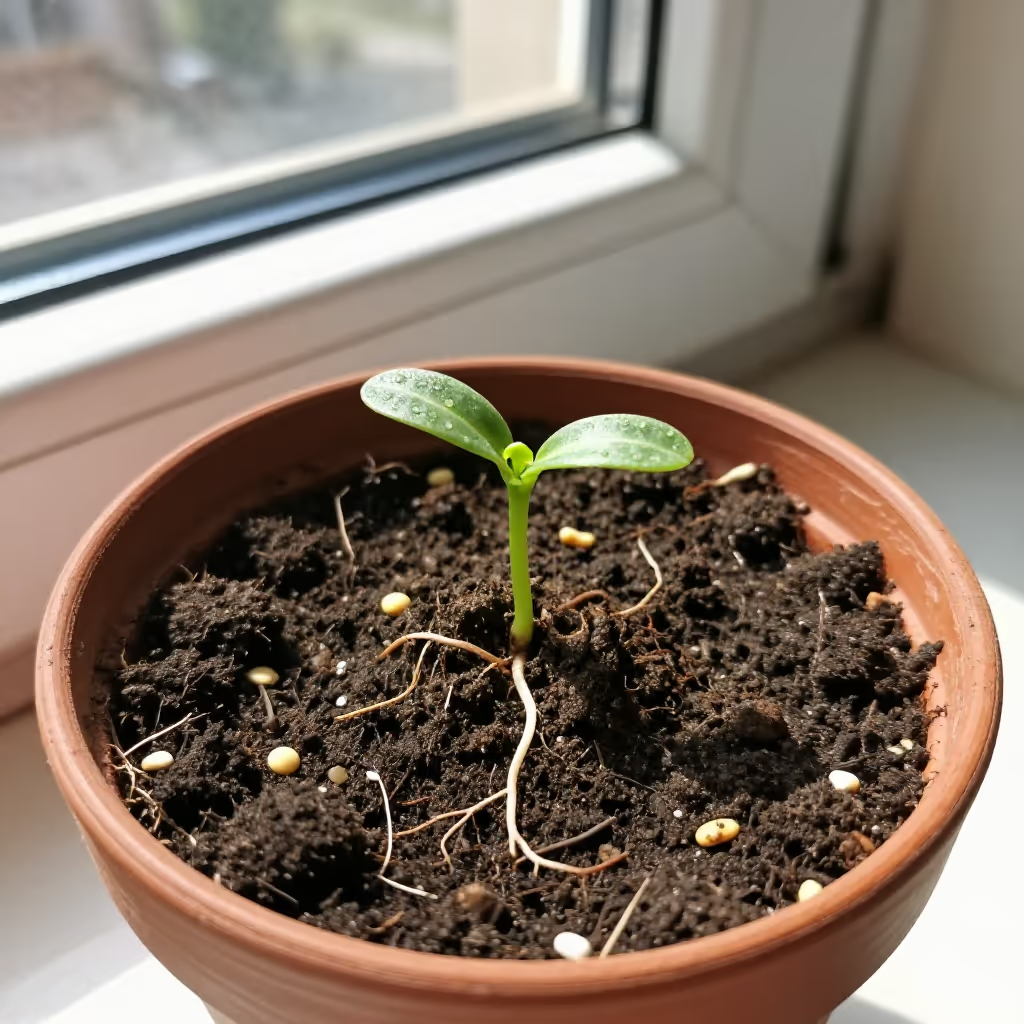
sprout
In botany, the first young shoot that grows from a seed; the beginning of a plant.
Nach wenigen Tagen im Wasser zeigten die Kressesamen die ersten zarten Keime.
After a few days in water, the cress seeds showed their first delicate sprouts.

germ / seed
The origin or beginning of something, for example an idea, a feeling, or a development.
Schon in seiner Jugend lag der Keim für seinen späteren Ehrgeiz.
Even in his youth lay the germ of his later ambition.

to nip something in the bud
An idiom meaning to stop a negative development, a problem, or a plan right at the beginning, before it can develop.
Der Aufstand wurde von der Regierung sofort im Keim erstickt.
The uprising was immediately nipped in the bud by the government.
The noun 'der Keim' (germ/sprout) is closely related to the verb 'keimen' (to germinate/sprout). 'Keimen' means 'to begin to grow'. This image helps you understand both the botanical and the figurative meaning (the beginning of an idea).
Im Frühling beginnen die Samen im Garten zu keimen.
In spring, the seeds in the garden begin to sprout.
You can easily recognize the three main meanings from the context. In a medical context, it is about pathogens. In a botanical context, it is about the beginning of a plant. In an abstract context, it is about the origin of an idea or feeling.
Das Krankenhauspersonal muss sich vor gefährlichen Keimen schützen.
Hospital staff must protect themselves from dangerous germs.
In the medical sense, 'Keim' (germ) is often associated with negative qualities. Typical combinations are 'krankmachende Keime' (disease-causing germs), 'Keime abtöten' (to kill germs), 'Keime bekämpfen' (to fight germs), or 'multiresistente Keime' (multidrug-resistant germs).
Desinfektionsmittel soll schädliche Keime auf Oberflächen reduzieren.
Disinfectant is meant to reduce harmful germs on surfaces.
In the figurative meaning, 'Keim' (germ/seed) is often combined with feelings or ideas. Common phrases are 'der Keim des Zweifels' (the seed of doubt), 'der Keim der Hoffnung' (the seed of hope), or 'der Keim einer Idee' (the germ/seed of an idea).
Seine unbedachte Bemerkung legte den Keim für einen langen Streit.
His thoughtless remark planted the seed for a long argument.
The idiom 'etwas im Keim ersticken' (to nip something in the bud) is always used for negative developments. 'Etwas' (something) is the problem, plan, or idea that is to be stopped before it grows bigger.
Die Gerüchte über eine Krise wurden von der Firmenleitung sofort im Keim erstickt.
The rumors about a crisis were immediately nipped in the bud by the company management.
origin
Both words can refer to the beginning of an idea or development. „Der Ursprung“ neutrally names the source or beginning, while „der Keim“ also suggests an undeveloped beginning with the potential to grow. Use „Ursprung“ for the source and „Keim“ when something may develop from it.

In diesem Gespräch lag bereits der Keim für unser späteres gemeinsames Projekt.
That conversation already contained the seed of our later joint project.
Der Ursprung der Idee liegt in einem Gespräch mit meiner Schwester.
The idea originated in a conversation with my sister.