


ersticken
to suffocate
To die because one can no longer get air; to suffer death by suffocation.
EXAMPLE
Ohne Sauerstoffgerät würde man in dieser Höhe ersticken.
Without an oxygen device, you would suffocate at this altitude.
to suffocate
Loading your saved state.
to suffocate
To die because one can no longer get air; to suffer death by suffocation.
Ohne Sauerstoffgerät würde man in dieser Höhe ersticken.
Without an oxygen device, you would suffocate at this altitude.

to nip in the bud
To stop a development, idea, or uprising immediately before it can spread or grow.
Die Regierung versuchte, die Proteste im Keim zu ersticken.
The government tried to nip the protests in the bud.

to drown in something
Figuratively used for a situation in which one is so overwhelmed or overloaded by something that one can no longer act effectively.
Kurz vor der Abgabefrist hatte sie das Gefühl, in Arbeit zu ersticken.
Shortly before the deadline, she felt like she was drowning in work.

to suffocate
To actively cause the death of a person or animal by depriving them of air to breathe.
Der Täter hat sein Opfer mit einem Kissen erstickt.
The perpetrator suffocated his victim with a pillow.
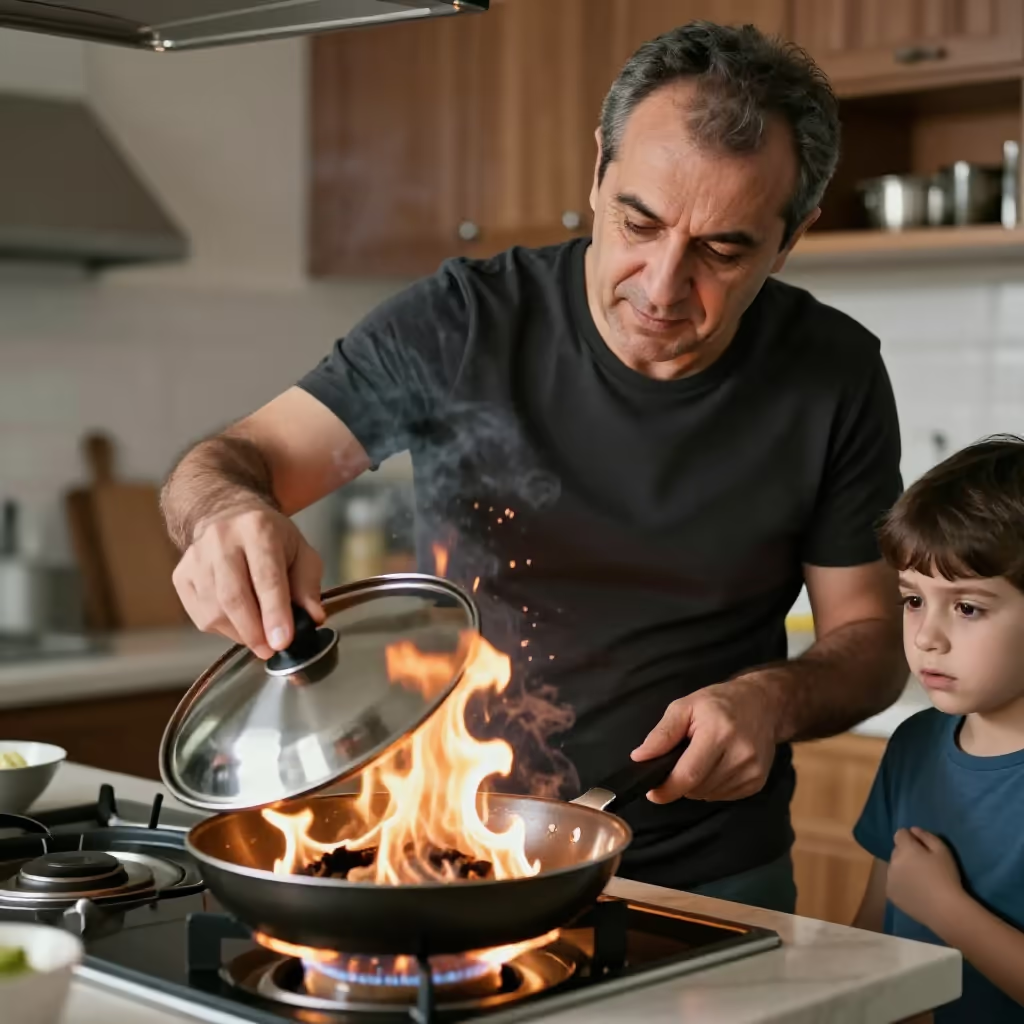
to smother
To put out a fire by cutting off its oxygen supply.
Die Feuerwehr konnte den Brand mit einer Löschdecke ersticken.
The fire department was able to smother the fire with a fire blanket.
'Ersticken' (to suffocate) is an inseparable verb with the prefix 'er-'. This prefix often points to a final or fatal result of an action, as in 'ertrinken' (to drown) or 'erfrieren' (to freeze to death).
Der Bergsteiger wäre beinahe erfroren.
The mountaineer nearly froze to death.
The auxiliary verb in the perfect tense depends on the meaning. When someone suffocates on their own (intransitive), you use 'sein'. When someone suffocates another person (transitive), you use 'haben'.
Der Mann ist in dem Rauch erstickt.
The man suffocated in the smoke.
The verb can be used transitively (actively, with an accusative object) or intransitively (passively, without an object). Without an object, it means that the subject dies. With an object, it means that the subject kills someone or something, or puts something out.
Die Katze ist fast an einem Fischknochen erstickt.
The cat almost choked on a fish bone.
The idiom 'etwas im Keim ersticken' (to nip something in the bud) is very common. It means to stop a negative development (e.g., a conflict, a rumor, an uprising) immediately before it becomes bigger.
Der Manager hat die Gerüchte über eine Schließung sofort im Keim erstickt.
The manager immediately nipped the rumors about a closure in the bud.
The figurative expression 'in etwas (Dativ) ersticken' (to drown in something) describes the feeling of being completely overloaded by something. For example, you can drown 'in Arbeit' (in work), 'in Bürokratie' (in bureaucracy), or 'in Müll' (in trash).
Ich habe das Gefühl, ich ersticke in Arbeit und habe keine freie Minute mehr.
I feel like I'm drowning in work and don't have a free minute anymore.
to extinguish / delete
Löschen generally means putting out a fire. Ersticken is appropriate when the oxygen supply is explicitly cut off in the process. If the method is not important or water is used, löschen is the right choice.
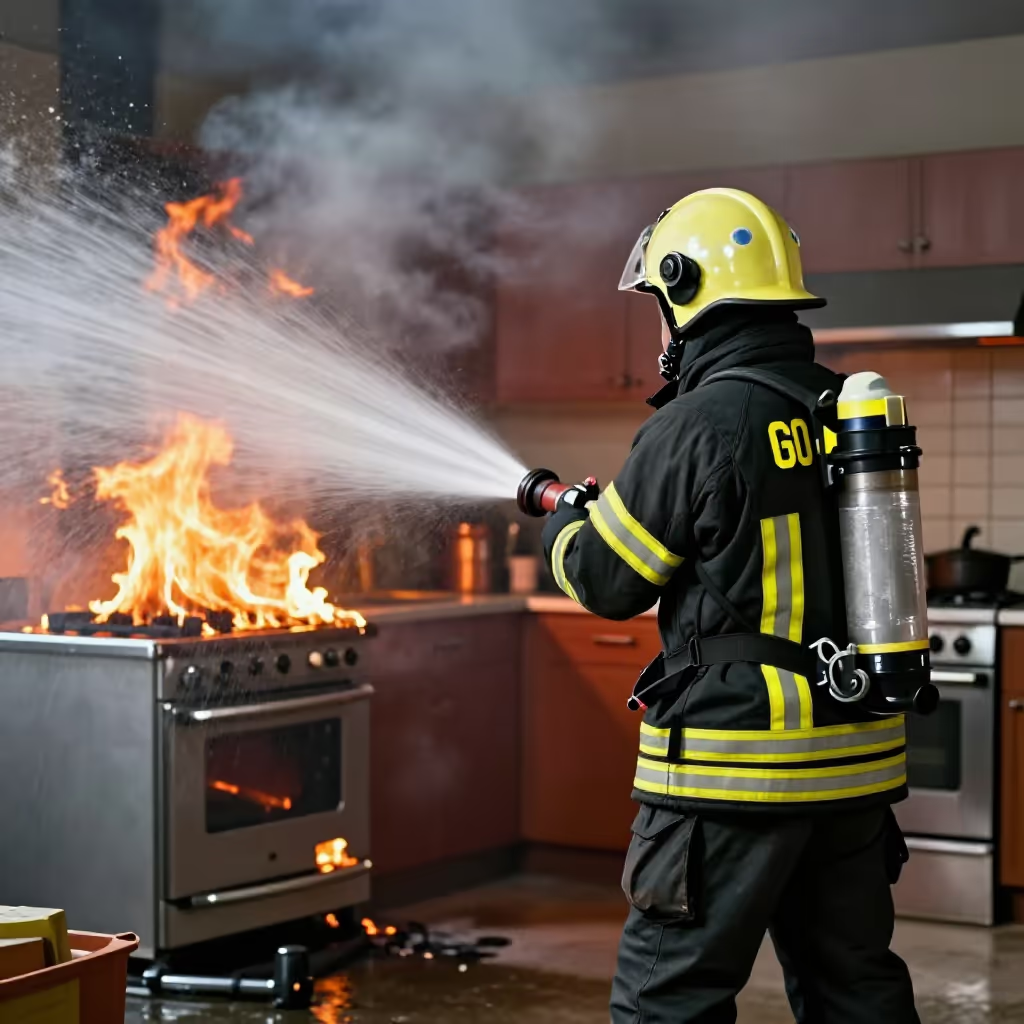
Mara erstickt das kleine Feuer mit einer Löschdecke.
Mara smothers the small fire with a fire blanket.
Mara löscht das kleine Feuer mit einem Eimer Wasser.
Mara puts out the small fire with a bucket of water.