

erstmal
first
Means 'zuerst' (first) or 'zunächst' (initially) and indicates an order of actions.
EXAMPLE
Lass uns erstmal essen, bevor wir den Film ansehen.
Let's eat first before we watch the film.
first / for now
Loading your saved state.
first
Means 'zuerst' (first) or 'zunächst' (initially) and indicates an order of actions.
Lass uns erstmal essen, bevor wir den Film ansehen.
Let's eat first before we watch the film.

for now
Means 'vorläufig' (for the time being) or 'für den Augenblick' (for the moment) and expresses that something is enough or finished for the moment.
Danke, das reicht erstmal.
Thanks, that's enough for now.
'Erstmal' is the commonly used colloquial short form of 'erst einmal' (first / for now). In spoken language and informal texts, 'erstmal' is very widespread.
Ich muss erstmal meine E-Mails checken.
I first need to check my emails.
In the meaning of 'zuerst' (first), 'erstmal' structures a sequence of actions. It often stands in the middle of the sentence, after the conjugated verb, to mark the first step in a chain.
Wir gehen erstmal einkaufen und kochen dann gemeinsam.
We'll go shopping first and then cook together.
'Erstmal' can also mean 'for the moment' or 'for the time being'. It expresses that a situation or action is finished or sufficient for the moment.
Für heute haben wir genug gearbeitet, das war's erstmal.
We've worked enough for today; that's it for now.
only / not until / first
Erst and erstmal can both mark an action as the first step. Erst works well with a clearly stated subsequent sequence. Erstmal focuses more on the immediate beginning and often leaves what happens afterward open. These are tendencies; in the right context, both are possible.
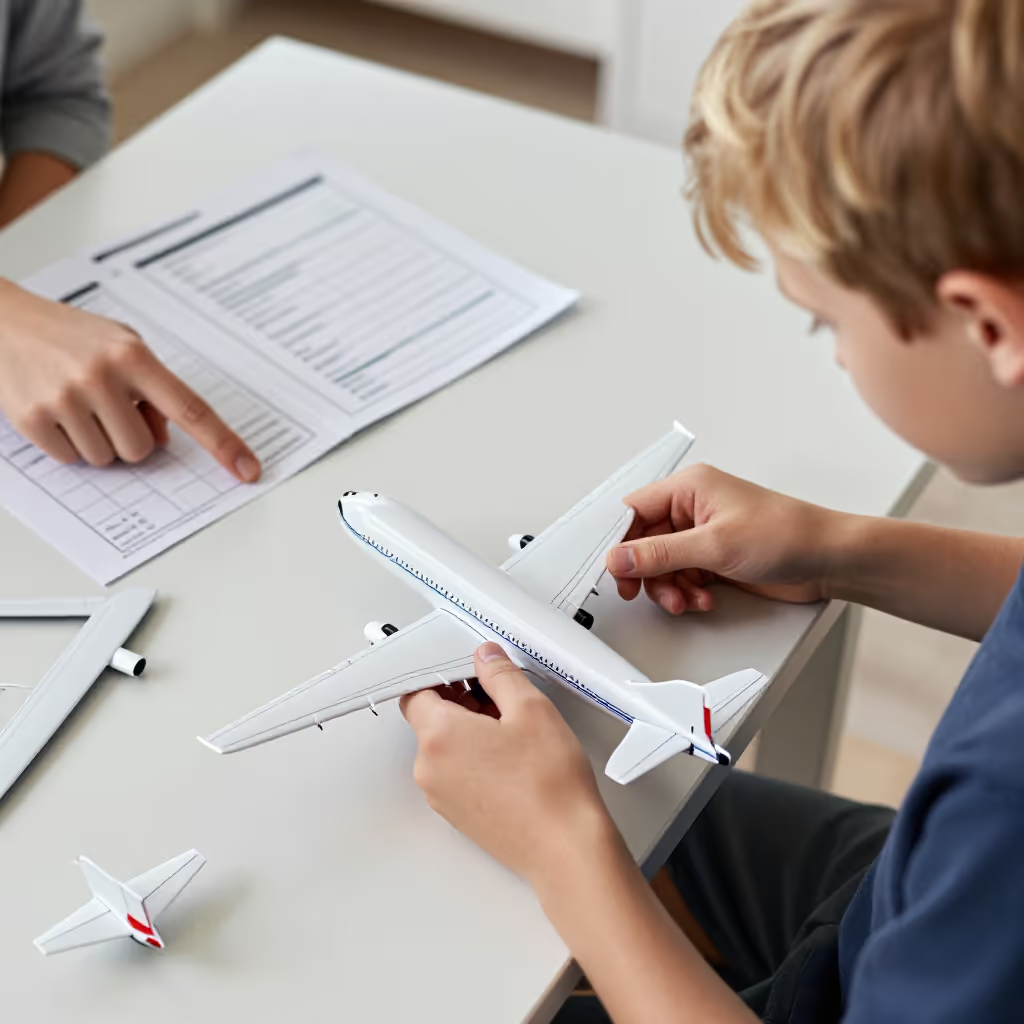
Ich prüfe erstmal die Rechnung und entscheide danach über den nächsten Schritt.
I’ll check the bill first and decide on the next step afterward.
Erst prüfe ich die Rechnung, dann überweise ich das Geld.
First I check the bill, and then I transfer the money.