

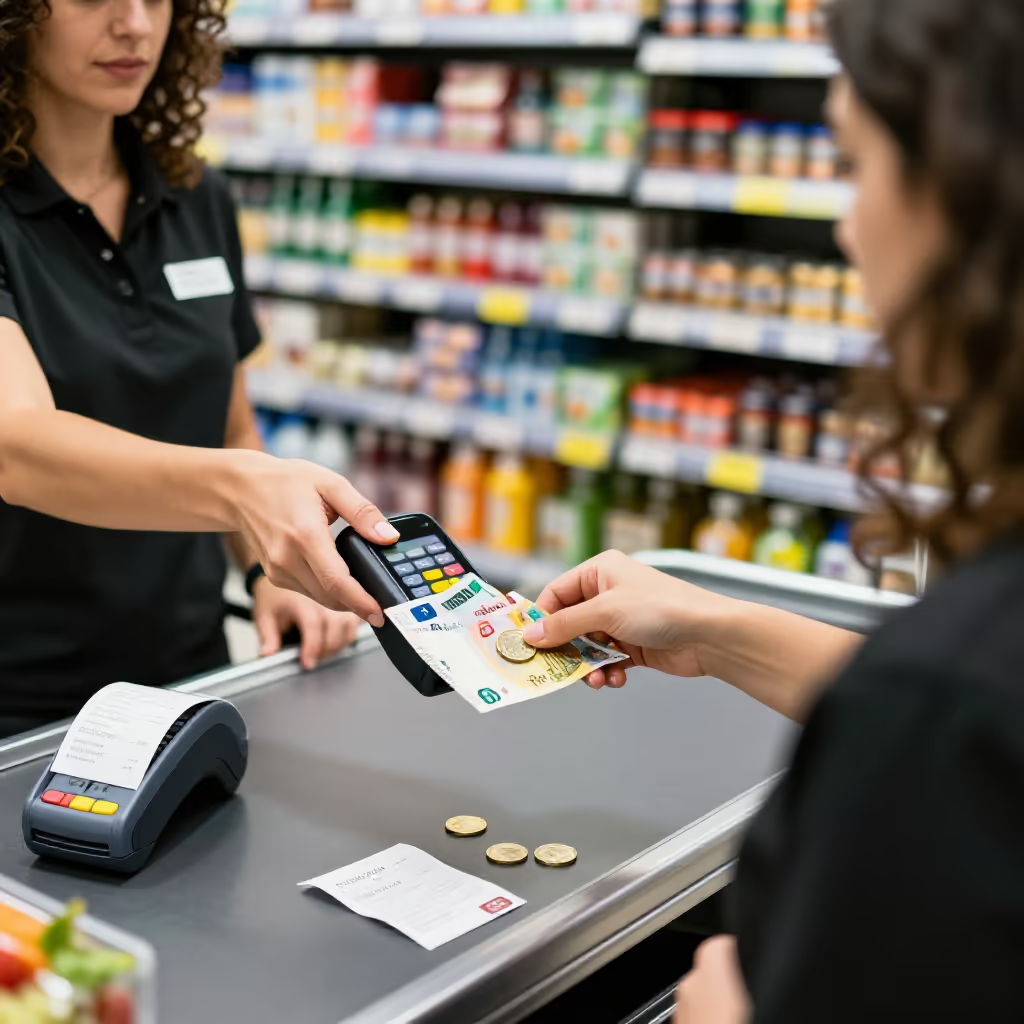
der Euro
euro
The official unit of currency in most member states of the European Union.
EXAMPLE
Dieses Buch kostet zwanzig Euro.
This book costs twenty euros.
euro
Loading your saved state.
euro
The official unit of currency in most member states of the European Union.
Dieses Buch kostet zwanzig Euro.
This book costs twenty euros.
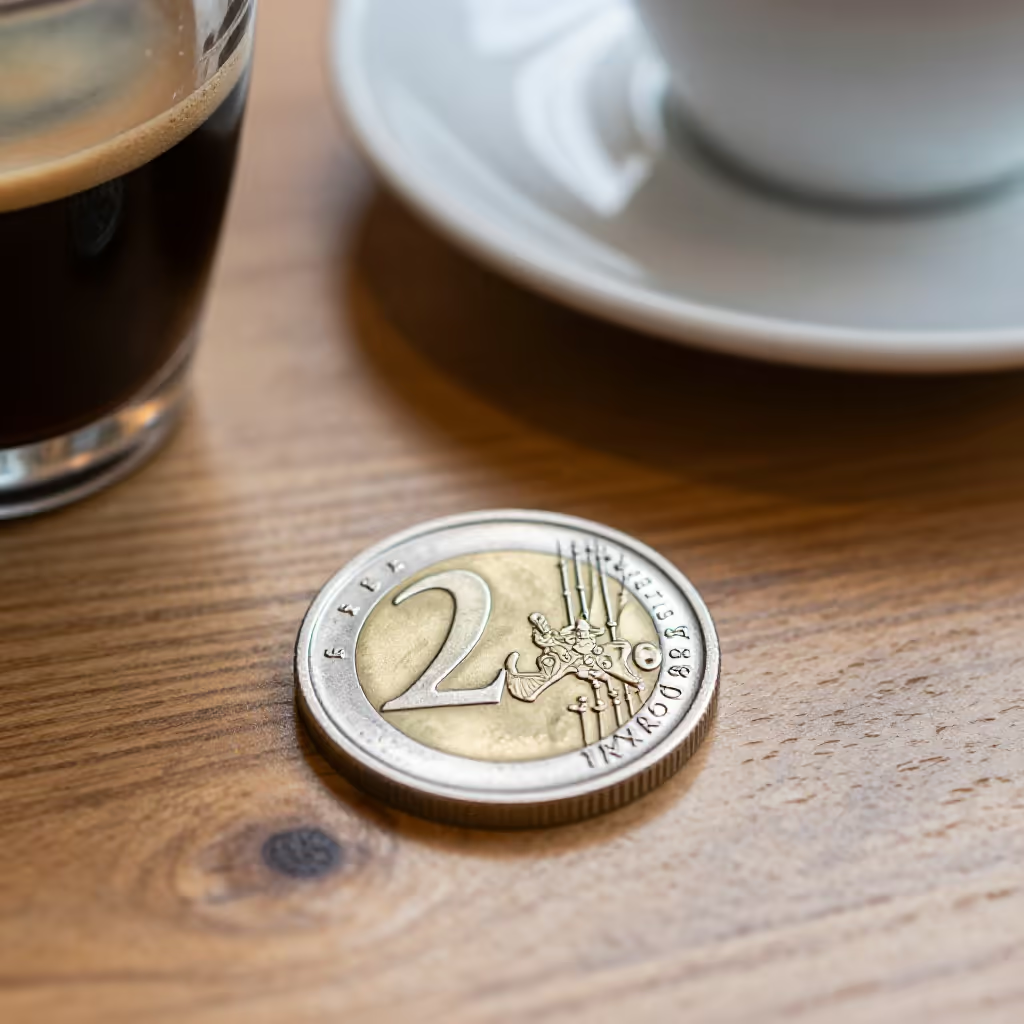
euro
A coin or banknote with the value of this unit of currency.
Hast du vielleicht einen Euro für den Einkaufswagen?
Do you maybe have a euro for the shopping cart?
When an amount of money follows a number greater than one, 'Euro' remains singular in German. You say 'zehn Euro' (ten euros). The plural form 'Euros' is used only rarely, when talking about individual coins.
Die Jacke hat 99 Euro gekostet.
The jacket cost 99 euros.
The letter combination 'eu' is pronounced in German like 'oy' in the English word 'oil'. So 'Euro' sounds like 'Oy-ro'.
Ein Cappuccino kostet hier vier Euro.
A cappuccino costs four euros here.
The symbol for the euro is €. In German texts, it normally comes after the amount, often with a space in between.
Sonderangebot: nur 15 €!
Special offer: only €15!
You can recognize from context whether the unit of currency or a physical coin is meant. If it is about prices, the currency is meant. If an individual coin is meant, an article is often used.
Das Eis kostet zwei Euro.
The ice cream costs two euros.
ruble
Euro literally refers here to the currency taken in. In the fixed colloquial expression „der Rubel rollt“ (money is rolling in), Rubel generally means that a lot of money is coming in or that business is doing well. For this figurative statement, Euro cannot simply be used instead of Rubel.
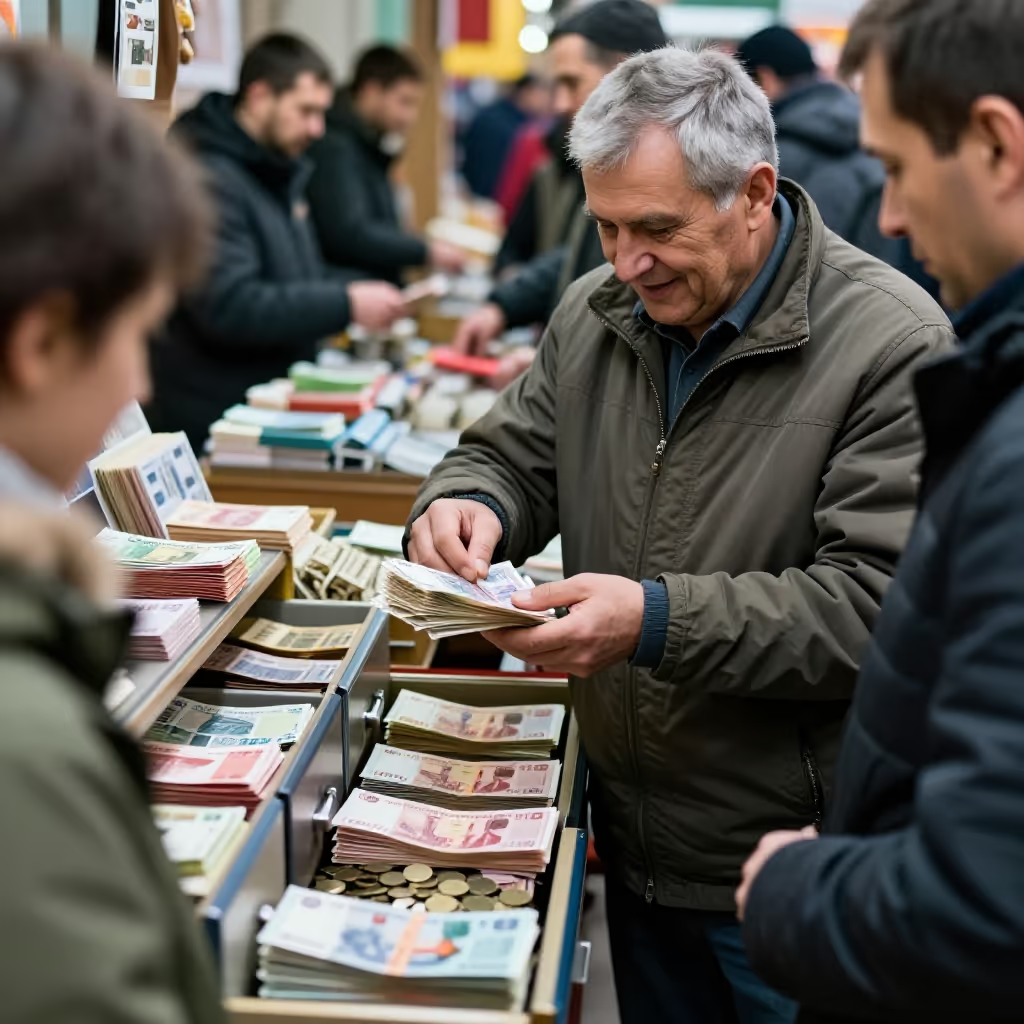
Das Geschäft nahm im Sommer viele Euro ein.
The business took in a lot of euros during the summer.
Im Sommer rollte in dem Geschäft der Rubel.
During the summer, money was rolling in at the business.