


klein
small
Of small size, extent, or dimension. The opposite of 'groß' (big).
EXAMPLE
Wir wohnen in einem kleinen Haus am Stadtrand.
We live in a small house on the outskirts of town.
small
Loading your saved state.
small
Of small size, extent, or dimension. The opposite of 'groß' (big).
Wir wohnen in einem kleinen Haus am Stadtrand.
We live in a small house on the outskirts of town.

young
Refers to a young age, especially childhood.
Als ich klein war, wollte ich immer Feuerwehrmann werden.
When I was young, I always wanted to become a firefighter.

minor
Of little importance, unimportant, or insignificant.
Mach dir keine Sorgen, das ist nur ein kleines Problem.
Don't worry, it's only a minor problem.
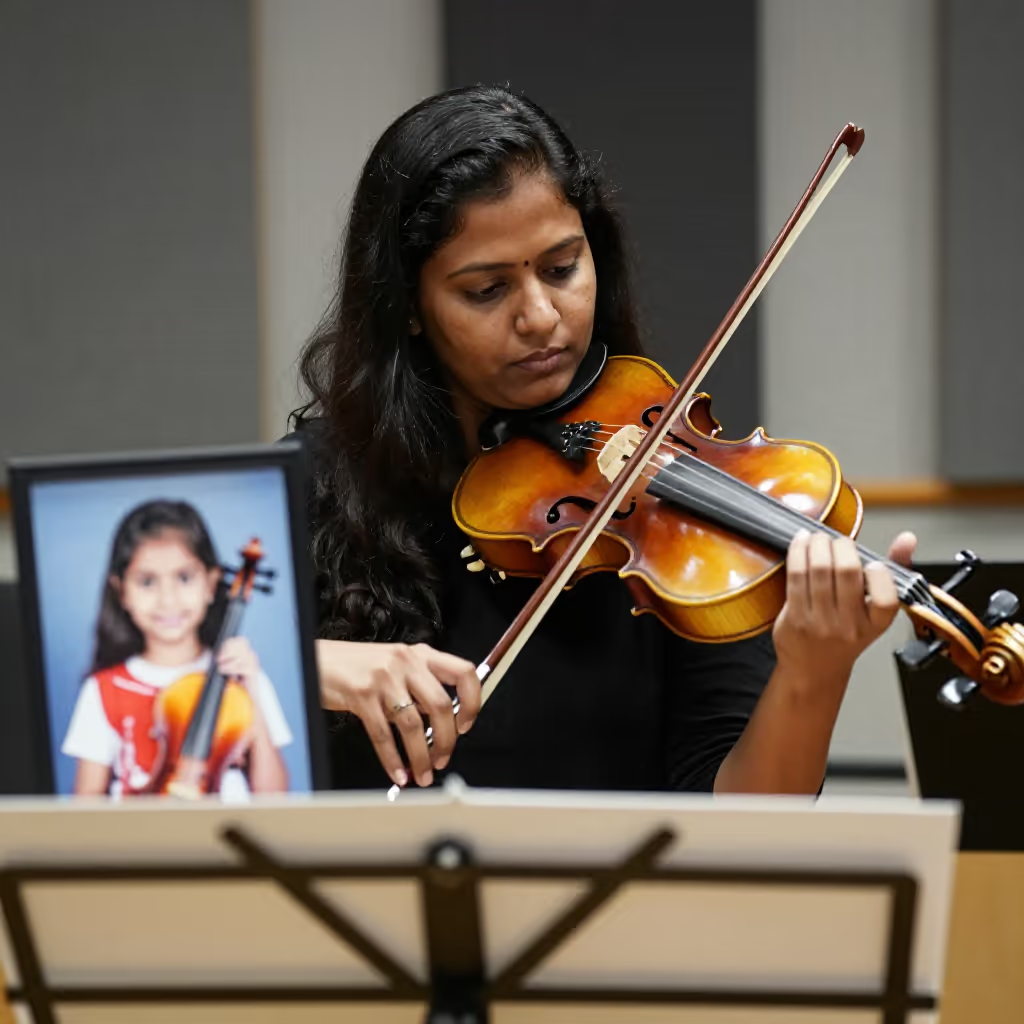
from early childhood
An idiom meaning 'since early childhood'.
Sie hat von klein auf gelernt, zwei Sprachen zu sprechen.
She learned to speak two languages from early childhood.

to give in
To yield, give up, or stop resisting in an argument or conflict.
Nach einer langen Diskussion hat er schließlich klein beigegeben.
After a long discussion, he finally gave in.

fine print
The part of a contract or document that is printed in very small type and often contains important but hard-to-read conditions.
Man sollte immer das Kleingedruckte lesen, bevor man etwas unterschreibt.
You should always read the fine print before signing something.
When 'klein' (small) is used like a noun, it is capitalized. This often happens after articles ('der Kleine' - the little one, 'die Kleinen' - the little ones) or indefinite pronouns ('etwas Kleines' - something small, 'nichts Kleines' - nothing small).
Die Großen passen auf die Kleinen auf.
The big ones look after the little ones.
There is a difference between 'klein schreiben' (to write in small handwriting or small font size) and 'kleinschreiben' (to write a letter as lowercase, not as a capital letter).
Du schreibst so klein, ich kann es kaum entziffern.
You write so small, I can barely decipher it.
The phrase 'als ich klein war' (when I was little/young) is a very common way to talk about one's own childhood. 'Klein' means 'young' here.
Als ich klein war, bin ich oft auf Bäume geklettert.
When I was young, I often climbed trees.
In the meaning 'unimportant', 'klein' is often combined with abstract nouns. Typical examples are: 'ein kleines Problem' (a minor problem), 'ein kleiner Fehler' (a minor mistake), 'eine kleine Sorge' (a small worry), or 'nur eine kleine Sache' (only a small thing).
Das ist nur ein kleiner Fehler, den wir schnell beheben können.
That's only a minor mistake that we can fix quickly.
The idiom 'von klein auf' means 'since early childhood'. It is used to emphasize that an ability or habit began very early in life.
Er kann von klein auf Ski fahren.
He has been able to ski since early childhood.
The expression 'klein beigeben' is a fixed phrase with the separable verb 'beigeben'. It means that one gives up one's resistance.
Er wollte zuerst nicht nachgeben, aber am Ende gab er doch klein bei.
At first he didn't want to give in, but in the end he did give in.
'Das Kleingedruckte' (the fine print) is a fixed term. It refers to the part of a text that is written in small print and often contains important details. 'Gedruckte' is a participle used as a noun here.
Es ist immer ratsam, vor dem Unterschreiben das Kleingedruckte zu lesen.
It is always advisable to read the fine print before signing.
little / few
Wenig refers to a small amount or number, whereas klein refers to a small size or extent. Wenig Brot therefore means a small amount of bread; ein kleines Brot is a single loaf of small size.
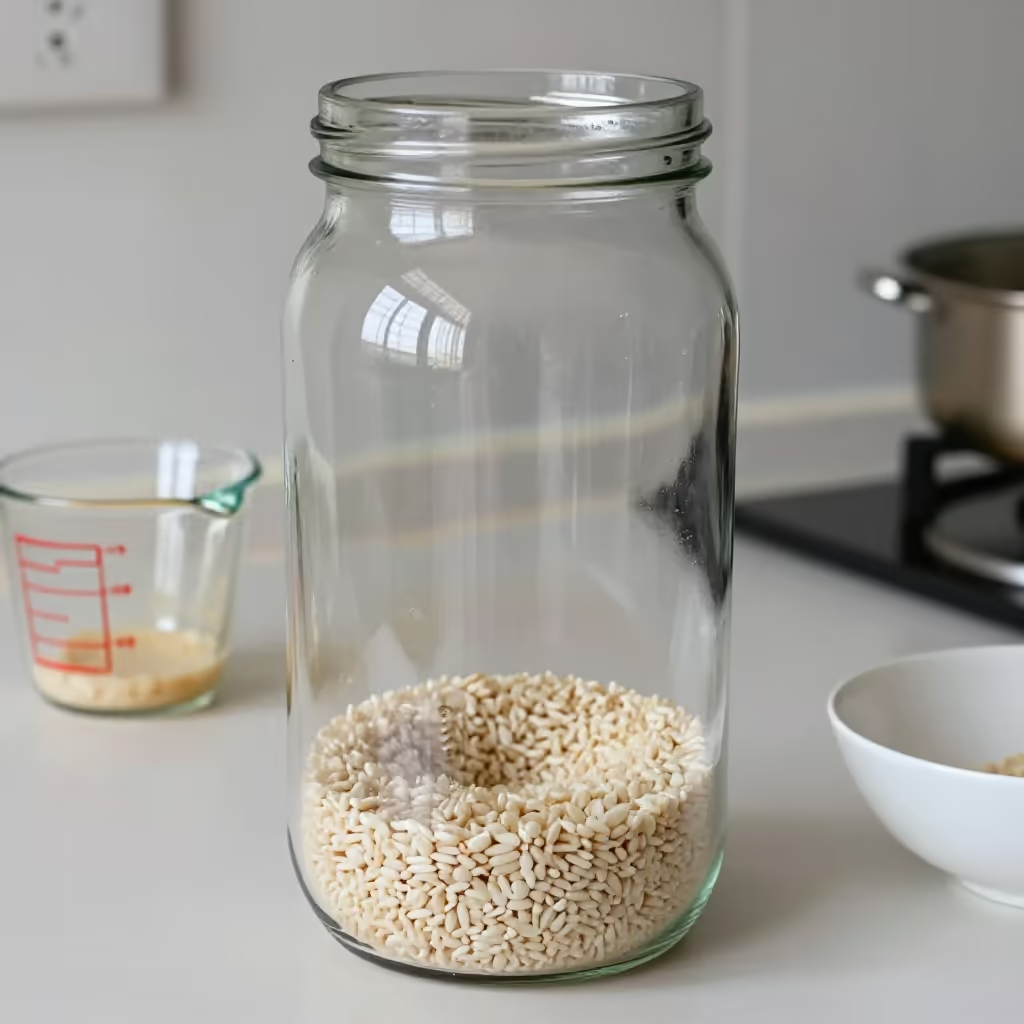
Für das Frühstück haben wir nur ein kleines Brot.
We only have a small loaf of bread for breakfast.
Für das Frühstück haben wir nur wenig Brot.
We only have a little bread for breakfast.