

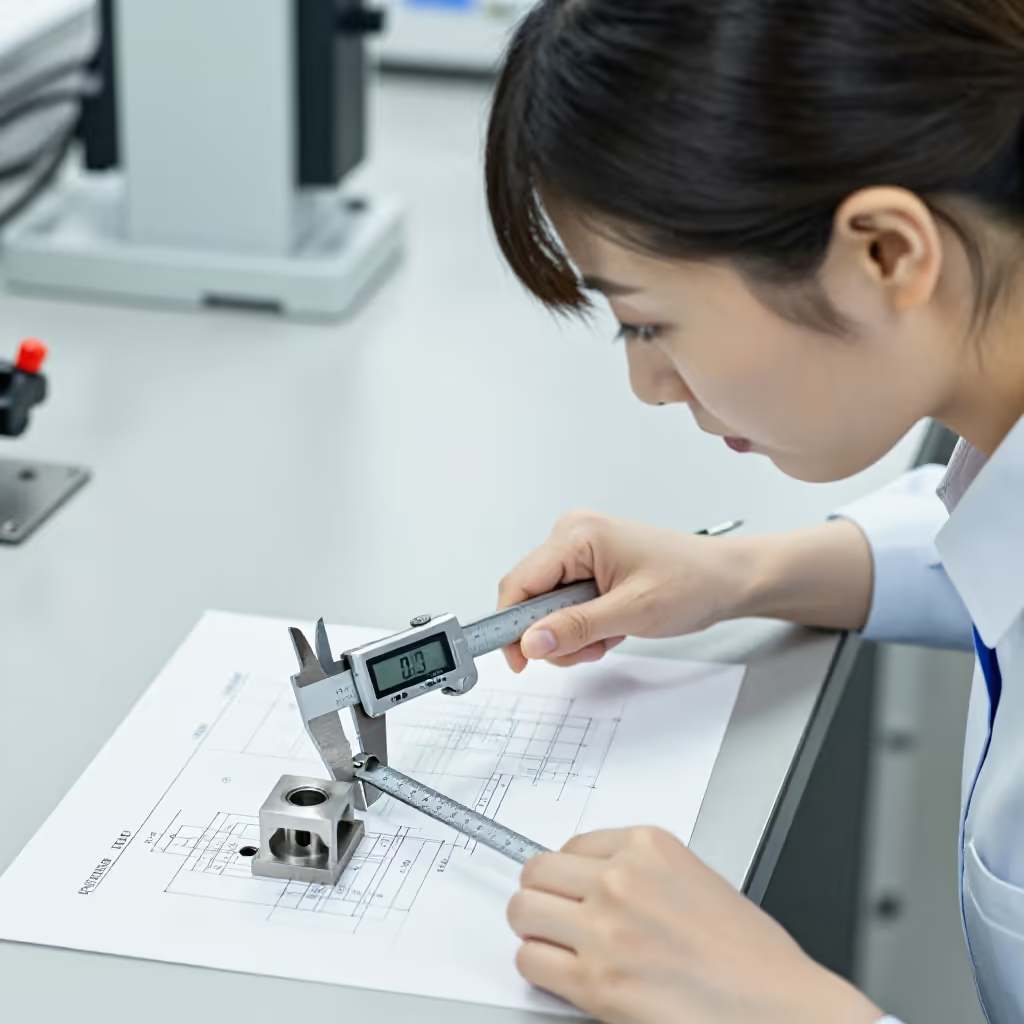
Accurate, precise, and without deviation. It describes something that completely corresponds to the facts or to a standard.
example
Für das Rezept benötigen Sie eine exakte Menge von 250 Gramm Mehl.
For the recipe, you need an exact amount of 250 grams of flour.

Usage tips
Adjective or answer
When 'exakt' (exact) stands before a noun or describes a noun, it means 'precise'. When it stands alone or at the beginning of a sentence, it is an affirmative answer and means 'exactly' or 'right'.
EXAMPLE
Bitte gib mir die exakte Uhrzeit an.
Please give me the exact time.
Typical collocations
In its meaning 'präzise' (precise), 'exakt' is often used in contexts that require accuracy. Typical collocations are 'exakte Wissenschaft' (exact science), 'exakte Messung' (exact measurement), 'exakte Kopie' (exact copy), or 'exakte Anweisungen' (exact instructions).
EXAMPLE
Die Polizei konnte eine exakte Beschreibung des Täters geben.
The police were able to give an exact description of the perpetrator.
Use as an adverb
As an adverb, 'exakt' (exactly) can intensify a statement and then often stands directly before the word or phrase it emphasizes. It underlines that something is exactly this way and not otherwise.
EXAMPLE
Das ist exakt der Ort, an dem wir uns letztes Jahr getroffen haben.
That is exactly the place where we met last year.
Compare with
synonym
exakt vs genau
exact / precise
'genau' and 'exakt' mean very similar things: something is correct without deviation or is precise. Both fit with numbers, times, measurements, descriptions, and also as a confirming answer. 'genau' often sounds a bit more natural and more common in everyday language. 'exakt' sometimes sounds a bit more formal or especially precise. In many sentences, you can swap the two words.
exakt
Die Messung im Labor war exakt.
The measurement in the lab was exact.
genau
Beim Frühstück hat die Chefin den Plan genau erklärt.
At breakfast, the boss explained the plan precisely.