

faden
bland
Without flavor or seasoning; tasteless or dull. This form is a rarer, colloquial variant of 'fade' (bland).
EXAMPLE
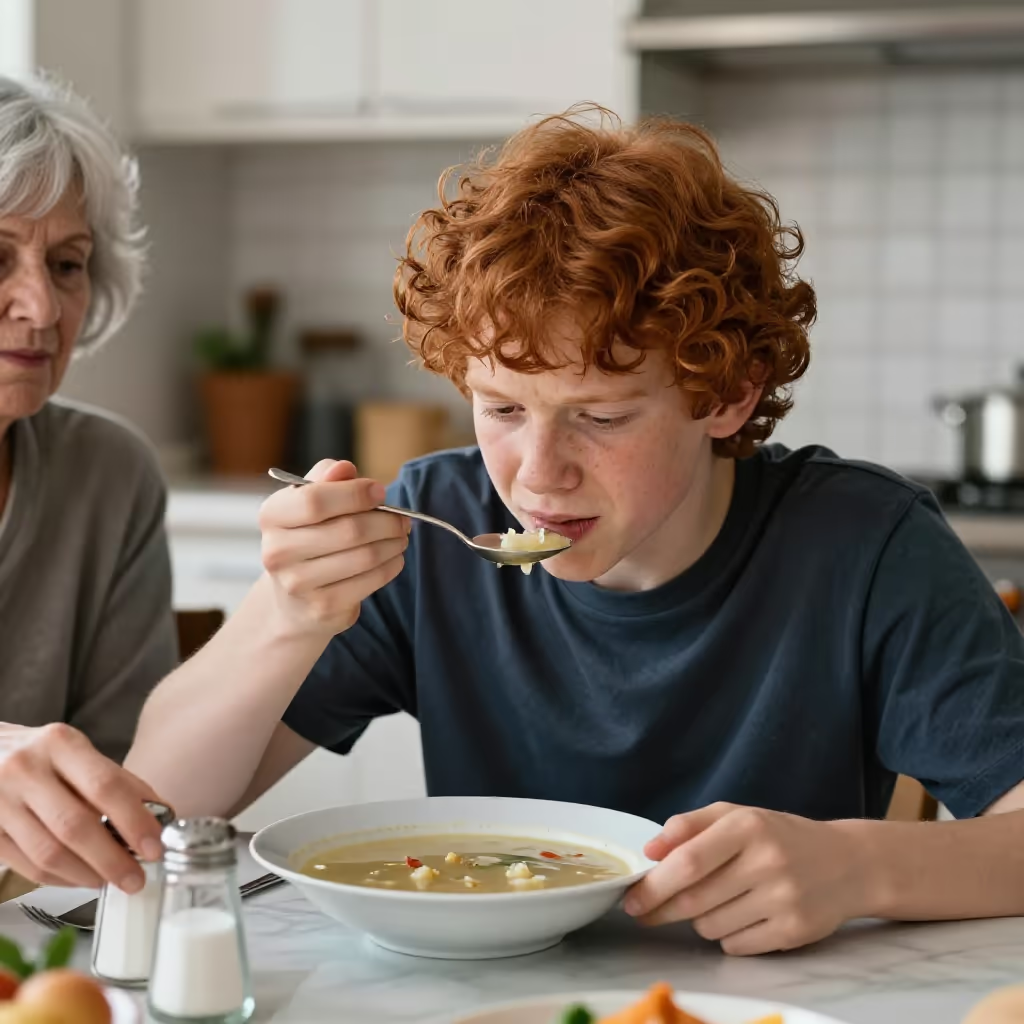
Ohne Salz und Kräuter schmeckt die Suppe ziemlich faden.
Without salt and herbs, the soup tastes pretty bland.
bland
Loading your saved state.
bland
Without flavor or seasoning; tasteless or dull. This form is a rarer, colloquial variant of 'fade' (bland).
Ohne Salz und Kräuter schmeckt die Suppe ziemlich faden.
Without salt and herbs, the soup tastes pretty bland.
Do not confuse the adjective 'faden' (bland) with the noun 'der Faden' (thread). The adjective is written in lowercase and declined before a noun, while the noun is always capitalized.
Die Soße hat einen faden Geschmack.
The sauce has a bland taste.
The adjective 'faden' (bland) is used almost exclusively to describe food and drink that lacks flavor or seasoning. It is often combined with the verb 'schmecken' (to taste).
Der Tee schmeckt ohne Zucker etwas faden.
The tea tastes a bit bland without sugar.
'Faden' as an adjective meaning tasteless or bland is rather colloquial. It is a variant of the more common adjective 'fade' (bland).
Mir ist das Essen hier ein bisschen zu faden.
The food here is a little too bland for me.
fiber
In the meanings given here, faden and die Faser cannot be compared as terms for the same textile strand. Faden is an adjective for something bland or boring, while Faser refers to a thin, threadlike component. Use faden for taste or impression and Faser for material.

Die Suppe hatte einen faden Geschmack und brauchte mehr Gewürze.
The soup had a bland taste and needed more seasoning.
Die Faser war so dünn, dass sie beim Nähen leicht riss.
The fiber was so thin that it tore easily while being sewn.