

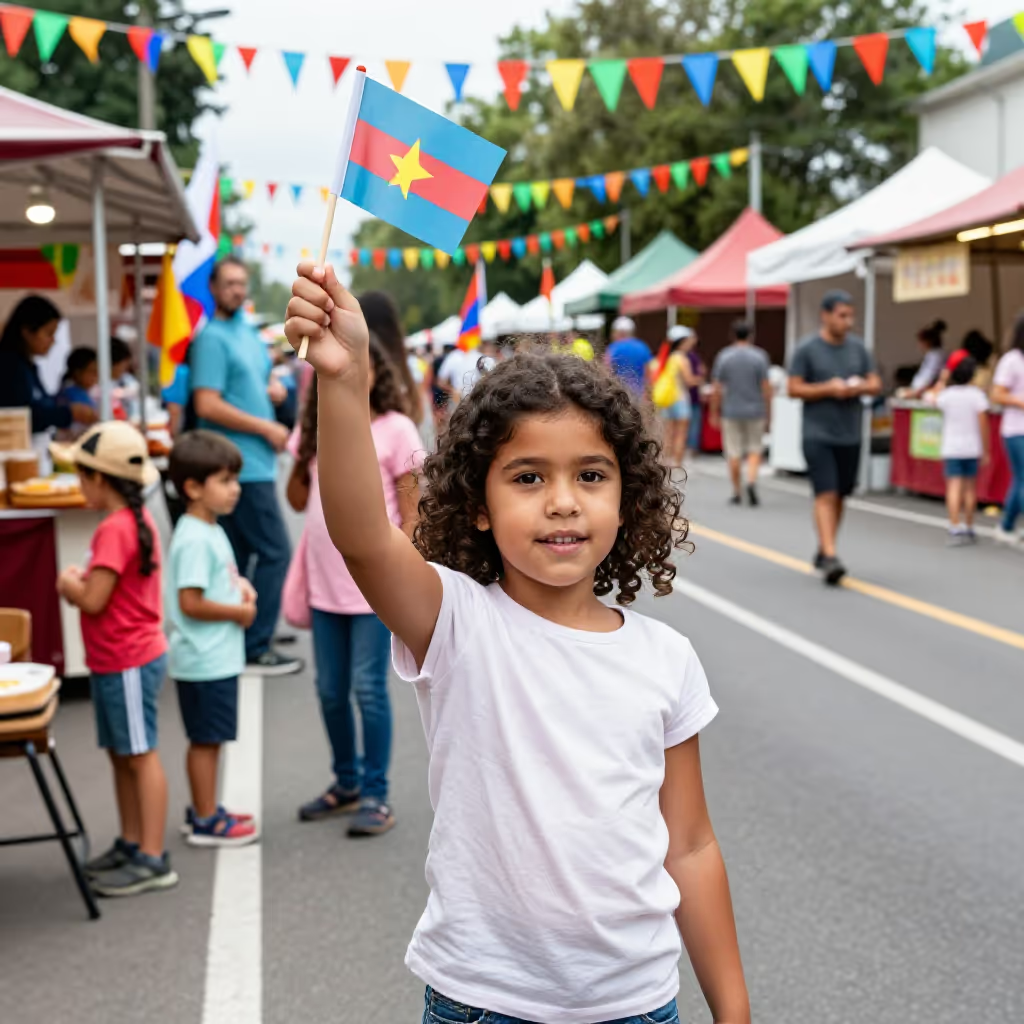
das Fähnchen
small flag
A small flag, often made of paper or fabric, used for waving, decorating, or marking something.
EXAMPLE
Die Kinder schwenkten beim Umzug bunte Fähnchen.
The children waved colorful little flags during the parade.
small flag
Loading your saved state.
small flag
A small flag, often made of paper or fabric, used for waving, decorating, or marking something.
Die Kinder schwenkten beim Umzug bunte Fähnchen.
The children waved colorful little flags during the parade.

to go with the wind
An idiom meaning to opportunistically adapt one's opinion or attitude to the prevailing opinion or circumstances.
Er ist kein verlässlicher Partner, er hängt sein Fähnchen immer nach dem Wind.
He is not a reliable partner; he always goes whichever way the wind blows.
'Das Fähnchen' (small flag) is the diminutive form of 'die Fahne' (flag). The ending '-chen' makes the word neuter ('das') and adds an umlaut to the vowel 'a' (ä).
Auf der Torte steckte ein kleines Fähnchen mit einer Zahl.
There was a little flag with a number stuck in the cake.
You can do various things with a 'Fähnchen' (small flag). Typical verbs are 'schwenken' (to wave), 'schwingen' (to swing), or 'in den Sand stecken' (to stick into the sand).
Die Fans schwenkten begeistert ihre Fähnchen.
The fans enthusiastically waved their little flags.
The idiom 'sein Fähnchen nach dem Wind hängen' means that someone quickly changes their opinion in order to gain advantages. The person is therefore opportunistic and not guided by principles.
Auf seine Meinung kann man sich nicht verlassen, er hängt sein Fähnchen nach dem Wind.
You can't rely on his opinion; he always goes whichever way the wind blows.
In the idiom 'sein Fähnchen nach dem Wind hängen', the possessive pronoun ('sein', 'ihr', 'mein', etc.) must be adapted to the person you are talking about.
Sie ist in der Politik sehr flexibel und hängt ihr Fähnchen immer nach dem Wind.
She is very flexible in politics and always goes whichever way the wind blows.
flag
Here, “Fahne” literally refers to a visible sign made of fabric. For opportunistically adapting one’s own position, however, German uses the fixed expression “sein Fähnchen nach dem Wind hängen” (to go with the wind). In this expression, “Fähnchen” cannot simply be replaced with “Fahne”.
Vor der Wahl hängt der Politiker sein Fähnchen nach dem Wind.
Before the election, the politician goes with the wind.
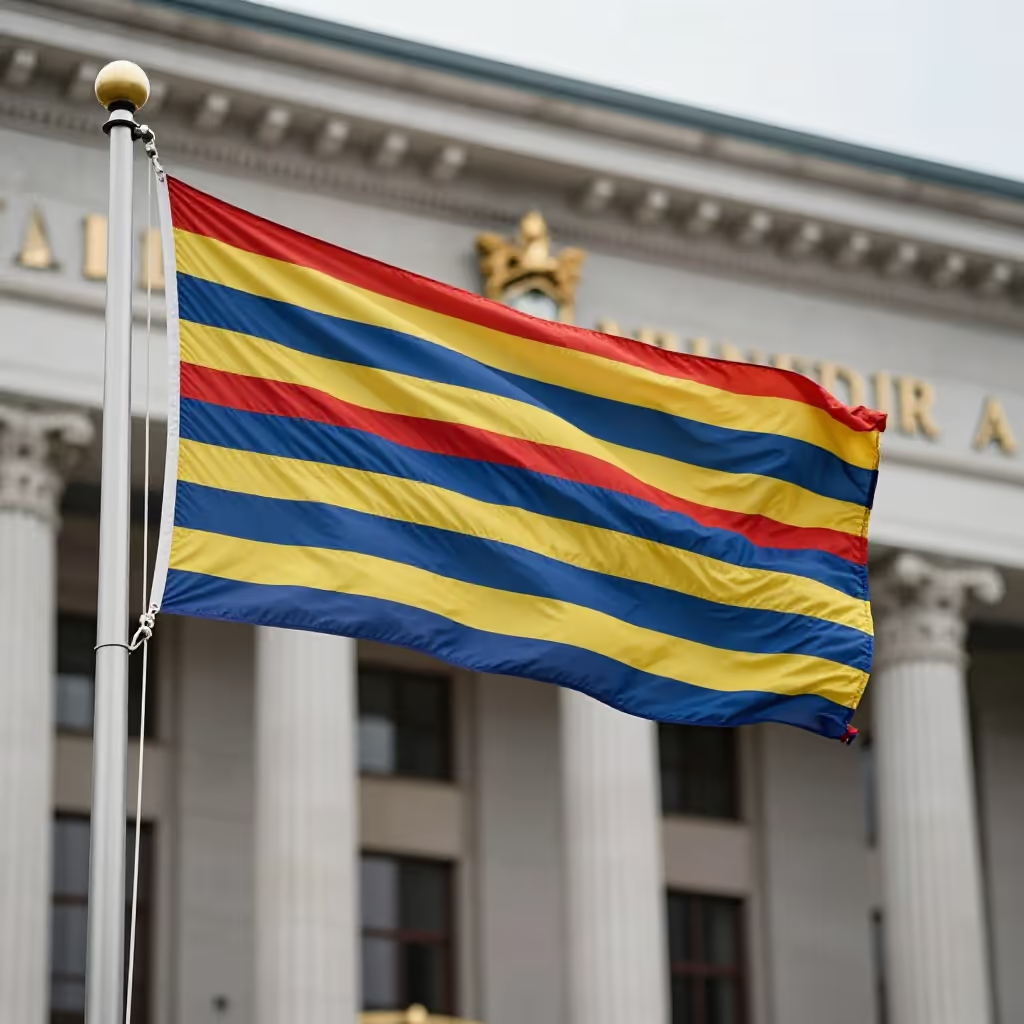
Vor dem Rathaus bewegt sich die Fahne im Wind.
The flag is moving in the wind in front of the town hall.