

färben
to dye
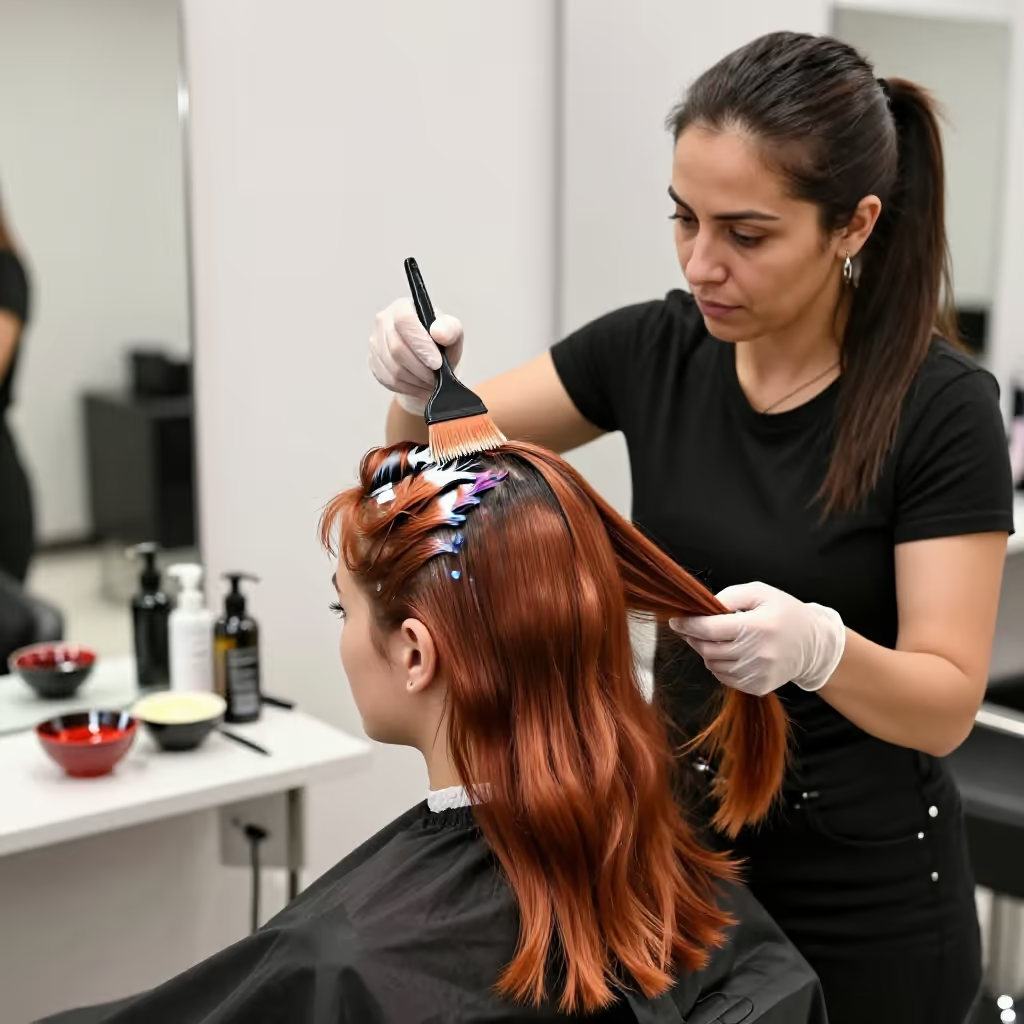
To change the color of something using a dye or color.
EXAMPLE
Sie hat sich die Haare rot gefärbt.
She dyed her hair red.
to dye / color
Loading your saved state.
to dye
To change the color of something using a dye or color.
Sie hat sich die Haare rot gefärbt.
She dyed her hair red.
to turn
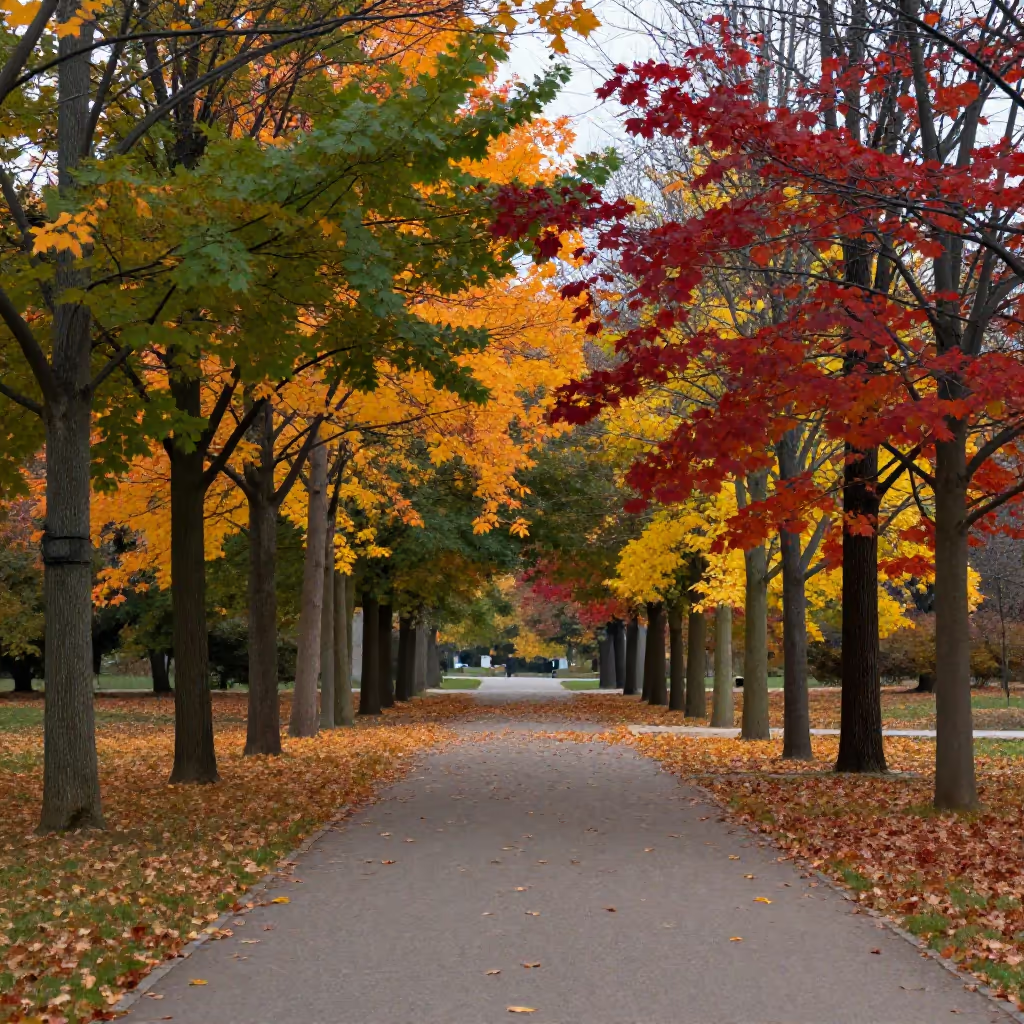
To change color naturally.
Im Herbst färben sich die Blätter der Bäume bunt.
In autumn, the leaves of the trees turn colorful.

to flush
Specifically of the face: to turn red, usually from embarrassment, shame, or excitement.
Ihre Wangen färbten sich, als er ihr ein Kompliment machte.
Her cheeks flushed when he gave her a compliment.
The verb 'färben' (to dye/color) belongs to the word family of 'die Farbe' (color). It literally means to give color to something.
Zu Ostern färben wir immer die Eier.
We always dye eggs at Easter.
When a person actively dyes something, the verb is used transitively: 'jemand färbt etwas' (someone dyes something). When something changes its color by itself, it is used reflexively: 'etwas färbt sich' (something changes color).
Ich färbe mein altes T-Shirt schwarz.
I am dyeing my old T-shirt black.
When you dye something on your own body, a dative pronoun is often added to make the connection to the person clear. The most common form is 'sich (Dat.) die Haare (Acc.) färben' (to dye one's hair).
Ich habe mir die Haare blond gefärbt.
I dyed my hair blond.
When something changes color naturally, the subjects are often parts of nature. Typical examples are 'die Blätter' (the leaves), 'der Himmel' (the sky), or 'die Wolken' (the clouds).
Die Blätter an den Bäumen haben sich schon gelb gefärbt.
The leaves on the trees have already turned yellow.
This reflexive meaning refers almost exclusively to a person's face or cheeks turning red from embarrassment, shame, or joy.
Sein Gesicht färbte sich rot, als alle über seinen Witz lachten.
His face turned red when everyone laughed at his joke.
to paint / to cancel
Streichen refers to covering a surface with paint, especially a wall. Färben has a more general meaning: changing the color of a material with a dye. So streichen is appropriate for painting a surface, while färben is usually used for fabric or hair.

Mia färbt den Stoff für die Vorhänge blau.
Mia is dyeing the fabric for the curtains blue.
Mia streicht die Wand im Schlafzimmer blau.
Mia is painting the bedroom wall blue.