


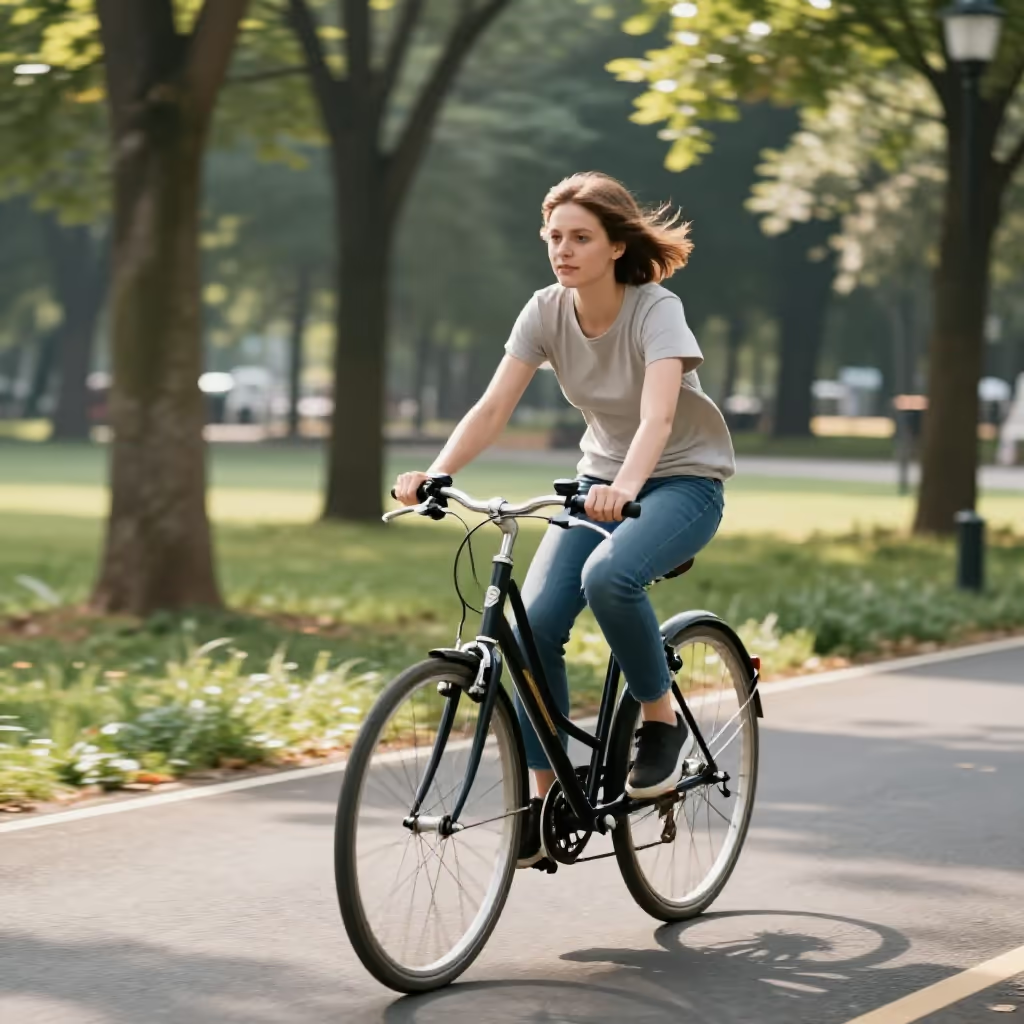
A vehicle with two wheels that is powered by pushing pedals with the feet. It is used for transporting people.
example
Bei gutem Wetter fahre ich immer mit dem Fahrrad zur Arbeit.
When the weather is good, I always ride my bicycle to work.
Usage tips
Word composition
The word 'Fahrrad' consists of 'fahr-' (from the verb 'fahren' — to drive/ride/go) and 'Rad' (wheel). So it is literally a 'ride-wheel,' which simply explains the function of the device.
EXAMPLE
Mein altes Fahrrad braucht ein neues Rad.
My old bicycle needs a new wheel.
Typical collocation
The activity itself is often expressed as 'Fahrrad fahren' (to ride a bicycle). Here, 'Fahrrad' is treated like part of the verb and comes before the infinitive 'fahren' at the end of the sentence.
EXAMPLE
Am Wochenende wollen wir im Park Fahrrad fahren.
At the weekend, we want to ride our bikes in the park.
Correct preposition
To express that you use a bicycle as a means of transport, use the preposition 'mit' followed by the dative: 'mit dem Fahrrad' (by bicycle).
EXAMPLE
Er ist heute mit dem Fahrrad gekommen.
He came by bicycle today.
Compare with
synonym · near_synonym · confusable
Fahrrad vs Rad
wheel / bike
'das Fahrrad' and 'das Rad' can both mean a vehicle with two wheels that you ride by pedaling. 'Fahrrad' is more precise and understood everywhere. 'Rad' in this meaning is a short, everyday form. For example, people say 'mit dem Rad fahren' (to go by bike). The words can be confused because 'Rad' can also mean just one individual round part of a vehicle. If you want to make it completely clear that you mean the whole vehicle, 'Fahrrad' is safer.
Fahrrad
Samir stellt sein Fahrrad vor dem Haus ab.
Samir parks his bicycle in front of the house.
Rad
Bei schönem Wetter fahre ich oft mit dem Rad zur Arbeit.
When the weather is nice, I often ride my bike to work.