

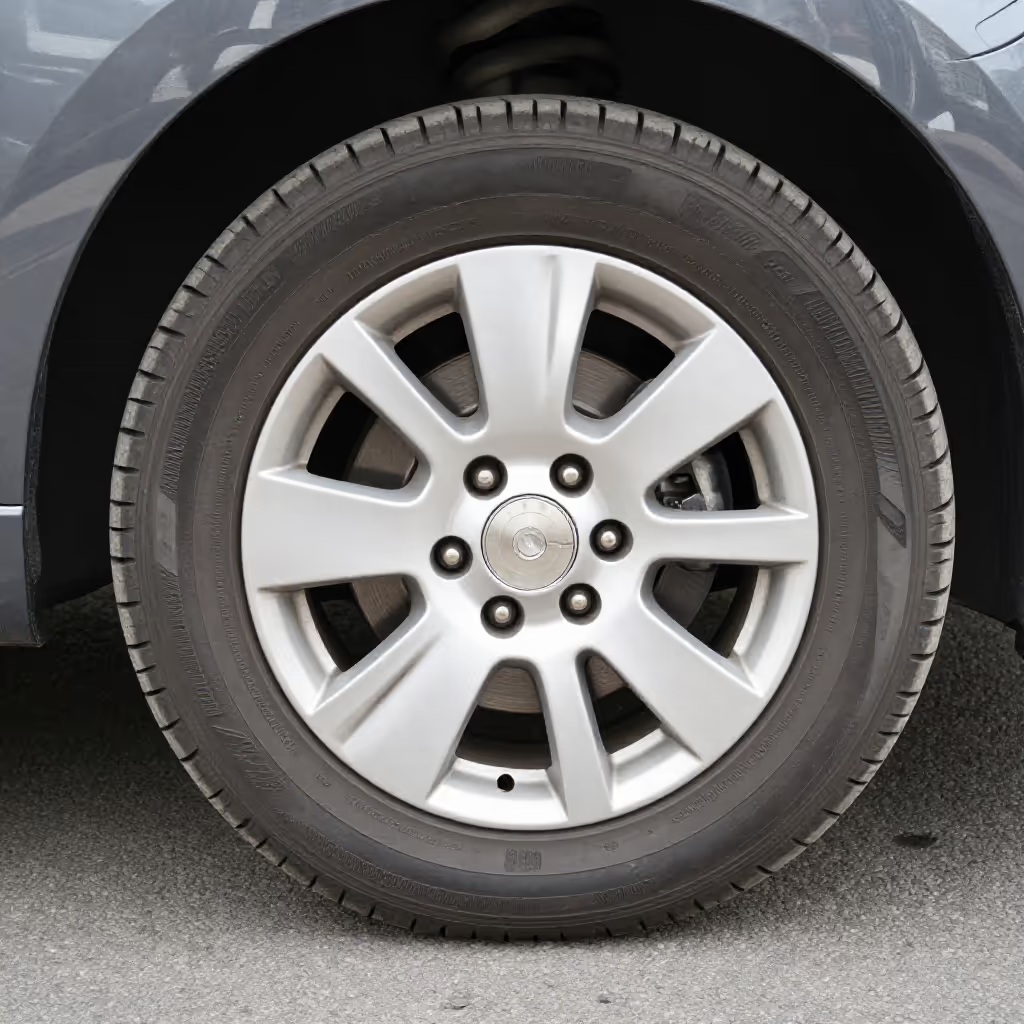
das Rad
wheel
A circular component that turns around an axle and enables vehicles to move.
EXAMPLE
Am Auto muss ein Rad gewechselt werden.
A wheel on the car needs to be changed.
wheel / bike
Loading your saved state.
wheel
A circular component that turns around an axle and enables vehicles to move.
Am Auto muss ein Rad gewechselt werden.
A wheel on the car needs to be changed.
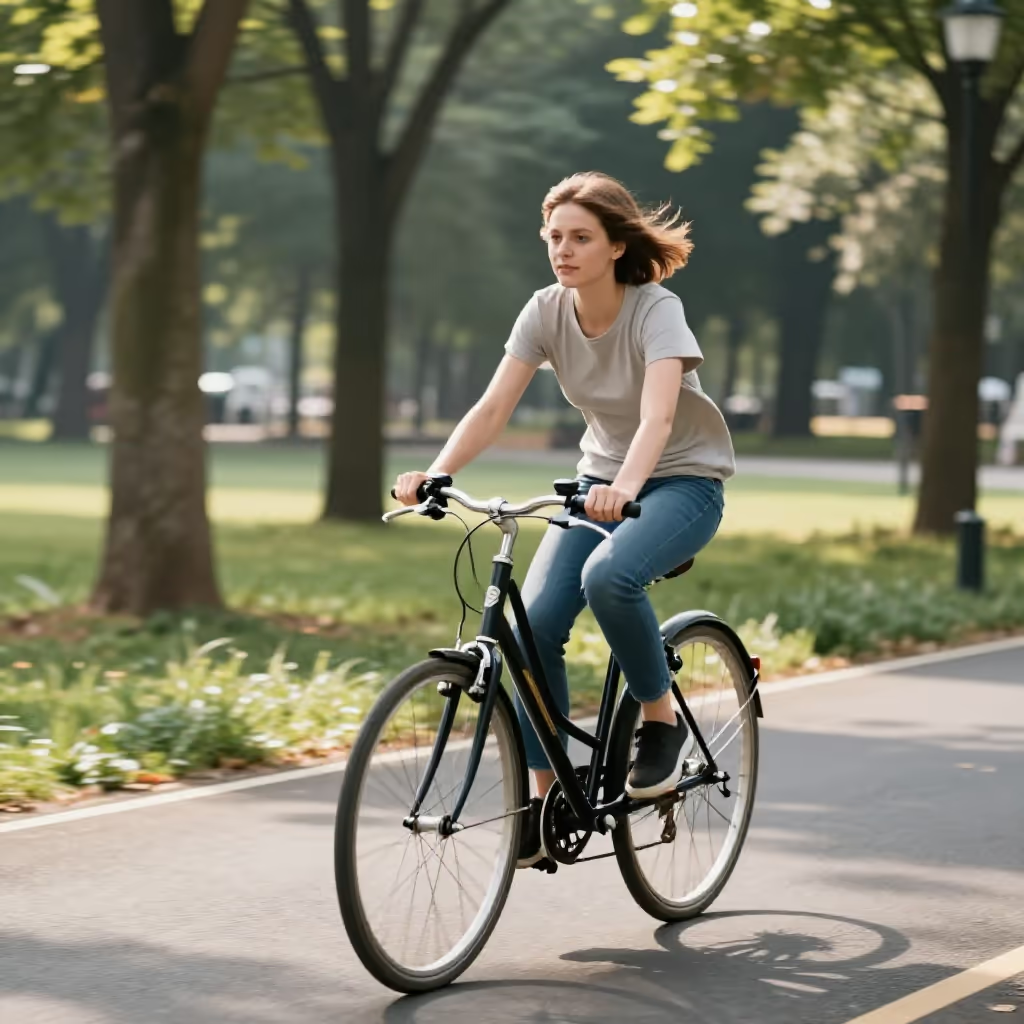
bike
Short form for bicycle.
Bei dem schönen Wetter fahre ich mit dem Rad zur Arbeit.
With the weather this nice, I'm going to work by bike.
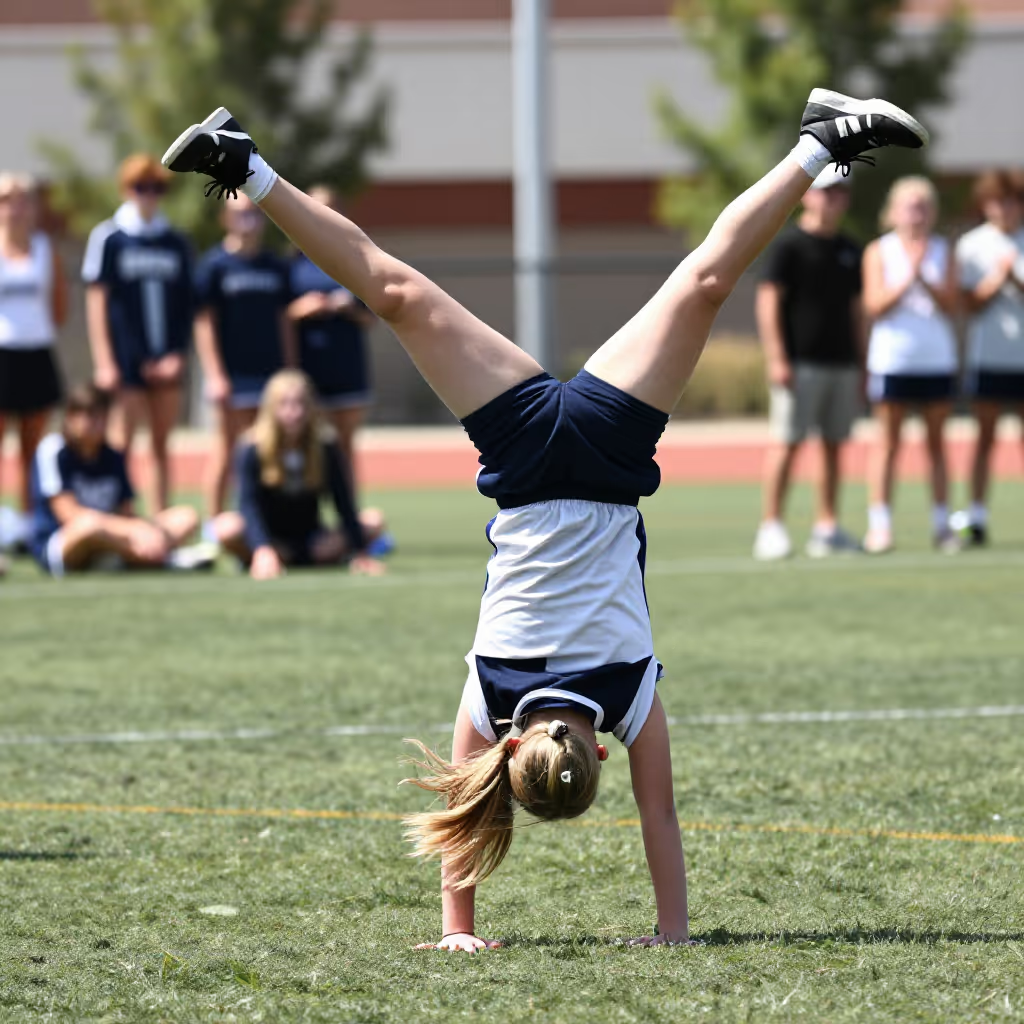
to do a cartwheel
A gymnastic exercise in which you turn sideways over your hands and feet like a wheel.
Die Kinder schlugen vor Freude Räder auf der Wiese.
The children did cartwheels on the meadow for joy.

to go crazy
Informal expression meaning to lose control, go crazy, or overreact.
Wenn das noch länger dauert, drehe ich am Rad!
If this takes much longer, I'm going to go crazy!
'Rad' (wheel/bike) is a common component of compound words for things that have wheels or are round. Examples include 'Fahrrad' (bicycle), 'Motorrad' (motorcycle), 'Windrad' (wind turbine/pinwheel), or 'Zahnrad' (gear/cogwheel).
Das Windrad auf dem Hügel dreht sich langsam.
The wind turbine on the hill is turning slowly.
You can tell from context whether 'Rad' means a wheel (m01) or a bicycle (m02). If people are talking about cars or mechanics, it usually means the wheel. If they are talking about leisure time or the way to work, it often means the bicycle.
In der Werkstatt wurde das vordere Rad des Autos demontiert.
In the workshop, the front wheel of the car was removed.
When 'Rad' is used as a short form for 'Fahrrad' (bicycle), it very often appears in the fixed phrase 'mit dem Rad fahren' (to go by bike/ride a bike). The preposition 'mit' is typical here.
Am Wochenende fahren wir oft mit dem Rad an den See.
On weekends, we often ride our bikes to the lake.
The gymnastic exercise 'Rad schlagen' (to do a cartwheel) is a fixed expression. The verb is always 'schlagen'. You can say 'ein Rad schlagen', but not 'machen' or 'tun'.
Im Turnunterricht haben wir gelernt, ein Rad zu schlagen.
In gymnastics class, we learned to do a cartwheel.
The idiom 'am Rad drehen' (to go crazy) is a fixed unit and means to lose control. The person who is overreacting is the subject of the sentence.
Wegen des ganzen Stresses hatte er das Gefühl, bald am Rad zu drehen.
Because of all the stress, he felt like he was about to go crazy.
bicycle
Fahrrad and Rad can refer to the same vehicle. Fahrrad is unambiguous and stylistically neutral, while Rad is a context-dependent shortened form and may sound more informal or regional. Without clear context, Fahrrad is therefore usually the safer choice.

Ich fahre jeden Morgen mit dem Rad zur Arbeit.
I ride my bike to work every morning.
Ich fahre jeden Morgen mit dem Fahrrad zur Arbeit.
I ride my bicycle to work every morning.