

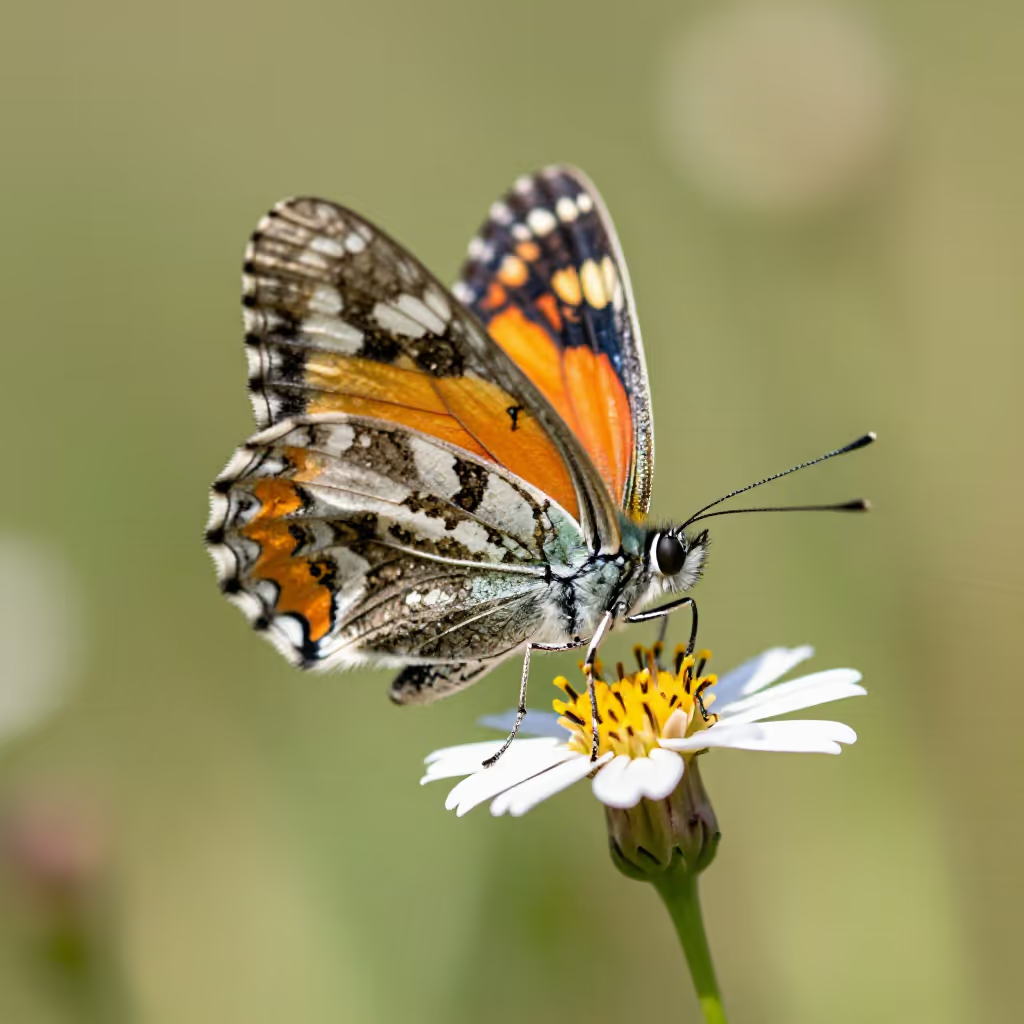
der Falter
butterfly / moth
An insect with two pairs of large, often colorful wings. The term includes both butterflies (Tagfalter) and moths (Nachtfalter).
Ein bunter Falter landete auf der Blüte.
A colorful butterfly landed on the flower.
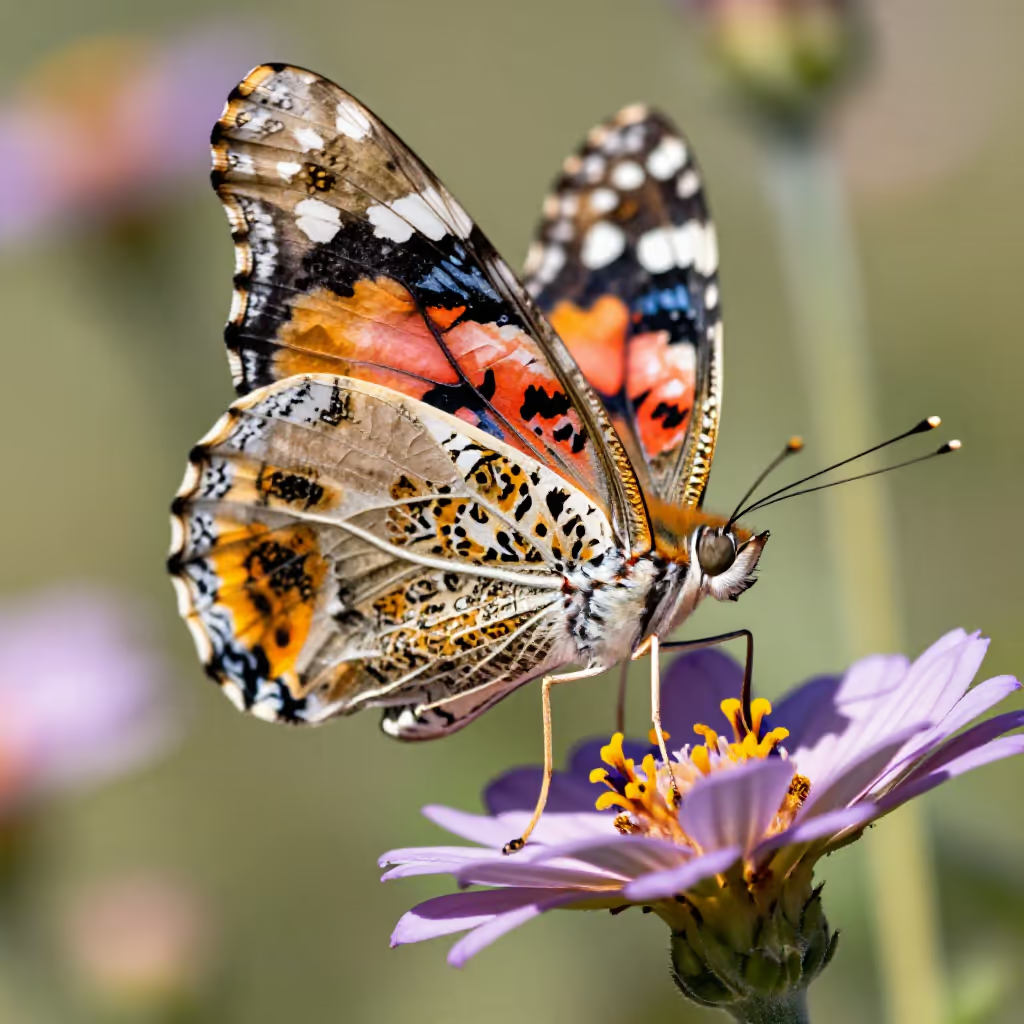
butterfly / moth
Loading your saved state.

butterfly / moth
An insect with two pairs of large, often colorful wings. The term includes both butterflies (Tagfalter) and moths (Nachtfalter).
Ein bunter Falter landete auf der Blüte.
A colorful butterfly landed on the flower.
The noun 'der Falter' (butterfly/moth) is closely related to the verb 'falten' (to fold). The name describes the insect's characteristic movement of folding its wings together.
Der Falter faltete seine Flügel, als er auf dem Blatt saß.
The butterfly folded its wings as it sat on the leaf.
'Falter' (butterfly/moth) is a biological umbrella term. It is often used to describe both insects active during the day (Tagfalter) and insects active at night (Nachtfalter).
Die Ausstellung im Museum zeigt viele verschiedene Arten von Faltern.
The exhibition at the museum shows many different species of butterflies and moths.
Common verbs used in connection with 'Falter' (butterfly/moth) are 'fliegen' (to fly), 'flattern' (to flutter), 'landen' (to land), and 'beobachten' (to observe).
Wir konnten beobachten, wie der Falter von Blüte zu Blüte flog.
We were able to watch the butterfly fly from flower to flower.
butterfly
Schmetterling and Falter both refer to winged insects, but Falter is the broader term and also includes moths. Use Schmetterling when exactly a butterfly is meant, whereas Falter is also possible when the species is not specified or when it is a moth.

Das Tier am Licht ist ein Falter und keine genau bestimmte Schmetterlingsart.
The creature by the light is a moth or butterfly, but the exact species is not specified.
Das farbige Tier auf der Blume ist ein Schmetterling.
The colorful creature on the flower is a butterfly.