


faul
lazy
Work-shy and sluggish; not wanting to make an effort or be active.
EXAMPLE
Am Sonntag bin ich meistens faul und liege den ganzen Tag auf dem Sofa.
On Sundays, I'm usually lazy and lie on the sofa all day.
lazy / rotten
Loading your saved state.
lazy
Work-shy and sluggish; not wanting to make an effort or be active.
Am Sonntag bin ich meistens faul und liege den ganzen Tag auf dem Sofa.
On Sundays, I'm usually lazy and lie on the sofa all day.
rotten
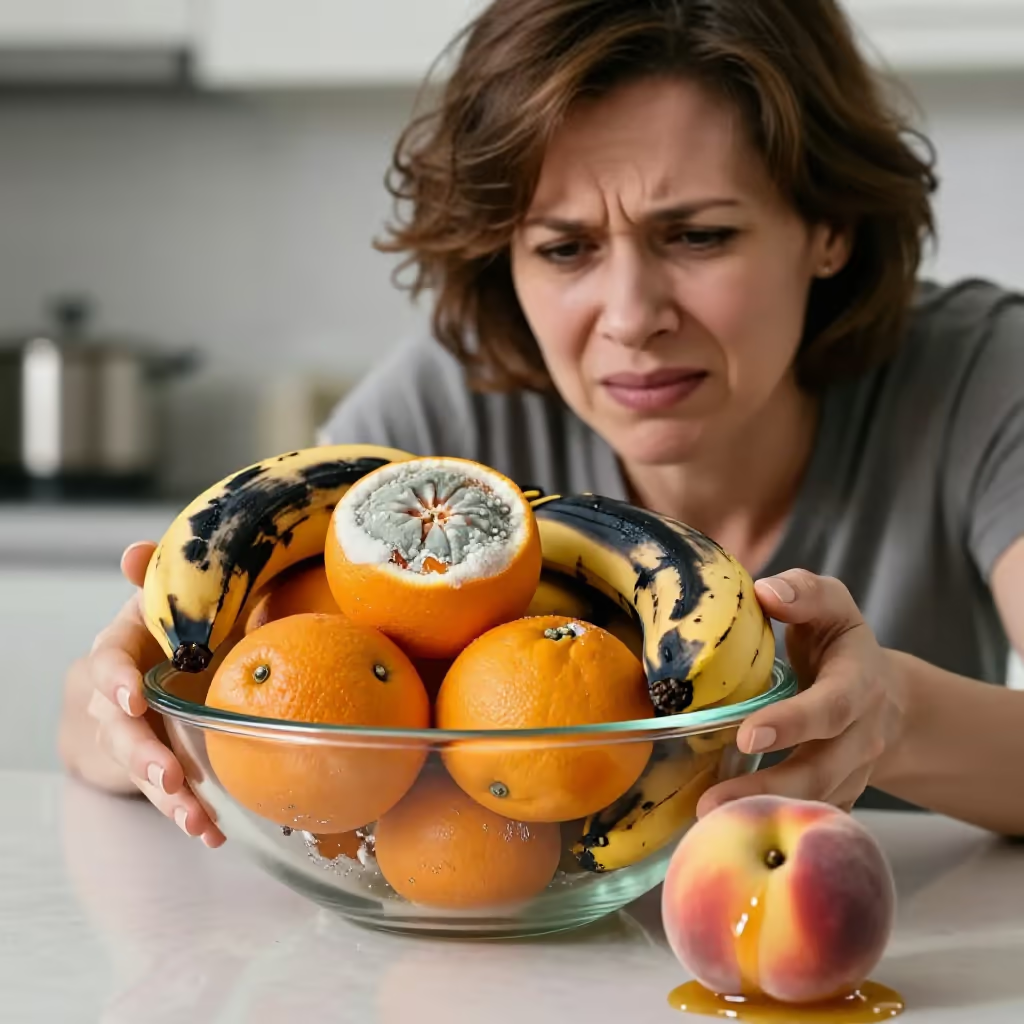
Refers to organic substances, especially food, that have spoiled through decomposition processes and become inedible.
Der Apfel hat eine braune Stelle, er ist schon faul.
The apple has a brown spot; it's already rotten.

fishy
Used to express that a situation is suspicious or not right. Often in the phrase 'an der Sache ist etwas faul' (there is something fishy about the matter).
Er hat das Spiel gewonnen, aber irgendetwas an der Sache ist faul.
He won the game, but something about the whole thing is fishy.

poor / lame
Describes an excuse, compromise, or apology that is bad, dishonest, or unconvincing.
Das war nur eine faule Ausrede, um nicht mitkommen zu müssen.
That was just a lame excuse so he wouldn't have to come along.
The meaning of 'faul' (lazy / rotten) depends heavily on the context. If it refers to a person or an animal, it means 'sluggish' or 'work-shy'. If it refers to food or organic material, it means 'spoiled' or 'rotten'.
Mein Kater ist sehr faul und schläft den ganzen Tag.
My tomcat is very lazy and sleeps all day.
A very common idiom is 'auf der faulen Haut liegen'. It means that someone is inactive and does nothing, that is, lazes around.
Am Wochenende will ich einfach nur auf der faulen Haut liegen und entspannen.
At the weekend, I just want to laze around and relax.
The meaning 'verdorben' (spoiled) is related to the noun 'die Fäulnis' (rot/decay). 'Fäulnis' describes the process of decomposition. This helps you remember the meaning for food.
Durch die Feuchtigkeit im Keller begann das Holz in die Fäulnis überzugehen.
Because of the moisture in the basement, the wood began to rot.
The phrase 'an der Sache ist etwas faul' (there is something fishy about the matter) is used to express mistrust. It means that a situation seems suspicious or something is not right.
Er hat mir ein zu gutes Angebot gemacht. Ich glaube, an der Sache ist etwas faul.
He made me an offer that was too good. I think there is something fishy about it.
In the meaning 'unehrlich' (dishonest) or 'schlecht' (bad), 'faul' is often combined with abstract nouns. Typical examples are 'eine faule Ausrede' (a lame excuse) or 'ein fauler Kompromiss' (a poor compromise).
Er sagte, er hätte den Bus verpasst, aber das war nur eine faule Ausrede.
He said he had missed the bus, but that was just a lame excuse.
bad
A schlechte Ausrede (bad excuse) fails to convince because of its poor quality. A faule Ausrede is also unconvincing, but it often additionally suggests that someone is being dishonest or trying to avoid responsibility.

Seine Erklärung für die Verspätung war eine faule Ausrede, mit der er seine Schuld verbergen wollte.
His explanation for being late was a lame excuse that he wanted to use to hide his guilt.
Seine Erklärung für die Verspätung war eine schlechte Ausrede, die niemand überzeugte.
His explanation for being late was a bad excuse that convinced no one.