


feiern
to celebrate
To mark a special occasion such as a birthday, festival, or success with other people, often with a party.
EXAMPLE
Wir feiern am Samstag den 80. Geburtstag meiner Oma.
We're celebrating my grandma's 80th birthday on Saturday.
to celebrate
Loading your saved state.
to celebrate
To mark a special occasion such as a birthday, festival, or success with other people, often with a party.
Wir feiern am Samstag den 80. Geburtstag meiner Oma.
We're celebrating my grandma's 80th birthday on Saturday.

to celebrate
To enthusiastically praise, acclaim, or cheer someone or something.
Die Fans feierten ihre Mannschaft nach dem unerwarteten Sieg.
The fans celebrated their team after the unexpected victory.

to be celebrated
To visibly enjoy public recognition and applause for one's own achievement.
Nachdem sie den Preis gewonnen hatte, ließ sich die Schauspielerin auf der Bühne ausgiebig feiern.
After she had won the prize, the actress let herself be celebrated extensively on stage.
The verb 'feiern' (to celebrate) is typically connected with positive, special events. Common combinations are 'Geburtstag feiern' (to celebrate a birthday), 'Hochzeit feiern' (to celebrate a wedding), 'Jubiläum feiern' (to celebrate an anniversary), or 'einen Sieg feiern' (to celebrate a victory).
Nächstes Jahr feiern wir unser zehnjähriges Firmenjubiläum.
Next year we are celebrating our company's tenth anniversary.
In colloquial language, 'feiern' (to celebrate) or 'feiern gehen' often simply means 'to have a party' or 'to go out and have fun', even without a specific occasion.
Kommst du am Freitag mit uns feiern?
Are you coming to celebrate with us on Friday?
While you celebrate occasions (meaning 1), you can also cheer people or groups for an achievement. The object of the verb here is usually a person, an artist, or a team.
Das Publikum feierte den Pianisten mit stehenden Ovationen.
The audience celebrated the pianist with a standing ovation.
The construction 'sich feiern lassen' (to let oneself be celebrated) is reflexive and describes that a person is at the center of recognition and enjoys it. The person is the subject of the sentence.
Nach ihrem Tor ließ sich die Stürmerin von den Fans feiern.
After her goal, the striker let herself be celebrated by the fans.
to commit / to celebrate
Both words can refer to a special occasion. „Feiern“ is more general and usually suggests a cheerful celebration, while „begehen“ sounds more formal and can also refer to observing an occasion ceremonially, without an exuberant party. „Feiern“ is more suitable for a party, while „begehen“ is often used for a formal occasion.
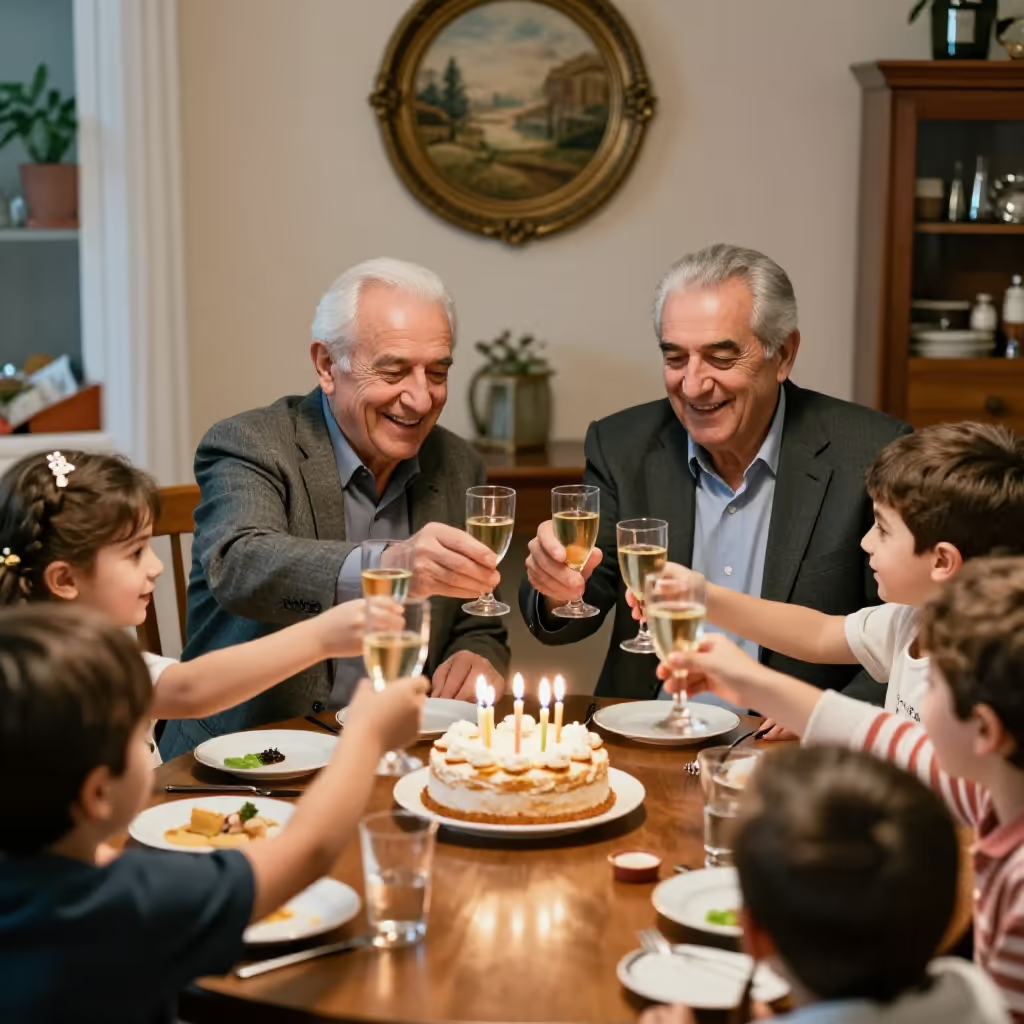
Wir feiern das Jubiläum am Samstag mit einem großen Fest.
We’re celebrating the anniversary with a big party on Saturday.
Die Stadt begeht das Jubiläum am Samstag mit einer offiziellen Gedenkfeier.
The city is observing the anniversary with an official memorial ceremony on Saturday.