

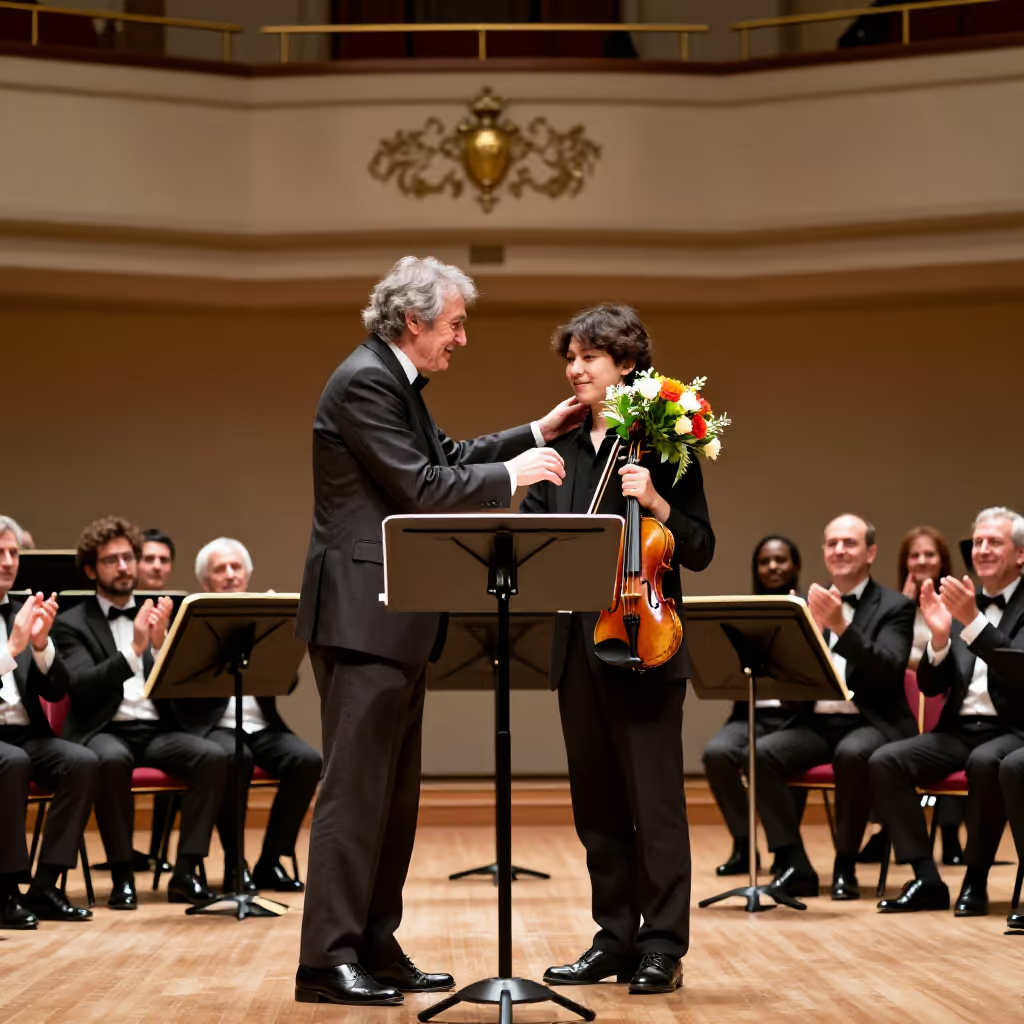
preisen
to praise
To praise, extol, or glorify someone or something in elevated language.
EXAMPLE
In vielen alten Gedichten wird die Schönheit der Natur gepriesen.
In many old poems, the beauty of nature is praised.
to praise
Loading your saved state.
to praise
To praise, extol, or glorify someone or something in elevated language.
In vielen alten Gedichten wird die Schönheit der Natur gepriesen.
In many old poems, the beauty of nature is praised.

to count oneself lucky
A fixed expression meaning to consider oneself very lucky or privileged.
Wer in Frieden leben kann, darf sich glücklich preisen.
Anyone who can live in peace may count themselves lucky.

to promote / tout
To praise a product or service in order to advertise and sell it. Often used as part of 'anpreisen' (to advertise/tout).
Der Händler preist seine Äpfel als die saftigsten der ganzen Region.
The merchant promotes his apples as the juiciest in the whole region.
The verb 'preisen' (to praise) is related to the noun 'der Preis' (price/prize). Originally, it meant to determine the value of something, from which today's meaning 'loben' (to praise) or 'rühmen' (to extol) developed.
Der Dichter preist die Liebe als höchste Tugend.
The poet praises love as the highest virtue.
'Preisen' (to praise) is a word used in elevated language and often appears in literature, poems, or ceremonial speeches. It is uncommon in normal everyday speech.
Die Heldentaten des Ritters wurden in Liedern gepriesen.
The knight's heroic deeds were praised in songs.
The expression 'sich glücklich preisen' (to count oneself lucky) is a fixed reflexive construction. Here the verb is always combined with 'sich' (oneself) and the adjective 'glücklich' (happy/lucky).
Er konnte sich glücklich preisen, den Unfall überlebt zu haben.
He could count himself lucky to have survived the accident.
In commercial contexts, 'preisen' (to promote/tout) is often used as part of the separable verb 'anpreisen' (to advertise/tout). It describes a seller's promotional praise of goods.
Auf dem Markt preisen die Händler lautstark ihre Waren an.
At the market, the vendors loudly promote their goods.
to celebrate
Both words can express strong appreciation for a person or a work. „Feiern“ emphasizes an enthusiastic reception and public attention, while „preisen“ sounds more elevated and focuses on explicit praise. Use „preisen“ in deliberately laudatory language and „feiern“ when visible enthusiasm is the focus.

Die Kritiker priesen die Sängerin nach ihrem Auftritt als große Entdeckung.
After her performance, the critics praised the singer as a major new discovery.
Die Zuschauer feierten die Sängerin nach ihrem Auftritt begeistert.
The audience enthusiastically cheered the singer after her performance.