

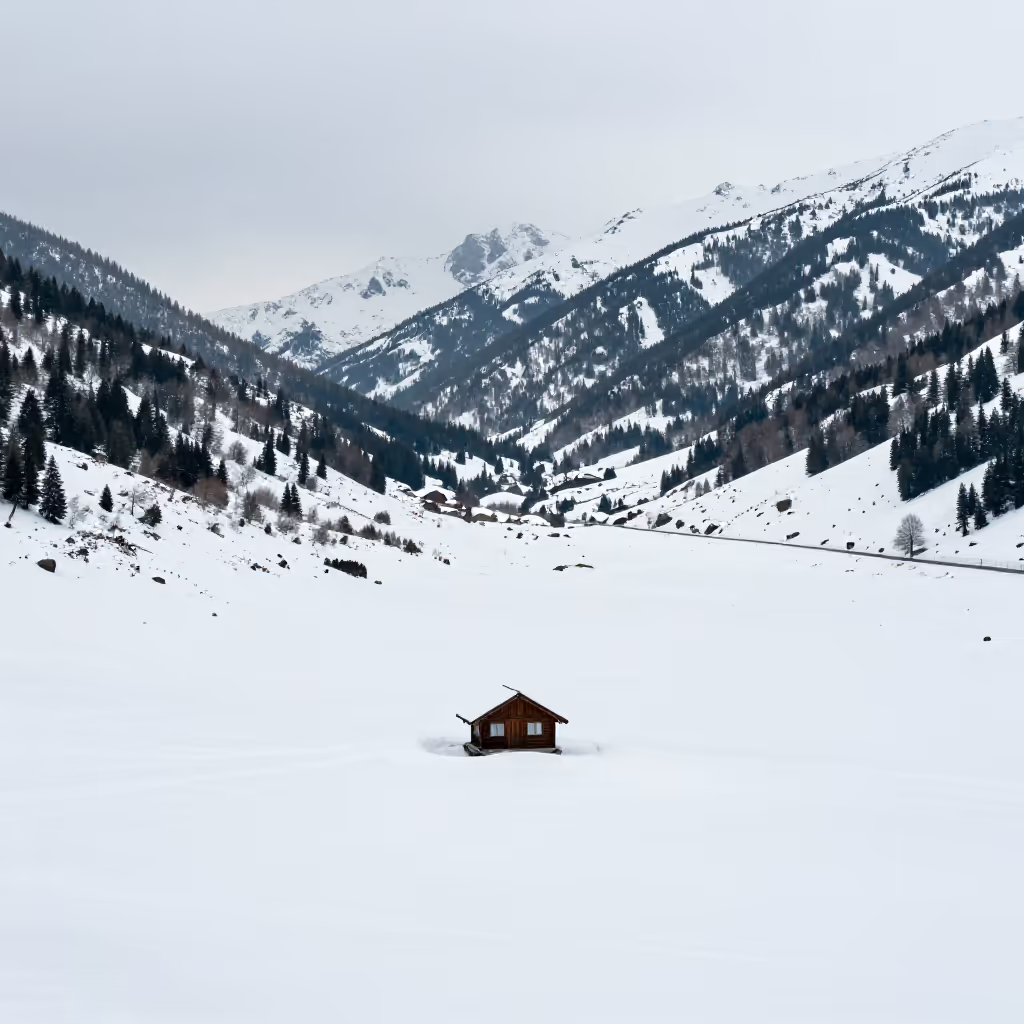
Expresses a great physical distance or remoteness from a place or thing. It is usually used as a preposition with the genitive.
example
Sie leben in einem kleinen Dorf fernab der großen Städte.
They live in a small village far from the big cities.
Usage tips
Word composition
'Fernab' (far from) is a compound of 'fern' (far away) and 'ab' (away from/separate from). So the meaning 'far away from something' can be derived directly from its components.
EXAMPLE
Das Kloster liegt fernab vom Lärm der Stadt.
The monastery is located far from the noise of the city.
Register
'Fernab' (far from) belongs to an elevated, more written style. It is often found in literary texts or travel writing.
EXAMPLE
Sie träumte von einem Leben fernab aller Sorgen.
She dreamed of a life far from all worries.
Preposition with genitive
'Fernab' (far from) is usually used like a preposition and takes the genitive. So the question is: Fernab wessen? (Far from what/whose?)
EXAMPLE
Wir machten Urlaub in einer Hütte fernab jeglicher Zivilisation.
We took a vacation in a cabin far from any civilization.
Alternative with 'von'
Although the genitive is the formally correct form, 'fernab' (far from) is also often used colloquially with 'von' (from/of) and the dative. This variant is widespread and usually understood.
EXAMPLE
Er wohnt auf einem Bauernhof fernab von der nächsten Stadt.
He lives on a farm far from the nearest town.
Compare with
antonym
fernab vs nahe
near / close
'nahe' and 'fernab' both describe physical distance, but in opposite directions. 'nahe' means that something is only a short distance away. 'fernab' means that something is far away or remote. 'nahe' is very common and simple in everyday language. 'fernab' sounds somewhat elevated and often appears with a genitive, for example 'fernab der Stadt' (far from the city). The practical difference is: 'nahe' says that you can get there quickly; 'fernab' says that a place is clearly off the beaten path.
fernab
Die Klasse übernachtet in einer Hütte fernab der großen Straßen.
The class is spending the night in a cabin far from the main roads.
nahe
Johanna wohnt nahe der Bibliothek und geht oft zu Fuß dorthin.
Johanna lives near the library and often walks there.