

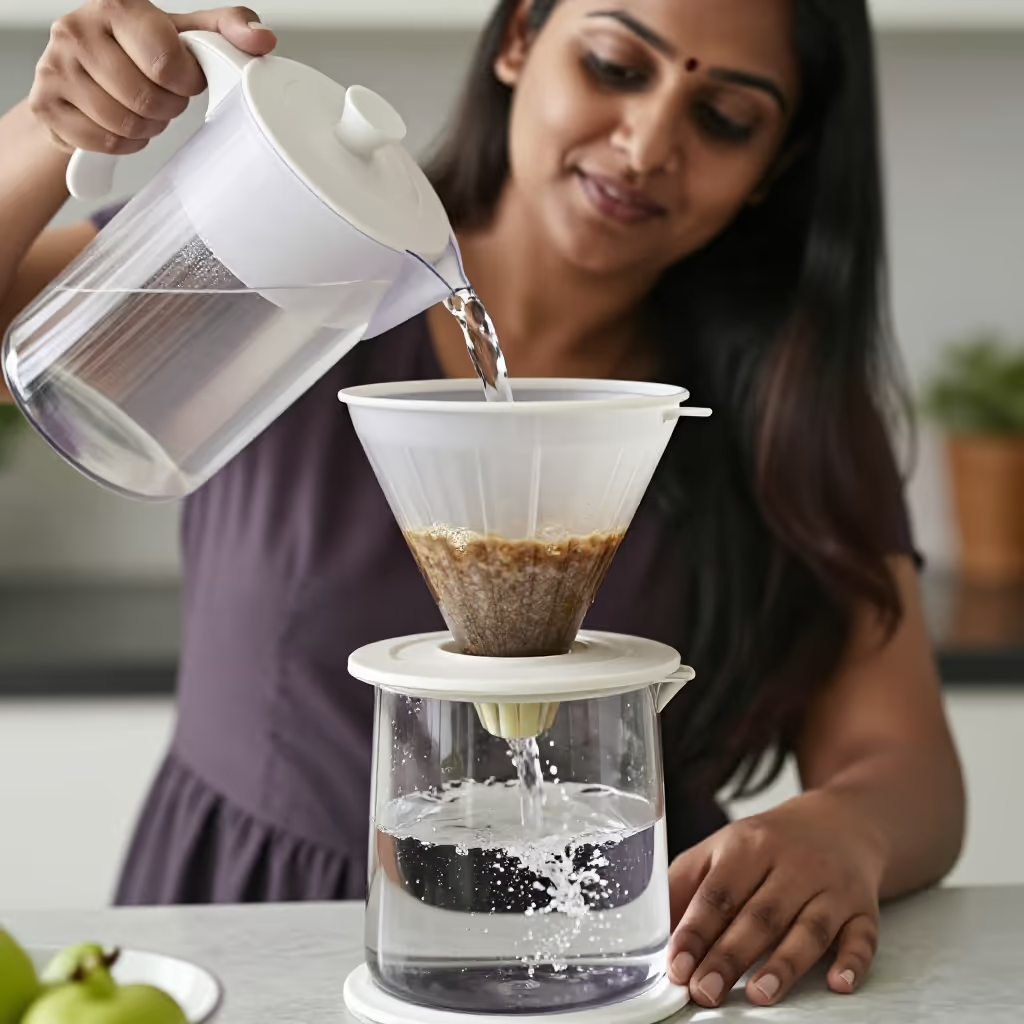
filtern
to filter
To pass a liquid, a gas, or even light through a filter in order to remove unwanted substances or components from it.
EXAMPLE
Man sollte das Wasser filtern, bevor man es trinkt.
You should filter the water before drinking it.
to filter
Loading your saved state.
to filter
To pass a liquid, a gas, or even light through a filter in order to remove unwanted substances or components from it.
Man sollte das Wasser filtern, bevor man es trinkt.
You should filter the water before drinking it.
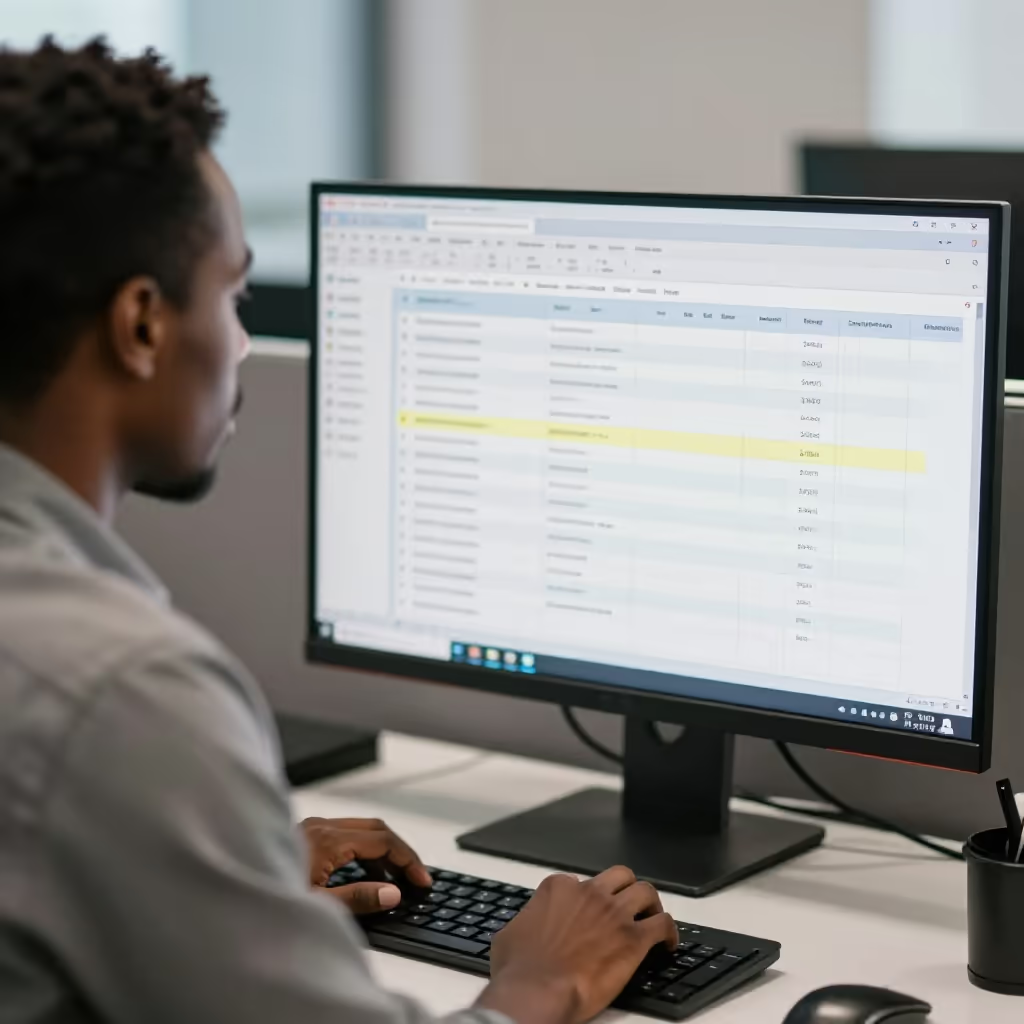
to filter
In data processing, to selectively choose and display certain information from a large amount while the rest is hidden.
Ich kann die E-Mails in meinem Posteingang nach Absender filtern.
I can filter the emails in my inbox by sender.
The verb 'filtern' (to filter) belongs to the word family around 'der Filter' (the filter). A filter is the device or material used to carry out the act of filtering.
Dieser spezielle Filter soll Schadstoffe aus der Luft filtern.
This special filter is designed to filter pollutants out of the air.
The object of the verb makes the meaning clear. If you filter a physical substance like 'Wasser' (water), 'Luft' (air), or 'Kaffee' (coffee), the literal meaning is intended. If you filter digital information like 'E-Mails' (emails), 'Daten' (data), or 'Suchergebnisse' (search results), the figurative meaning from data processing is intended.
Die neue Maschine kann die Luft im Raum sehr effektiv filtern.
The new machine can filter the air in the room very effectively.
When you want to say what is being removed, you often use the preposition 'aus' (out of/from). The structure is: [unwanted substances] aus [liquid/gas] filtern.
Die Anlage filtert kleinste Partikel aus dem Abwasser.
The system filters the tiniest particles out of the wastewater.
In digital contexts, 'filtern' (to filter) is very often used with the preposition 'nach' (by/according to) to indicate the selection criterion. The structure is: [data] nach [criterion] filtern.
Du kannst die Tabelle nach dem Datum oder dem Preis filtern.
You can filter the table by date or price.