

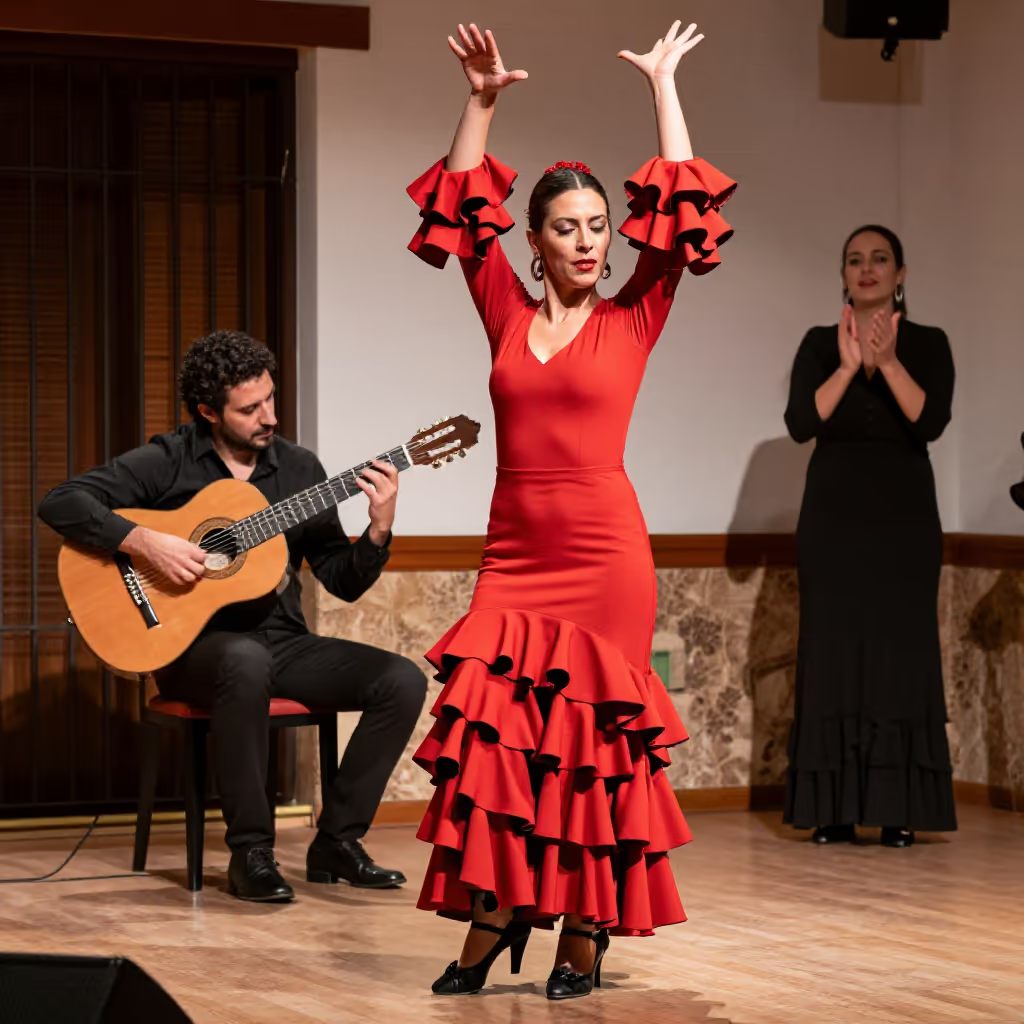
A traditional art form from Andalusia in southern Spain that consists of singing, guitar playing, and expressive dance.
example
In einer kleinen Bar in Sevilla sahen wir eine authentische Flamenco-Darbietung.
In a small bar in Seville, we saw an authentic flamenco performance.
Usage tips
Loanword
'Flamenco' is a word borrowed directly from Spanish. It keeps its original spelling and pronunciation.
EXAMPLE
Der Klang des Wortes Flamenco erinnert sofort an Spanien.
The sound of the word flamenco immediately brings Spain to mind.
Typical verbs
Depending on which part of flamenco is meant, different verbs are used: you can 'tanzen' (dance), 'singen' (sing), or 'spielen' (play) flamenco on the guitar.
EXAMPLE
Meine Schwester lernt seit einem Jahr, Flamenco zu tanzen.
My sister has been learning to dance flamenco for a year.
Cultural context
Flamenco is more than just a dance. This art form traditionally consists of three parts that belong together: singing (cante), guitar playing (toque), and dance (baile).
EXAMPLE
Für viele ist der Gesang das Herz des Flamenco.
For many, the singing is the heart of flamenco.
Compare with
confusable
Flamenco vs Tango
tango
'der Tango' and 'der Flamenco' can both have to do with dance and music. That is why they can easily be confused, especially if you are only thinking of passionate dances. 'Tango' is a partner dance from Argentina and Uruguay; the music for it is also called Tango. 'Flamenco' comes from Andalusia in Spain and combines singing, guitar, and a very expressive dance. A practical tip: with Tango, you often think of a dance couple; with Flamenco, you think of Spanish music, singing, guitar, and strong movements.
Flamenco
Bei dem Fest spielte ein Gitarrist Flamenco, und eine Tänzerin klatschte den Rhythmus.
At the festival, a guitarist played flamenco, and a dancer clapped the rhythm.
Tango
Im Tanzkurs üben wir heute den Tango zu langsamer Musik.
In dance class today, we are practicing the tango to slow music.