

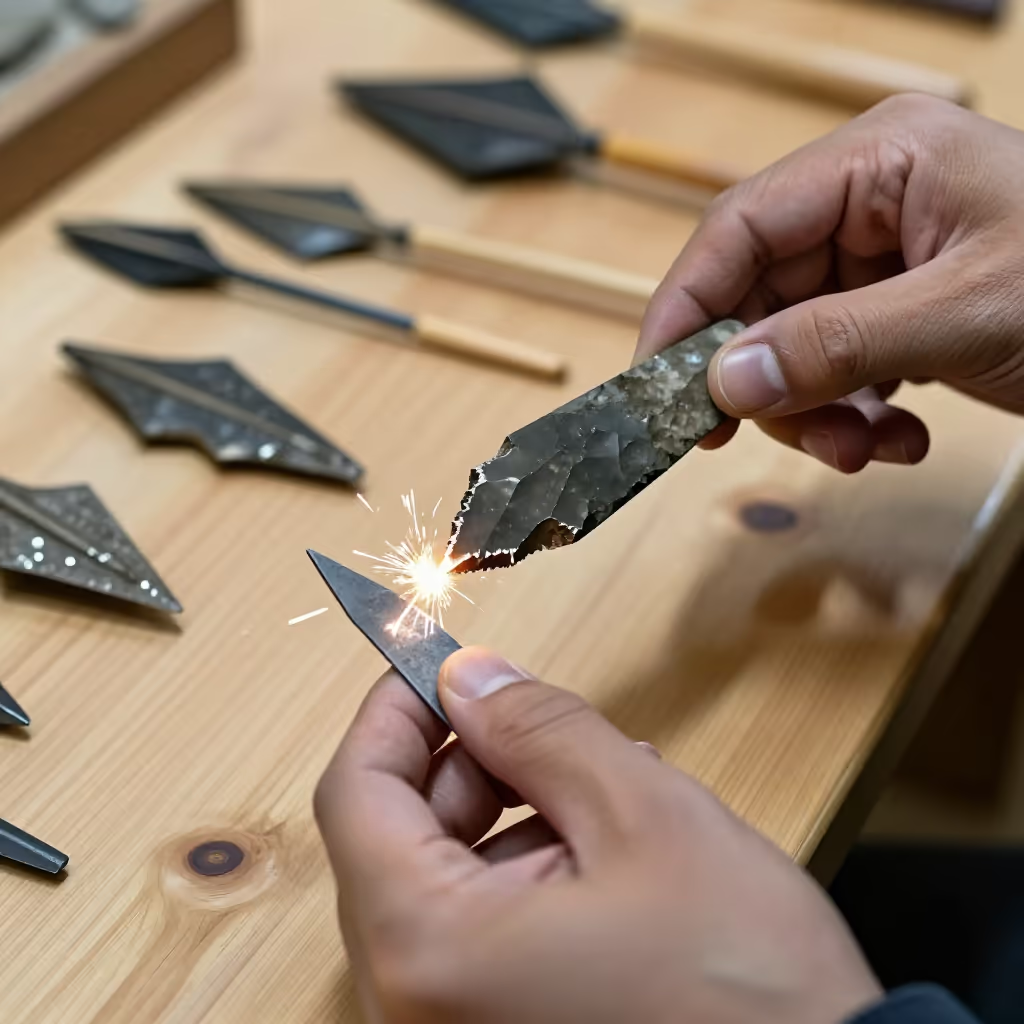
A very hard, siliceous rock (also called Feuerstein in German) that was used in the Stone Age to make tools and weapons because it forms sharp edges. It can also be used to make fire because it produces sparks when struck against metal.
example
Archäologen fanden bei der Ausgrabung eine Pfeilspitze aus Flint.
Archaeologists found an arrowhead made of flint during the excavation.
Usage tips
Register and style
The word 'Flint' (flint) is a technical term. It is found mainly in scientific or technical texts, especially in archaeology and geology.
EXAMPLE
Der Geologe erklärte die Eigenschaften von Flint.
The geologist explained the properties of flint.
Use with 'aus'
When 'Flint' (flint) describes the material an object is made of, it is almost always used with the preposition 'aus' (made of/from).
EXAMPLE
Im Museum sind Werkzeuge aus Flint ausgestellt.
Tools made of flint are on display in the museum.
Typical context
This word appears almost exclusively in connection with prehistory and early history, especially the Stone Age. Typical topics are tools, weapons, or the technique of making fire.
EXAMPLE
In der Steinzeit lernten die Menschen, mit Flint Feuer zu machen.
In the Stone Age, people learned to make fire with flint.
Compare with
synonym
Flint vs Feuerstein
flint
'Flint' and 'Feuerstein' mean the same hard rock. Both words fit when talking about Stone Age tools or about sparks for making fire. 'Feuerstein' is usually easier to understand in everyday language because the word directly reminds you of fire. 'Flint' is a bit more technical or shorter and also appears in factual texts. In terms of meaning, there is no important difference here.
Flint
Im Museum zeigt der Führer ein Messer aus Flint.
In the museum, the guide shows a knife made of flint.
Feuerstein
Mit einem Feuerstein und einem Stück Stahl schlug Tom kleine Funken.
With a piece of flint and a piece of steel, Tom struck small sparks.