

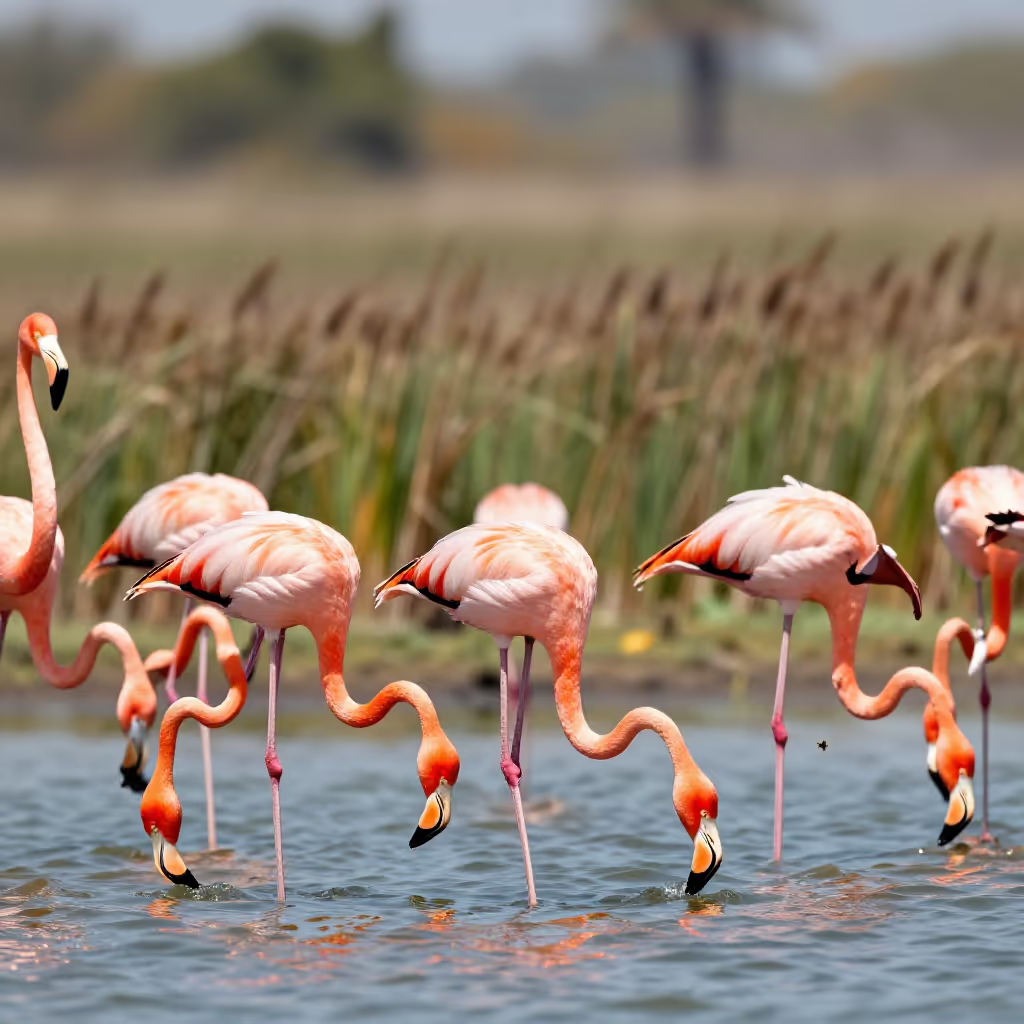
A large, usually pink water bird with very long legs and a long, curved neck that lives in warm regions.
example
Im Zoo stand eine ganze Gruppe Flamingos auf einem Bein im Wasser.
At the zoo, a whole group of flamingos was standing on one leg in the water.
Usage tips
Typical description
Flamingos are almost always associated with their characteristic pink color and their posture. A very typical expression is that they 'auf einem Bein stehen' (stand on one leg).
EXAMPLE
Der rosa Flamingo stand bewegungslos auf einem Bein.
The pink flamingo stood motionless on one leg.
Group term
When talking about several flamingos, people often use the terms 'eine Gruppe von Flamingos' (a group of flamingos) or 'ein Schwarm Flamingos' (a flock of flamingos).
EXAMPLE
Am Ufer des Sees versammelte sich ein großer Schwarm Flamingos.
A large flock of flamingos gathered on the shore of the lake.
Typical context
The word 'Flamingo' (flamingo) is mostly found in texts about zoos, nature documentaries, or travel to tropical and subtropical regions where these birds live in the wild.
EXAMPLE
In diesem Nationalpark kann man Flamingos in ihrer natürlichen Umgebung beobachten.
In this national park, you can observe flamingos in their natural environment.
Compare with
confusable
Flamingo vs Storch
stork
'der Storch' and 'der Flamingo' are both large birds with long legs. That is why they can easily be confused in pictures or at the zoo. A stork is usually white with black wings, red legs, and a red, straight beak. It often nests on roofs or chimneys. A flamingo is usually pink, lives near water, and has a long curved neck. Its beak is noticeably curved. A practical tip: 'der Storch' is associated with roofs and nests in Central Europe, while 'der Flamingo' is more associated with warm regions and water.
Flamingo
Im Zoo steht ein Flamingo auf einem Bein am Wasser.
At the zoo, a flamingo is standing on one leg by the water.
Storch
Auf dem Schornstein sitzt ein Storch in seinem großen Nest.
A stork is sitting in its large nest on the chimney.