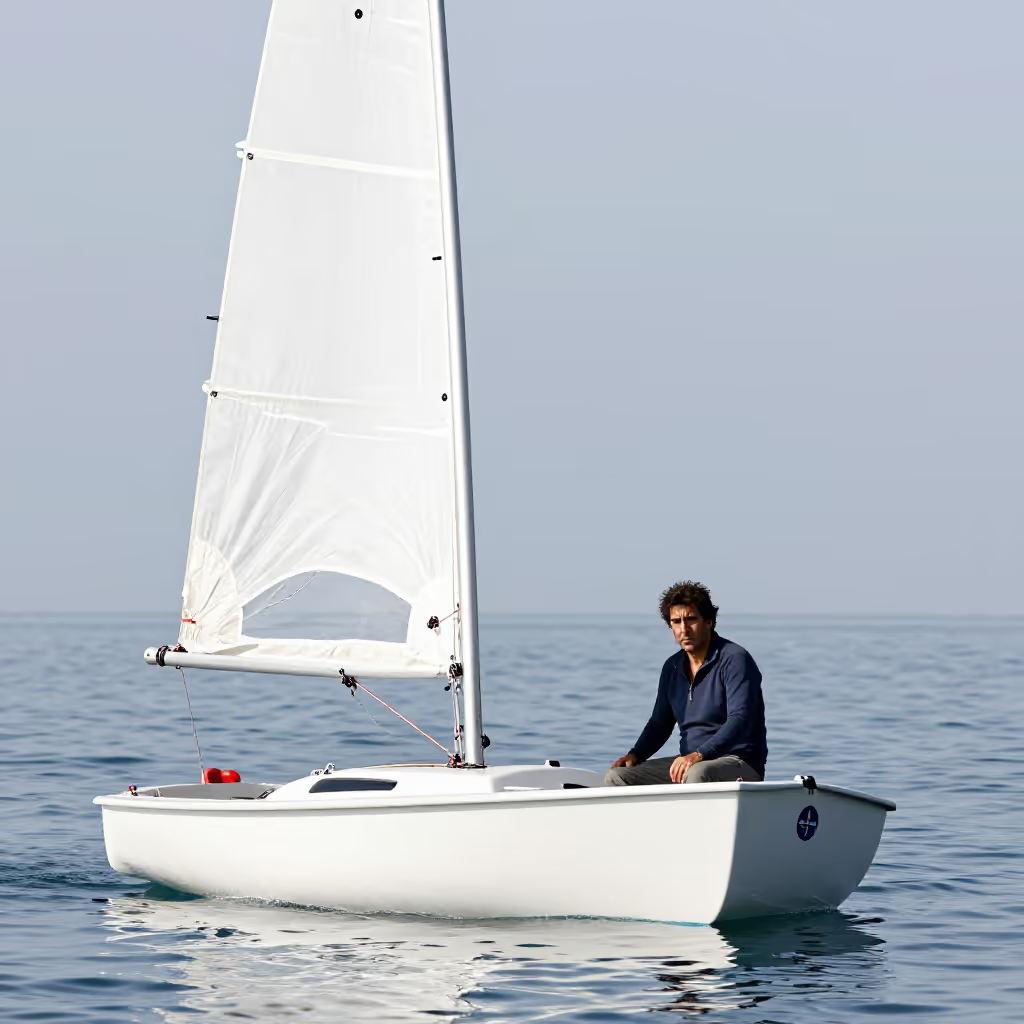
A period of complete absence of wind, especially at sea, which is problematic for sailing ships.
example
Wegen der Flaute kamen die Segelboote bei der Regatta kaum voran.
Because of the calm, the sailboats in the regatta made hardly any progress.

Usage tips
Word family
'Die Flaute' (calm/slump) is related to the adjective 'flau' (queasy, weak, listless), which describes a feeling of weakness, nausea, or lack of energy. 'Die Flaute' is therefore the noun form of a state in which energy or movement is lacking.
EXAMPLE
Mir ist heute irgendwie flau im Magen.
My stomach feels kind of queasy today.
Sentence structure and usage
A very common and natural expression with 'Flaute' (calm/slump) uses the verb 'herrschen' (to prevail, to reign). For example, people say 'Es herrscht Flaute' (there is a lull/slump) or 'In der Wirtschaft herrscht Flaute' (there is a slump in the economy).
EXAMPLE
Seit Wochen herrscht bei den Autoherstellern eine Flaute.
There has been a slump among car manufacturers for weeks.
Context clue: weather
The original meaning of 'Flaute' (calm) can be recognized from the context. If the topic is 'Wind' (wind), 'Segeln' (sailing), 'Meer' (sea), or 'Wetter' (weather), it always means the absence of wind.
EXAMPLE
Mitten auf dem See überraschte uns eine plötzliche Flaute.
In the middle of the lake, a sudden calm took us by surprise.
Typical collocations
In the figurative economic meaning, 'Flaute' (slump) is often combined with words such as 'wirtschaftlich' (economic), 'Aufträge' (orders), 'Umsatz' (revenue), or 'Nachfrage' (demand). For example, people speak of a 'wirtschaftliche Flaute' (economic slump).
EXAMPLE
Wegen der Flaute bei den Aufträgen musste die Firma Kurzarbeit anmelden.
Because of the slump in orders, the company had to register for short-time work.
Register: colloquial language
The personal meaning of 'Flaute' (slump) is often colloquial. For example, people speak of a 'kreative Flaute' (creative slump, no ideas) or jokingly of 'Flaute im Bett' (a dry spell in bed, no love life).
EXAMPLE
Der Autor leidet seit Monaten unter einer kreativen Flaute.
The author has been suffering from a creative slump for months.
Compare with
antonym · confusable
Flaute vs Wind
wind
'der Wind' and 'die Flaute' are clear opposites in weather contexts. 'Wind' means that the air is noticeably moving. 'Flaute' means that there is almost no wind or no wind at all, especially at sea. This is important for sailboats because they can hardly make progress without wind. Learners may confuse the words because both occur in conversations about weather and sailing. Memory aid: with 'Wind', the air moves; with 'Flaute', the wind is missing.
Flaute
Wegen der Flaute lag das Segelboot stundenlang ruhig auf dem Wasser.
Because of the calm, the sailboat lay still on the water for hours.
Wind
Am Nachmittag kam Wind auf, und die Segel füllten sich sofort.
In the afternoon, the wind picked up, and the sails filled immediately.