

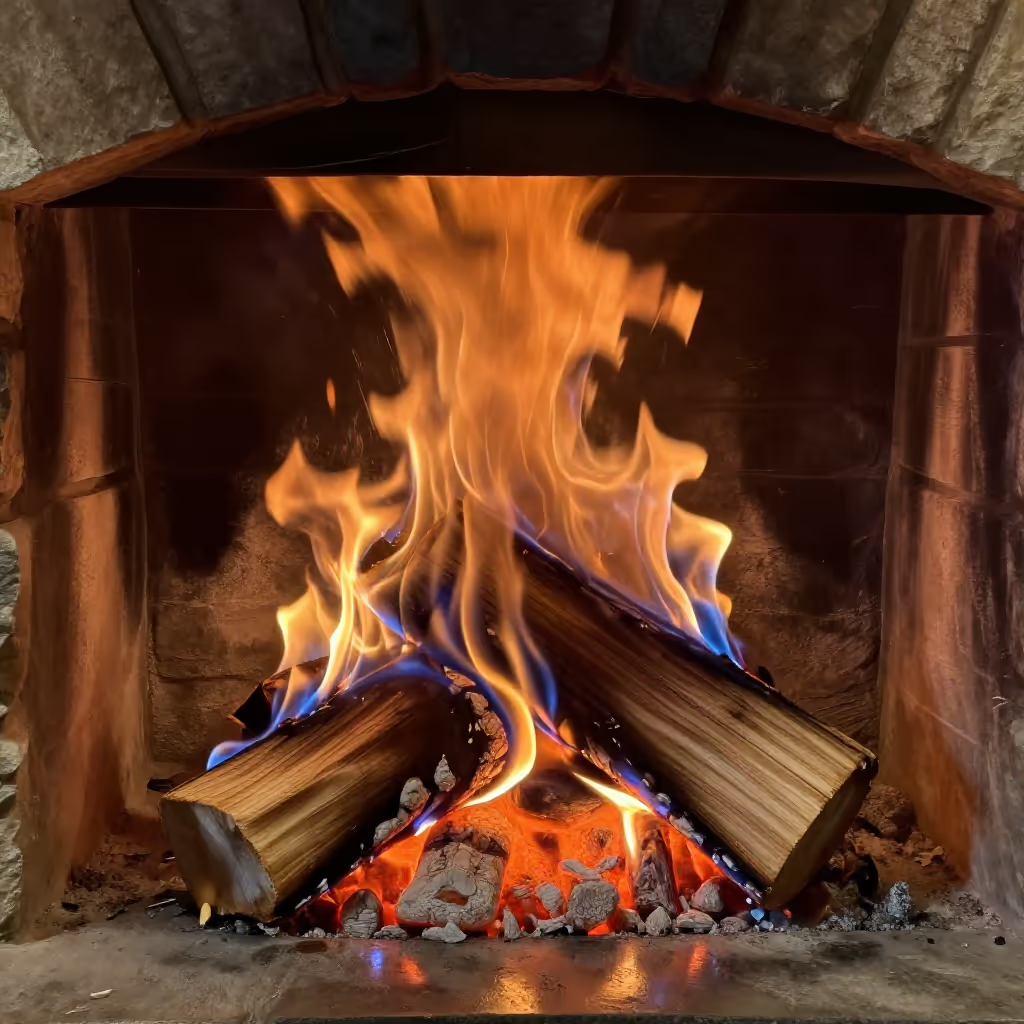
die Flamme
flame
The visible, glowing, gaseous part of a fire.
EXAMPLE
Die Flamme der Kerze tanzte im leichten Windzug.
The candle's flame danced in the light draft.
flame
Loading your saved state.
flame
The visible, glowing, gaseous part of a fire.
Die Flamme der Kerze tanzte im leichten Windzug.
The candle's flame danced in the light draft.

flame
A person one is or was in love with; a love affair.
Auf der Party hat er zufällig seine alte Flamme aus der Schulzeit wiedergetroffen.
At the party, he happened to run into his old flame from school.

flame
A strong, passionate feeling such as enthusiasm, anger, or love.
In seinen Augen loderte die Flamme des Zorns.
The flame of anger blazed in his eyes.
The noun 'die Flamme' (flame) belongs to a word family with the verb 'flammen' (to glow, to burn) and the adjective 'flammend' (flaming, e.g. flaming red). Recognizing this family helps with understanding related words.
Das Feuer im Kamin flammte gemütlich vor sich hin.
The fire in the fireplace flickered cozily.
In connection with fire, 'Flamme' (flame) is often used in fixed expressions. Typical ones are 'in Flammen stehen' (to be in flames/burning) or 'eine Flamme entzünden' (to ignite a flame/start a fire).
Das verlassene Gebäude stand plötzlich in Flammen.
The abandoned building was suddenly in flames.
When 'Flamme' (flame) describes a person, this is colloquial. People often speak of 'einer alten Flamme' (an old flame/former love interest) or 'einer neuen Flamme' (a new flame/current love interest).
Er hat seine alte Flamme aus der Jugend zufällig im Supermarkt getroffen.
He happened to meet his old flame from his youth in the supermarket.
To describe a strong feeling, 'Flamme' (flame) is often combined with a genitive that names the feeling. This use is rather elevated or poetic. Typical examples are 'die Flamme der Leidenschaft' (the flame of passion) or 'die Flamme des Zorns' (the flame of anger).
In ihren Augen loderte die Flamme der Entschlossenheit.
The flame of determination blazed in her eyes.
girlfriend / female friend
Both words can refer to a woman in a romantic relationship. Freundin is the neutral, everyday term, while Flamme (flame) sounds humorous or somewhat old-fashioned and emphasizes being in love more strongly. In normal conversations, Freundin is usually the more appropriate choice.

Er erzählte seinen Freunden begeistert von seiner neuen Flamme.
He enthusiastically told his friends about his new flame.
Er stellte uns seine Freundin beim gemeinsamen Abendessen vor.
He introduced us to his girlfriend at dinner.